

Synonyms for hair are essential when you want to describe hairstyles, beauty routines, character appearances, or animal coats smoothly.
Imagine sitting in a salon chair as the stylist runs a comb through your freshly washed strands before cutting.
Finding the exact synonym for hair allows you to describe visual appearances clearly. Consequently, it brings vivid description into your everyday writing.
Using a synonym for hair enriches your vocabulary in blogs, essays, and creative stories. Therefore, students and writers can easily avoid repetitive phrasing.
What Does “Hair” Really Mean?
The word hair refers to fine, thread-like strands that grow from the skin of humans, mammals, and certain organisms.
Native English speakers use it in everyday speech, fashion discussions, salon consultations, biological descriptions, and creative storytelling. For instance, someone might complain about having a bad hair day.
In broader contexts, it can describe the collective coat of an animal or delicate plant fibers.
- Part of Speech: Noun (Uncountable or Countable)
- Definition: Any of the fine, thread-like strands growing from the skin of humans and other mammals.

Connotative Meaning
(Connotation is the emotional tone, cultural feeling, or mental association attached to a word beyond its strict literal dictionary definition.)
- Positive Tone: High when describing health, style, grooming, elegance, and beauty.
- Negative Tone: Occurs when associated with messiness, shedding, unwanted body hair, or finding a stray strand in food.
- Neutral Tone: Moderate in biological, medical, scientific, and forensic contexts.
Etymology
The word hair traces back through ancient Germanic and Proto-Indo-European roots connected to concepts of fuzz, bristles, and rough coverings.
- Old English (450–1100): Emerged from the Germanic word hær or hēr, describing human head growth and animal coats.
- Middle English (1100–1500): Developed into heer or hare, aligning closer with modern spelling under West Germanic influences.
- Modern English (1500–Present): Expanded across cosmetic, medical, poetic, and styling industries.
Pronunciation (US & UK)
- US: /her/
- UK: /heər/
Syllables & Structure
- Syllables: hair (1 syllable)
- Root: hair (from Old Germanic hær)
- Prefix: None
- Suffix: None
List of Synonyms for Hair
Locks (Noun) — US: /lɑːks/ | UK: /lɒks/
- Meaning: A head of hair, usually consisting of full, defined, or flowing strands.
- Tone/Register: Descriptive / Poetic
- Example 1: She brushed her long golden locks before stepping onto the stage.
- Example 2: Furthermore, his dark locks curled naturally after washing.
Tresses (Noun) — US: /ˈtres.ɪz/ | UK: /ˈtres.ɪz/
- Meaning: Long, luxurious, or elegant strands of human head hair.
- Tone/Register: Literary / Elegant
- Example 1: The princess let her thick tresses cascade down her back.
- Example 2: Consequently, the salon featured products designed to nourish shiny tresses.
Mane (Noun) — US: /meɪn/ | UK: /meɪn/
- Meaning: Thick, long, or untamed head hair on a person, or the heavy neck hair of an animal.
- Tone/Register: Expressive / Figurative
- Example 1: He shook his thick mane of hair after running through the rain.
- Example 2: Meanwhile, the male lion displayed an impressive dark mane.
Strands (Noun) — US: /strændz/ | UK: /strændz/
- Meaning: Individual thin fibers or threads of hair taken together.
- Tone/Register: Neutral / Practical
- Example 1: The hairdresser trimmed a few damaged strands at the back.
- Example 2: Therefore, she tucked a loose strand behind her ear.
Mop (Noun) — US: /mɑːp/ | UK: /mɒp/
- Meaning: A thick, dense, and often untidy mass of head hair.
- Tone/Register: Informal / Casual
- Example 1: The young boy ran inside with a wild mop of curly hair.
- Example 2: As a result, his mother told him to comb his mop before dinner.
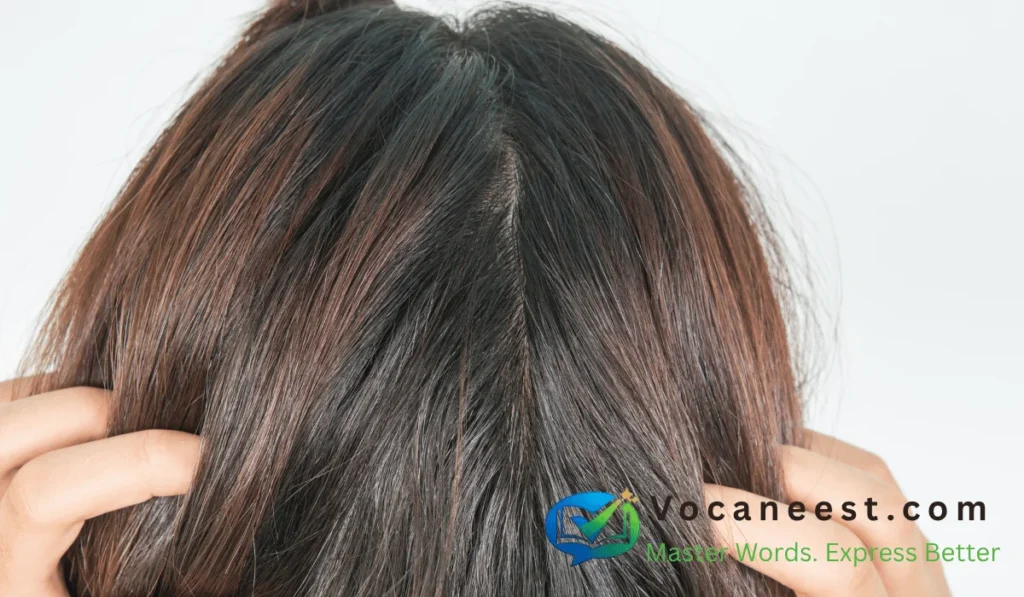
Coiffure (Noun) — US: /kwɑːˈfjʊr/ | UK: /kwɑːˈfjʊər/
- Meaning: An elaborately styled or professionally arranged haircut or hairstyle.
- Tone/Register: Formal / High Fashion
- Example 1: The model displayed an elegant coiffure at the fashion gala.
- Example 2: Thus, the celebrity stylist spent hours perfecting her wedding coiffure.
Fur (Noun) — US: /fɝː/ | UK: /fɜː/
- Meaning: The dense, soft hair coat covering the skin of animals.
- Tone/Register: General / Biological
- Example 1: The cat groomed its soft fur in the warm afternoon sunlight.
- Example 2: In addition, winter coats protected animals with thick fur layers.
Fleece (Noun) — US: /fliːs/ | UK: /fliːs/
- Meaning: The thick woolly coat covering sheep or similar animals.
- Tone/Register: Agricultural / Descriptive
- Example 1: Farmers gathered early in the morning to shear the heavy sheep fleece.
- Example 2: Consequently, clean white fleece was processed into warm winter yarn.
Pelage (Noun) — US: /ˈpel.ɪdʒ/ | UK: /ˈpel.ɪdʒ/
- Meaning: The total fur, wool, or hair covering of a mammal.
- Tone/Register: Academic / Scientific
- Example 1: Zoologists studied the changing color of the fox’s winter pelage.
- Example 2: Therefore, thick pelage helped Arctic mammals survive freezing temperatures.
Coat (Noun) — US: /koʊt/ | UK: /kəʊt/
- Meaning: The natural exterior covering of hair, fur, or wool on an animal.
- Tone/Register: Common / Veterinary
- Example 1: Daily brushing kept the retriever’s golden coat healthy and shiny.
- Example 2: Meanwhile, the vet checked the horse for a healthy winter coat.
Ringlets (Noun) — US: /ˈrɪŋ.ləts/ | UK: /ˈrɪŋ.ləts/
- Meaning: Hair styled or naturally formed into tight, corkscrew-shaped curls.
- Tone/Register: Descriptive / Visual
- Example 1: Natural ringlets bounced around her face as she danced.
- Example 2: Thus, heat styling tools created perfect spiral ringlets for the event.
Curls (Noun) — US: /kɝːlz/ | UK: /kɜːlz/
- Meaning: Strands of hair that form curved, spiral, or wavy shapes naturally or manually.
- Tone/Register: Everyday / Casual
- Example 1: Humidity always brought out her natural curls during summer months.
- Example 2: Furthermore, she applied anti-frizz cream to define her soft curls.
Waves (Noun) — US: /weɪvz/ | UK: /weɪvz/
- Meaning: Hair featuring smooth, gentle curves that flow continuously without tight loops.
- Tone/Register: Common / Beauty
- Example 1: Beachy waves remained a popular summer hairstyle among clients.
- Example 2: Therefore, the stylist used a large curling iron to add gentle waves.
Braids (Noun) — US: /breɪdz/ | UK: /breɪdz/
- Meaning: Patterns formed by interweaving three or more strands of hair together.
- Tone/Register: Practical / Styling
- Example 1: She styled her long hair into neat side braids before running.
- Example 2: Consequently, protective braids kept her hair safe from winter breakage.
Plait (Noun) — US: /plæt/ | UK: /plæt/
- Meaning: A single braid formed by interweaving hair strands smoothly.
- Tone/Register: British / Traditional
- Example 1: The student tied her long hair into a tight back plait for school.
- Example 2: In addition, traditional plaits were decorated with colorful ribbon ties.
Crop (Noun) — US: /krɑːp/ | UK: /krɒp/
- Meaning: A very short, closely trimmed human haircut.
- Tone/Register: Modern / Casual
- Example 1: She traded her long hairstyle for a chic pixie crop.
- Example 2: As a result, the low-maintenance crop saved him time every morning.
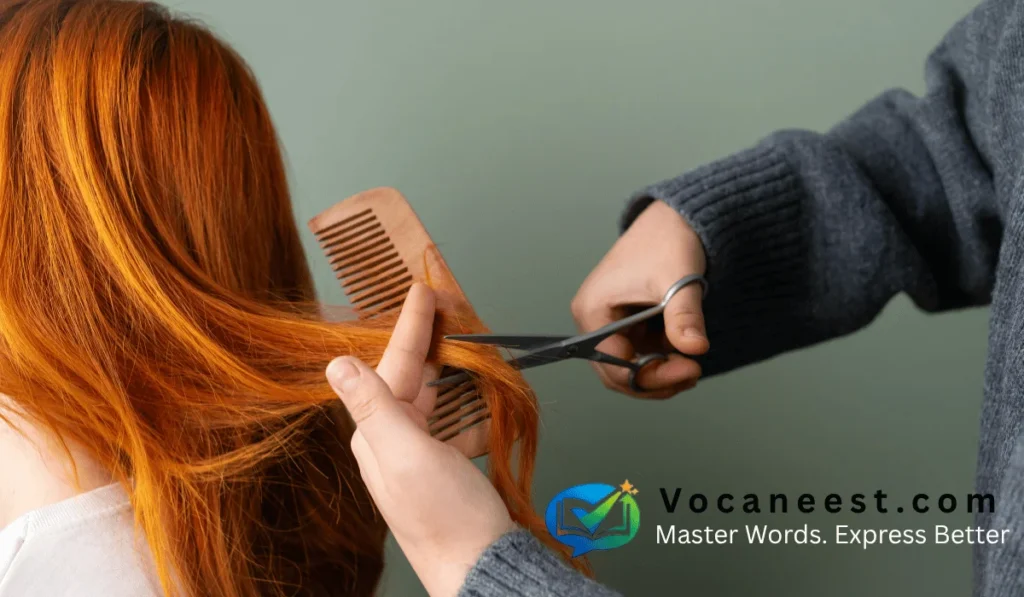
Extension (Noun) — US: /ɪkˈsten.ʃən/ | UK: /ɪkˈsten.ʃən/
- Meaning: Artificial or natural hair pieces added to existing hair to add length or volume.
- Tone/Register: Beauty / Commercial
- Example 1: The salon technician clipped in seamless hair extensions for the bride.
- Example 2: Thus, premium hair extensions matched her natural color perfectly.
Toupee (Noun) — US: /tuːˈpeɪ/ | UK: /tuːˈpeɪ/
- Meaning: A small artificial hairpiece worn to cover partial baldness.
- Tone/Register: Practical / Personal
- Example 1: He adjusted his custom toupee before stepping in front of the camera.
- Example 2: Meanwhile, modern toupees blend invisibly with natural scalp lines.
Wig (Noun) — US: /wɪɡ/ | UK: /wɪɡ/
- Meaning: A full artificial head covering made of synthetic or real human hair.
- Tone/Register: General / Theater
- Example 1: The actor wore a powdered colonial wig during the historical play.
- Example 2: Consequently, synthetic wigs allow people to change hairstyles instantly.
Crown (Noun) — US: /kraʊn/ | UK: /kraʊn/
- Meaning: A figurative reference to the hair growing on the top of the human head.
- Tone/Register: Poetic / Metaphorical
- Example 1: She considered her thick natural hair her glory and crowning joy.
- Example 2: Therefore, massage treatments stimulate blood flow around the scalp crown.
Wisps (Noun) — US: /wɪsps/ | UK: /wɪsps/
- Meaning: Small, thin, delicate, or stray bunches of hair floating freely.
- Tone/Register: Gentle / Descriptive
- Example 1: Soft wisps of hair escaped from her messy top knot.
- Example 2: In addition, the light morning breeze stirred tiny wisps around her forehead.
Shock (Noun) — US: /ʃɑːk/ | UK: /ʃɒk/
- Meaning: An unmanageable, thick, or surprisingly dense mass of hair.
- Tone/Register: Expressive / Literary
- Example 1: He stood out instantly due to his bright shock of white hair.
- Example 2: Thus, a wild shock of dark hair covered his forehead in youth photos.
Tufts (Noun) — US: /tʌfts/ | UK: /tʌfts/
- Meaning: Small clusters or bunches of short hair, fur, or grass growing close together.
- Tone/Register: Descriptive / Animal
- Example 1: The owl displayed small pointed tufts of feathers above its eyes.
- Example 2: Consequently, tufts of dog hair collected under the sofa cushions.
Down (Noun) — US: /daʊn/ | UK: /daʊn/
- Meaning: Extremely fine, soft, short hair or feathers covering young birds or human skin.
- Tone/Register: Soft / Biological
- Example 1: Soft peach-colored down gently covered the newborn baby’s cheeks.
- Example 2: Therefore, tiny ducklings stayed warm beneath their thick yellow down.
Bristles (Noun) — US: /ˈbrɪs.əlズ/ | UK: /ˈbrɪs.əlz/
- Meaning: Short, stiff, coarse hair found on animals or facial stubble on humans.
- Tone/Register: Rough / Physical
- Example 1: Stiff bristles on the wild boar protected its skin through sharp brushwood.
- Example 2: As a result, two days without shaving produced rough facial bristles on his jaw.
Filaments (Noun) — US: /ˈfɪl.ə.mənts/ | UK: /ˈfɪl.ə.mənts/
- Meaning: Slender, thread-like structures or individual fibers of hair.
- Tone/Register: Technical / Scientific
- Example 1: Microscope examination revealed fine keratin filaments along the follicle.
- Example 2: Consequently, specialized shampoo strengthened delicate hair filaments.
Wool (Noun) — US: /wʊl/ | UK: /wʊl/
- Meaning: The dense, soft, wavy hair coat of sheep and related animals.
- Tone/Register: Agricultural / Descriptive
- Example 1: Farmers sheared thick white wool from the sheep before summer.
- Example 2: Furthermore, natural wool provided excellent insulation for winter clothing.
Stubble (Noun) — US: /ˈstʌb.əl/ | UK: /ˈstʌb.əl/
- Meaning: Short, stiff, prickly hair growth appearing on the face or body after shaving.
- Tone/Register: Everyday / Casual
- Example 1: He ran his hand over his rough chin stubble in the morning.
- Example 2: Therefore, two days without shaving created light facial stubble.
Thread (Noun) — US: /θred/ | UK: /θred/
- Meaning: A fine, thin strand or fiber resembling spun yarn.
- Tone/Register: Figurative / Literary
- Example 1: Sunlight highlighted individual golden threads running through her braid.
- Example 2: In addition, the weaver matched fine silk threads to human hair strands.
Fluff (Noun) — US: /flʌf/ | UK: /flʌf/
- Meaning: Light, soft, downy hair or tiny clusters of loose fibers.
- Tone/Register: Casual / Gentle
- Example 1: The kitten was covered in soft, white fluff.
- Example 2: As a result, she brushed loose fluff off her wool sweater.
Tendrils (Noun) — US: /ˈten.drəlz/ | UK: /ˈten.drəlz/
- Meaning: Thin, curling strands or delicate ringlets of hair hanging freely.
- Tone/Register: Poetic / Romantic
- Example 1: Soft tendrils of hair framed her face as she looked down.
- Example 2: Thus, the romantic updos featured loose tendrils along the neck.
Cowlick (Noun) — US: /ˈkaʊ.lɪk/ | UK: /ˈkaʊ.lɪk/
- Meaning: A section of hair that grows in a different direction and stands upright.
- Tone/Register: Informal / Domestic
- Example 1: His persistent cowlick refused to lie flat despite using styling gel.
- Example 2: Meanwhile, the barber flattened the boy’s stubborn front cowlick.
Topknot (Noun) — US: /ˈtɑːp.nɑːt/ | UK: /ˈtɒp.nɒt/
- Meaning: A bun, tuft, or crest of hair gathered and tied together on top of the head.
- Tone/Register: Fashion / Casual
- Example 1: She twisted her long locks into a messy topknot for yoga class.
- Example 2: Consequently, samurai warriors wore traditional topknots in historic Japan.
Pompadour (Noun) — US: /ˈpɑːm.pə.dɔːr/ | UK: /ˈpɒm.pə.dɔː/
- Meaning: A hairstyle where hair is combed upward and swept back high over the forehead.
- Tone/Register: Stylistic / Vintage
- Example 1: The rock singer maintained a sharp, voluminous pompadour on stage.
- Example 2: Therefore, strong-hold pomade held his slick pompadour in place.
Bangs (Noun) — US: /bæŋz/ | UK: /bæŋz/
- Meaning: Hair cut short to fall straight or angled across the forehead.
- Tone/Register: Everyday / Common
- Example 1: She decided to trim her front bangs before school started.
- Example 2: Furthermore, side-swept bangs complemented her face shape nicely.
Fringe (Noun) — US: /frɪndʒ/ | UK: /frɪndʒ/
- Meaning: The British English term for hair cut to hang across the forehead.
- Tone/Register: British / General
- Example 1: The stylist trimmed her front fringe just above her eyebrows.
- Example 2: As a result, a full fringe became her signature look for years.
Extension-braid (Noun) — US: /ɪkˈsten.ʃən breɪd/ | UK: /ɪkˈsten.ʃən breɪd/
- Meaning: Synthetic or natural hair woven into natural strands for extended length.
- Tone/Register: Styling / Modern
- Example 1: The salon technician installed neat extension braids for her holiday trip.
- Example 2: Thus, protective extension braids kept her natural hair safe from breakage.
Dreadlocks (Noun) — US: /ˈdred.lɑːks/ | UK: /ˈdred.lɒks/
- Meaning: Long, matted ropes of hair formed by braiding or twisting natural strands.
- Tone/Register: Cultural / General
- Example 1: The musician wore long, well-maintained dreadlocks down his back.
- Example 2: Consequently, natural oils kept his dreadlocks hydrated and strong.
Buzzcut (Noun) — US: /ˈbʌz.kʌt/ | UK: /ˈbʌz.kʌt/
- Meaning: A very short haircut achieved using electric clippers close to the scalp.
- Tone/Register: Casual / Practical
- Example 1: He opted for a clean buzzcut to stay cool during summer training.
- Example 2: Therefore, the low-maintenance buzzcut required no daily combing.
Updo (Noun) — US: /ˈʌp.duː/ | UK: /ˈʌp.duː/
- Meaning: A formal hairstyle where hair is arranged and pinned up off the shoulders.
- Tone/Register: Elegant / Event
- Example 1: The bride selected a classic braided updo for her wedding ceremony.
- Example 2: Meanwhile, hairpins secured every strand of her sleek updo.
Afro (Noun) — US: /ˈæf.roʊ/ | UK: /ˈæf.rəʊ/
- Meaning: A thick, rounded hairstyle formed by naturally curly or kinky hair growing outward.
- Tone/Register: Cultural / Descriptive
- Example 1: He proudly wore a full, well-picked afro during the 1970s theme night.
- Example 2: In addition, moisturizing creams defined the texture of her afro.
Chignon (Noun) — US: /ˈʃiːn.jɑːn/ | UK: /ˈʃiːn.jɒ̃/
- Meaning: A sophisticated knot or bun of hair worn at the nape of the neck.
- Tone/Register: Formal / High Fashion
- Example 1: The ballerina secured her dark hair into a tight low chignon.
- Example 2: Thus, a sleek chignon added timeless elegance to her evening outfit.
Sideburns (Noun) — US: /ˈsaɪd.bɝːnz/ | UK: /ˈsaɪd.bɜːnz/
- Meaning: Facial hair grown down the sides of the face in front of the ears.
- Tone/Register: Grooming / Specific
- Example 1: The barber trimmed his sideburns evenly to align with his jawline.
- Example 2: As a result, long sideburns gave his style a retro vintage appearance.
Fiber (Noun) — US: /ˈfaɪ.bɚ/ | UK: /ˈfaɪ.bər/
- Meaning: A single strand or microscopic thread of biological material such as hair.
- Tone/Register: Forensic / Scientific
- Example 1: Forensic analysts tested a single hair fiber found at the crime scene.
- Example 2: Therefore, synthetic fibers matched natural hair textures seamlessly.
Crest (Noun) — US: /krest/ | UK: /krest/
- Meaning: A prominent tuft or plume of hair, feathers, or fur on top of an animal’s head.
- Tone/Register: Biological / Descriptive
- Example 1: The cockatoo raised its yellow crest of feathers when startled.
- Example 2: Consequently, a dark crest of fur ran along the wild boar’s spine.
Synonyms by Tone
Selecting the ideal synonym for hair depends on whether you are writing creative literature, beauty guides, or scientific reports.
Positive / Luxurious Alternatives
- Locks (Flowing, full, healthy head of hair)
- Tresses (Elegant, long, beautiful strands)
- Coiffure (Stylish, professionally set haircut)
Neutral / Everyday
- Strands (Precise term for individual hairs)
- Crop (Clean, short haircut option)
- Coat (General term for animal hair)
Casual / Playful
- Mop (Untidy or very thick hair)
- Mane (Wild, big, or voluminous hair)
- Ringlets (Bouncy, spiral curls)
Mini Comparison: Hair vs Close Alternatives
| Feature | Hair | Locks | Tresses |
| Primary Focus | The general physical growth on the head or body. | Full, flowing, or healthy head hair. | Long, elegant, highly attractive head hair. |
| Tone | Neutral, direct, universal. | Descriptive, poetic, visual. | Formal, literary, romantic. |
| Best Context | Everyday talk, salons, biology, general descriptions. | Novels, fashion articles, beauty blogs. | Romantic stories, historical fiction, poetry. |
| User Impact | Clear and simple, but can sound repetitive. | Adds vivid visual depth and texture. | Creates an aura of elegance and beauty. |
Context-Based Usage
Daily Conversation
In casual talk, people use direct terms like hair, mop, crop, or curls. Phrases like “I need to trim this mop” sound relaxed and friendly.
Writing & Blogging
Fashion and lifestyle writers prefer visual terms like locks, waves, wisps, or braids. These words paint clear pictures for readers.
Professional & Academic Tone
In veterinary, medical, or forensic writing, experts use precise terms like pelage, coat, bristles, or fur. These words maintain scientific accuracy.
Creative & Informal Use
Storytellers reach for evocative terms like tresses, mane, shock, or down. These choices build mood and character presence effectively.
Common Mistakes & Native Usage
Overusing “Hair” in Fashion Writing
A common mistake in beauty writing is repeating hair in every sentence. Switching to locks or strands keeps articles engaging.
Confusing “Fur” with “Hair”
While both are hair fibers, native speakers reserve fur for dense animal coats. Calling human head growth fur sounds unnatural unless used jokingly.
Register Notes
- Literary / High Fashion: Tresses, Coiffure, Locks.
- Informal / Domestic: Mop, Crop, Wisps.
Real-Life Mini Scenarios
Workplace
During the professional photo shoot, the makeup artist smoothed down stray strands before the lighting was set.
Social Situations
Before leaving for the party, she tied her long locks into an elegant ponytail.
Media & Pop Culture
The red carpet host complimented the actress on her glamorous vintage coiffure.
Writing or Storytelling
In the fantasy novel, the hero had a wild shock of dark hair that fell across his eyes.
Conclusion
Mastering a wide selection of synonyms for hair helps you describe beauty, style, characters, and animals with precision and flair.
Furthermore, choosing dynamic alternatives like locks, tresses, mane, or strands keeps your writing fresh and visually engaging for readers.
By incorporating these varied words into your daily writing, you transform simple descriptions into clear, expressive English.
We encourage you to practice these synonyms in your next essay, blog, or conversation. Challenge yourself to try a new word today!
Interactive Practice Quiz
1. Which synonym for hair carries the most elegant and literary tone?
A) Mop
B) Tresses
C) Bristles
D) Crop
2. What is the best word for short, coarse facial hair or animal hair?
A) Bristles
B) Locks
C) Down
D) Coiffure
3. Which term best describes a thick, unmanageable mass of hair?
A) Pelage
B) Mop
C) Down
D) Plait
4. What scientific term describes the total fur covering on a mammal?
A) Tresses
B) Pelage
C) Toupee
D) Ringlets
5. Which word refers to artificial hair added to increase length or volume?
A) Extension
B) Fleece
C) Shock
D) Wisps
6. What is a British English term for a braided hairstyle?
A) Plait
B) Crop
C) Mane
D) Pelage
7. Which word describes soft, tiny hair found on baby skin or young birds?
A) Down
B) Bristles
C) Coiffure
D) Mop
8. What term describes a very short, closely cut hairstyle?
A) Tresses
B) Crop
C) Fleece
D) Mane
9. Which word is commonly used to describe spiral-shaped curls?
A) Ringlets
B) Wisps
C) Pelage
D) Down
10. Why is “locks” often used in beauty blogging instead of “hair”?
A) Locks is shorter.
B) Locks sounds more visual, healthy, and descriptive.
C) Hair is grammatically wrong.
D) There is no difference.
Application Task: Write one original sentence describing someone’s hairstyle using either locks or coiffure.
Answer Key: 1: B | 2: A | 3: B | 4: B | 5: A | 6: A | 7: A | 8: B | 9: A | 10: B
Frequently Asked Questions
1. What is the most popular synonym for hair in fashion writing?
The most popular choices in fashion writing are locks and tresses because they evoke texture, shine, and style naturally.
2. What is the difference between “locks” and “tresses”?
Locks refer generally to a full head of hair or defined strands, whereas tresses specifically imply long, beautiful, or luxurious hair.
3. Can human hair be called “fur”?
Calling human hair fur is non-standard. It is only used humorously or figuratively to describe extremely thick or uncombed body hair.
4. What is a good scientific synonym for animal hair?
In biology and veterinary science, terms like pelage, coat, or fur are standard terms for animal hair.
5. Is “coiffure” a formal word?
Yes, coiffure is a formal, French-derived word used in high fashion and styling to refer to an elaborate hairstyle.
6. Why should writers use varied synonyms for hair?
Using varied synonyms prevents repetitive writing, paints vivid mental pictures, and matches the appropriate tone for beauty, fiction, or science.
Aqsa Rani is the founder and lead writer at VocaNeest.com, a trusted platform dedicated to helping people improve their English vocabulary and communication skills. She creates well-researched, accurate, and easy-to-understand content covering synonyms, antonyms, word meanings, idioms, phrases, and everyday vocabulary. Her goal is to make learning English simple, practical, and accessible for students, writers, professionals, and lifelong learners.
At VocaNeest.com, every article is carefully researched, fact-checked, and written with a strong focus on accuracy, clarity, and real-world usage. Content is regularly reviewed and updated to ensure it remains helpful, relevant, and aligned with modern language standards. Through reliable vocabulary guides and practical examples, Aqsa aims to help readers write with confidence, expand their vocabulary, and communicate more effectively.