
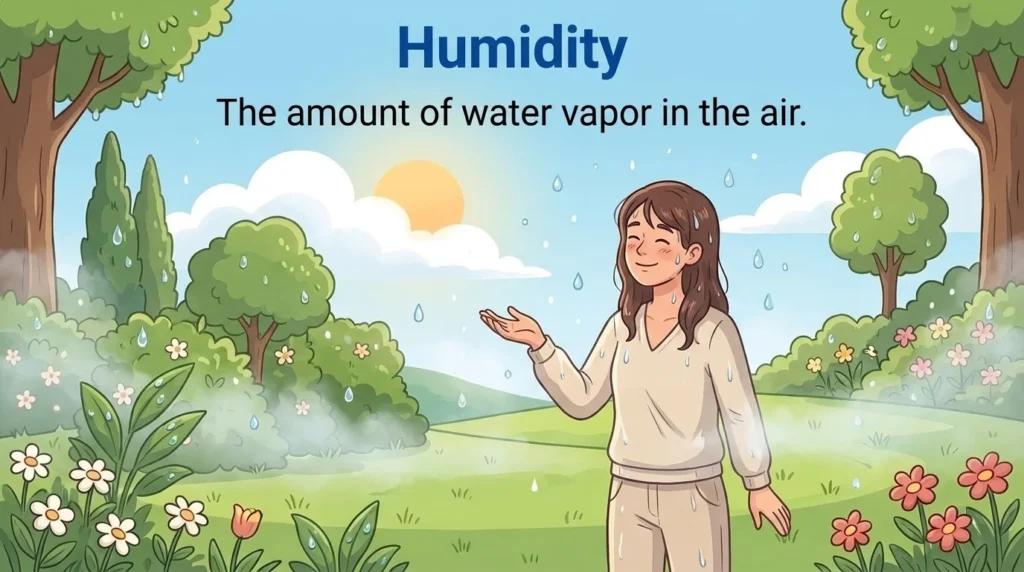
A synonym for humidity helps you describe sticky weather or wet air with much better precision. You feel humidity when thick moisture makes a summer afternoon feel heavy and hot.
Rich synonyms make your writing pop and help you connect with your readers. Writers and speakers often use this word to describe changing weather patterns and physical wetness.
A synonym for humidity gives students, bloggers, and content creators fresh options to elevate their work. Strong vocabulary keeps your daily English conversations colorful, engaging, and clear.
Expanding your word choice allows you to paint a vivid picture of the climate around you. Choosing the right term turns a plain sentence into a memorable, sensory experience.
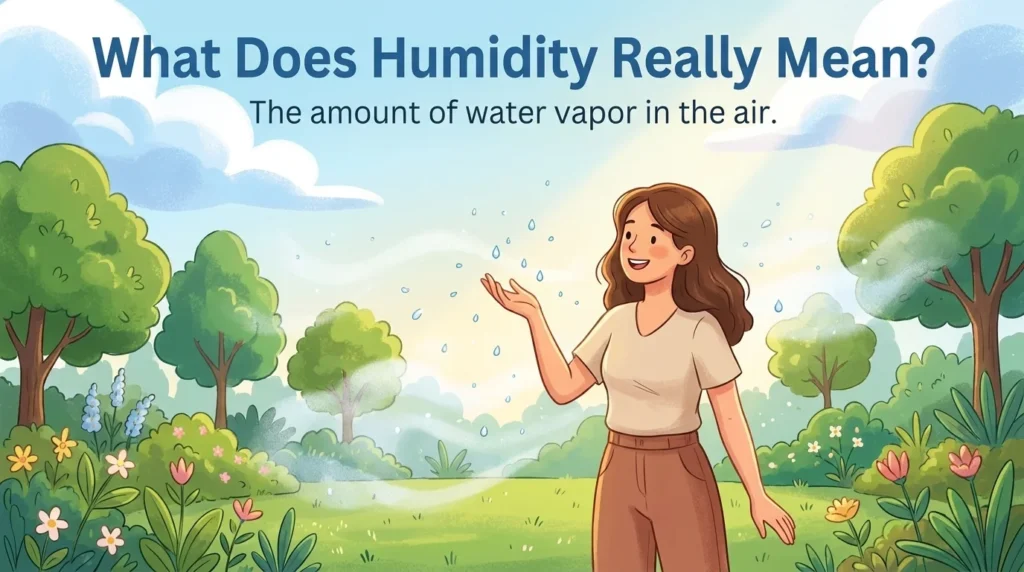
What Does “Humidity” Really Mean?
Meaning: The state or quality of being humid; a moderate or high amount of water vapor in the air.
Emotional Tone: Neutral to slightly uncomfortable or heavy.
Native Understanding: Native speakers use it when talking about sticky, damp weather or general moisture in the atmosphere.
Common Contexts: Weather forecasts, travel writing, science classes, and casual complaints about summer heat. Part of Speech: Noun. Simple definition: Moisture or dampness in the air.
Connotative Meaning
- Positive tone: Mild dampness can feel refreshing for dry skin or tropical plants.
- Negative tone: Oppressive, sweaty, or suffocating mugginess.
- Neutral tone: Scientific measurements of water vapor percentages.
- Connotation: (The emotional or cultural feeling a word carries beyond its literal dictionary definition.)
Etymology
- Origin: Derived from the Latin word humiditas, meaning wetness or moisture, from humidus (moist).
- Old English (450–1100): Native Germanic words like wēt handled basic dampness before Latin roots arrived.
- Middle English (1100–1500): Borrowed via Old French humidité into medical and natural philosophy texts.
- Modern English (1500–Present): Standardized in meteorology and everyday speech to mean atmospheric moisture.
Pronunciation (US & UK – IPA)
- US: /hjuːˈmɪd.ə.t̬i/
- UK: /hjuːˈmɪd.ə.ti/
Syllables
- Syllables: hu-mid-i-ty
- Affixation Pattern: Root (humid) + suffix (-ity)
- Root: humid-
- Prefix: None
- Suffix: -ity
Synonyms List
Dampness (Noun) — US: /ˈdæmp.nəs/ | UK: /ˈdæmp.nəs/
- Meaning: Slightly wet or moist condition in the air or on a surface.
- Tone/Register: Standard / Everyday
- Example 1: She felt the dampness in the old basement.
- Example 2: Morning dampness covered the grass in small beads of dew.
Moisture (Noun) — US: /ˈmɔɪs.tʃər/ | UK: /ˈmɔɪs.tʃə/
- Meaning: Water or other liquid diffused in a small quantity as vapor or condensation.
- Tone/Register: Neutral / Scientific
- Example 1: The soil lost all its moisture during the long drought.
- Example 2: Her skin needed extra moisture in the dry winter air.
Mugginess (Noun) — US: /ˈmʌɡ.i.nəs/ | UK: /ˈmʌɡ.i.nəs/
- Meaning: Unpleasantly warm and humid weather conditions.
- Tone/Register: Informal / Conversational
- Example 1: Everyone complained about the mugginess of the July afternoon.
- Example 2: The mugginess made it hard to breathe outside the café.
Clamminess (Noun) — US: /ˈklæm.i.nəs/ | UK: /ˈklæm.i.nəs/
- Meaning: Unpleasantly damp, sticky, or cold moisture.
- Tone/Register: Descriptive / Physical
- Example 1: He wiped the clamminess from his forehead after the run.
- Example 2: The room had a chill clamminess that felt uncomfortable.
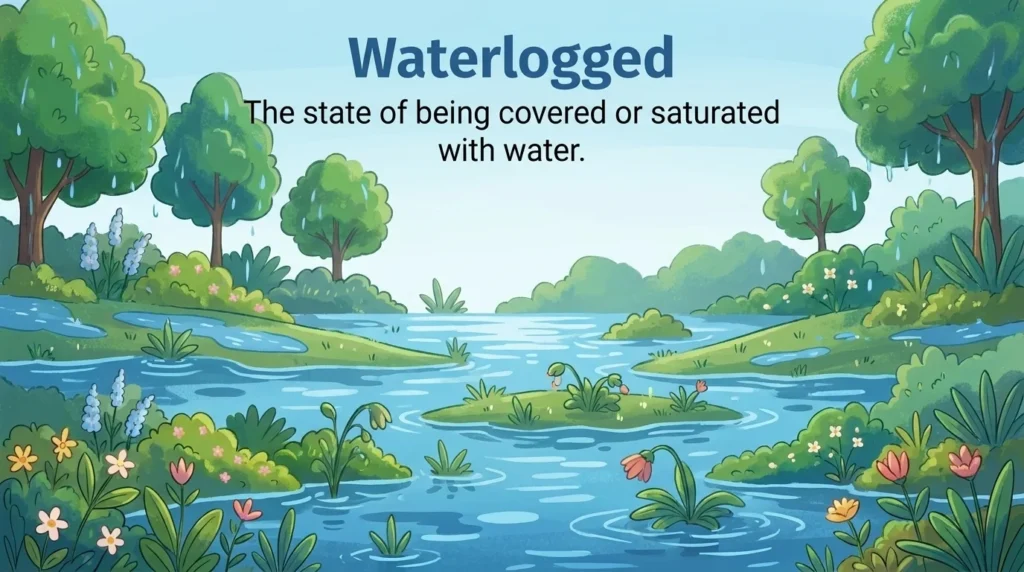
Wetness (Noun) — US: /ˈwɛt.nəs/ | UK: /ˈwɛt.nəs/
- Meaning: The state of being covered or saturated with water or liquid.
- Tone/Register: Simple / Direct
- Example 1: The wetness of the pavement showed a recent rain shower.
- Example 2: She disliked the wetness of the damp towel.
Steaminess (Noun) — US: /ˈstiː.mi.nəs/ | UK: /ˈstiː.mi.nəs/
- Meaning: Filled with steam or thick, hot moisture in the air.
- Tone/Register: Sensory / Vivid
- Example 1: The steaminess of the greenhouse fogged up his glasses.
- Example 2: They walked through the steaminess of the tropical rainforest.
Oppressiveness (Noun) — US: /əˈprɛs.ɪv.nəs/ | UK: /əˈpres.ɪv.nəs/
- Meaning: Heavy, stifling, or suffocating quality of heat and moisture.
- Tone/Register: Formal / Literary
- Example 1: The oppressiveness of the summer air drove people indoors.
- Example 2: He struggled against the oppressiveness of the crowded room.
Stickiness (Noun) — US: /ˈstɪk.i.nəs/ | UK: /ˈstɪk.i.nəs/
- Meaning: The quality of being sticky or humid enough to feel tacky on skin.
- Tone/Register: Casual / Everyday
- Example 1: The stickiness of the afternoon ruined his fresh shirt.
- Example 2: Kids didn’t mind the stickiness while eating sweet ice cream.
Muggy Air (Noun) — US: /ˈmʌɡ.i ɛr/ | UK: /ˈmʌɡ.i eə/
- Meaning: Warm, damp, and heavy atmosphere that feels thick.
- Tone/Register: Descriptive / Common
- Example 1: Thick muggy air settled over the beach by noon.
- Example 2: They tried to cool down in the breeze despite the muggy air.
Damp Air (Noun) — US: /ˈdæmp ɛr/ | UK: /ˈdæmp eə/
- Meaning: Atmosphere containing visible or felt particles of moisture.
- Tone/Register: Standard / Descriptive
- Example 1: Cool damp air drifted off the river at dusk.
- Example 2: His joints ached whenever damp air rolled in.
Vapor (Noun) — US: /ˈveɪ.pər/ | UK: /ˈveɪ.pə/
- Meaning: A substance diffused or suspended in the air, especially moisture.
- Tone/Register: Technical / Scientific
- Example 1: Water vapor rose gently from the hot teacup.
- Example 2: Fog forms when warm water vapor hits cold air.
Condensation (Noun) — US: /ˌkɑːn.dɛnˈseɪ.ʃən/ | UK: /ˌkɒn.denˈseɪ.ʃən/
- Meaning: Water drops that form on cold surfaces from warm, moist air.
- Tone/Register: Scientific / Practical
- Example 1: Drops of condensation lined the cold glass of lemonade.
- Example 2: Morning condensation pooled along the window frame.
Heaviness (Noun) — US: /ˈhɛv.i.nəs/ | UK: /ˈhev.i.nəs/
- Meaning: A dense or oppressive weight in the atmosphere.
- Tone/Register: Literary / Sensory
- Example 1: A sudden heaviness in the air warned of a coming storm.
- Example 2: She felt the heaviness of the tropical climate immediately.
Sultriness (Noun) — US: /ˈsʌl.trɪ.nəs/ | UK: /ˈsʌl.trɪ.nəs/
- Meaning: Hot, sultry, and heavily humid weather.
- Tone/Register: Literary / Evocative
- Example 1: The sultriness of the night kept everyone awake.
- Example 2: Poets often wrote about the sultriness of southern summers.
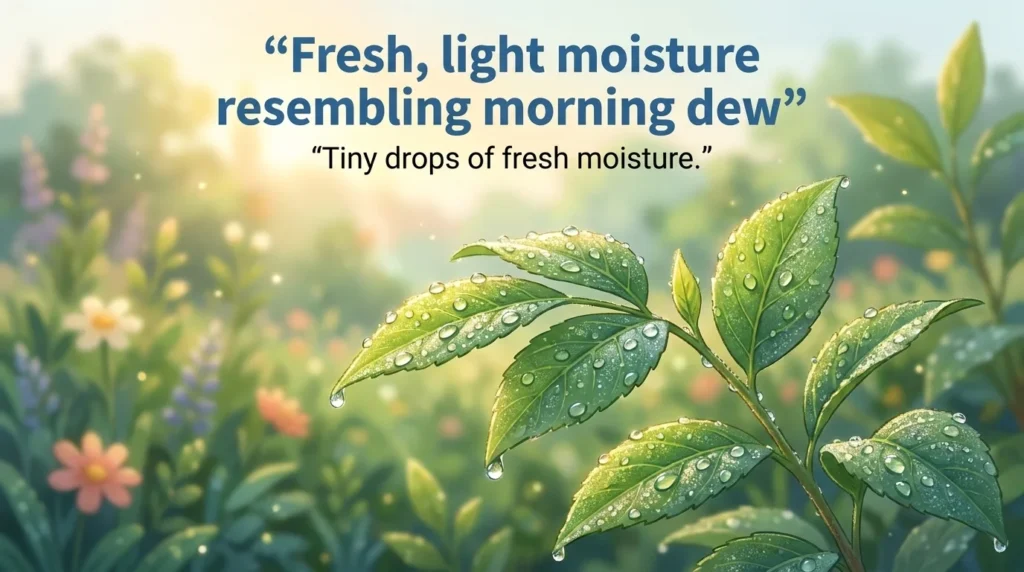
Dewiness (Noun) — US: /ˈduː.i.nəs/ | UK: /ˈdjuː.i.nəs/
- Meaning: Fresh, light moisture resembling morning dew.
- Tone/Register: Soft / Pleasant
- Example 1: She loved the dewiness of the rose petals at dawn.
- Example 2: The cream gave her skin a youthful dewiness.
Saturation (Noun) — US: /ˌsætʃ.əˈreɪ.ʃən/ | UK: /ˌsætʃ.əˈreɪ.ʃən/
- Meaning: The state of holding as much water vapor as possible.
- Tone/Register: Scientific / Formal
- Example 1: Air saturation reached ninety percent before the rain.
- Example 2: High saturation made the fog look thick as milk.
Humid Air (Noun) — US: /ˈhjuː.mɪd ɛr/ | UK: /ˈhjuː.mɪd eə/
- Meaning: Air rich with moisture and water vapor.
- Tone/Register: Direct / Standard
- Example 1: Humid air filled the greenhouse with warmth.
- Example 2: Breathing humid air helped soothe his dry cough.
Muggy Heat (Noun) — US: /ˈmʌɡ.zi hiːt/ | UK: /ˈmʌɡ.zi hiːt/
- Meaning: Sweltering warmth combined with heavy moisture.
- Tone/Register: Regional / Informal
- Example 1: Local farmers hated the muggy heat of late August.
- Example 2: The dog sought shade from the muggy heat.
Moistness (Noun) — US: /ˈmɔɪst.nəs/ | UK: /ˈmɔɪst.nəs/
- Meaning: A pleasant or mild degree of dampness.
- Tone/Register: Culinary / Gentle
- Example 1: The baker praised the moistness of the chocolate cake.
- Example 2: Proper moistness keeps the leather sofa soft.
Transpiration (Noun) — US: /ˌtræn.spəˈreɪ.ʃən/ | UK: /ˌtræn.spəˈreɪ.ʃən/
- Meaning: Moisture released into the air by plants and trees.
- Tone/Register: Botanical / Academic
- Example 1: Forest transpiration adds local humidity to the valley.
- Example 2: Scientists measured tree transpiration during the experiment.
Haze (Noun) — US: /heɪz/ | UK: /heɪz/
- Meaning: Fine suspended moisture or dust making the air less clear.
- Tone/Register: Atmospheric / Visual
- Example 1: A soft morning haze drifted across the distant hills.
- Example 2: Summer heat created a thick haze over the highway.
Swampiness (Noun) — US: /ˈswɑːm.pi.nəs/ | UK: /ˈswɒm.pi.nəs/
- Meaning: Characteristic dampness and muck of a marshy area.
- Tone/Register: Colloquial / Descriptive
- Example 1: The swampiness of the trail slowed their boots.
- Example 2: He disliked the swampiness near the river bend.

Muggy Weather (Noun) — US: /ˈmʌɡ.i ˈwɛð.ər/ | UK: /ˈmʌɡ.i ˈweð.ə/
- Meaning: Oppressively warm and moist meteorological conditions.
- Tone/Register: Everyday / Standard
- Example 1: Muggy weather spoiled their outdoor picnic.
- Example 2: People stayed indoors during the long muggy weather.
Aqueous Vapor (Noun) — US: /ˈeɪ.kwi.əs ˈveɪ.pər/ | UK: /ˈeɪ.kwi.əs ˈveɪ.pə/
- Meaning: Scientific term for water in gas form floating in the air.
- Tone/Register: Technical / Scientific
- Example 1: Aqueous vapor accumulated near the boiler room.
- Example 2: The lab test tracked aqueous vapor levels closely.
Sticky Weather (Noun) — US: /ˈstɪk.i ˈwɛð.ər/ | UK: /ˈstɪk.i ˈweð.ə/
- Meaning: Informal phrase for air so humid that clothes cling to skin.
- Tone/Register: Informal / Conversational
- Example 1: Sticky weather made everyone crave cold drinks.
- Example 2: They hated sticky weather after a long walk.
Clammy Air (Noun) — US: /ˈklæm.i ɛr/ | UK: /ˈklæm.i eə/
- Meaning: Cold, damp, and uncomfortable atmosphere.
- Tone/Register: Atmospheric / Moody
- Example 1: Clammy air greeted them inside the stone cellar.
- Example 2: His coat felt heavy from the clammy air.
Dampness of Air (Noun) — US: /ˈdæmp.nəs ʌv ɛr/ | UK: /ˈdæmp.nəs ɒv eə/
- Meaning: Literal measure of moisture suspended in the atmosphere.
- Tone/Register: Formal / Explanatory
- Example 1: The dampness of the air rusted the old iron gate.
- Example 2: Sensors tracked the dampness of the air inside the archive.
Moisture Content (Noun) — US: /ˈmɔɪs.tʃər ˌkɑːn.tent/ | UK: /ˈmɔɪs.tʃə ˌkɒn.tent/
- Meaning: The exact proportion of water present in air or soil.
- Tone/Register: Technical / Business
- Example 1: High moisture content ruined the stored grain.
- Example 2: The report listed the daily moisture content clearly.
Wet Air Mass (Noun) — US: /wɛt ɛr mæs/ | UK: /wet eə mæs/
- Meaning: A large body of maritime air carrying high moisture.
- Tone/Register: Meteorological / Scientific
- Example 1: A wet air mass rolled in from the southern ocean.
- Example 2: Forecasters warned of heavy rain from the wet air mass.
Tropical Feel (Noun) — US: /ˈtrɑː.pɪ.kəl fiːl/ | UK: /ˈtrɒp.ɪ.kəl fiːl/
- Meaning: The warm, thick, moisture-rich sensation of a jungle climate.
- Tone/Register: Descriptive / Travel
- Example 1: The greenhouse gave off a sudden tropical feel.
- Example 2: Evening walks carried a tropical feel near the coast.
Steamy Atmosphere (Noun) — US: /ˈstiː.mi ˈæt.mə.sfɪr/ | UK: /ˈstiː.mi ˈæt.mə.sfɪə/
- Meaning: Warm environment saturated with invisible or visible steam.
- Tone/Register: Vivid / Literary
- Example 1: They stepped into the steamy atmosphere of the spa.
- Example 2: Plants thrived in the steamy atmosphere.
Dankness (Noun) — US: /ˈdæŋk.nəs/ | UK: /ˈdæŋk.nəs/
- Meaning: Unpleasantly damp, cold, and often dark air.
- Tone/Register: Gothic / Literary
- Example 1: The dankness of the cave chilled their bones.
- Example 2: Mold grew well in the dankness of the cellar.
Mistiness (Noun) — US: /ˈmɪs.ti.nəs/ | UK: /ˈmɪs.ti.nəs/
- Meaning: The quality of being filled with fine, light water droplets suspended in the air.
- Tone/Register: Atmospheric / Gentle
- Example 1: A soft mistiness rolled across the valley at dawn.
- Example 2: She wiped the mistiness from her camera lens.
Dewy Air (Noun) — US: /ˈduː.i ɛr/ | UK: /ˈdjuː.i eə/
- Meaning: Cool, fresh air carrying light moisture that settles into dew.
- Tone/Register: Poetic / Refreshing
- Example 1: They enjoyed the crisp, dewy air on their morning jog.
- Example 2: Dewy air clung to the grass long after sunrise.
Humidness (Noun) — US: /ˈhjuː.mɪd.nəs/ | UK: /ˈhjuː.mɪd.nəs/
- Meaning: The direct state or condition of containing a high level of moisture.
- Tone/Register: Standard / Direct
- Example 1: The humidness of the greenhouse helped the ferns grow fast.
- Example 2: He checked the gauge to measure the room’s humidity.
Foggy Atmosphere (Noun) — US: /ˈfɔː.ɡi ˈæt.mə.sfɪr/ | UK: /ˈfɒɡ.i ˈæt.mə.sfɪə/
- Meaning: An environment thick with low-lying, condensed water vapor.
- Tone/Register: Descriptive / Visual
- Example 1: Driving home required patience through the foggy atmosphere.
- Example 2: Streetlights glowed softly in the foggy atmosphere.
Muggy Clime (Noun) — US: /ˈmʌɡ.i klaɪm/ | UK: /ˈmʌɡ.i klaɪm/
- Meaning: A regional climate characterized by persistently warm and humid conditions.
- Tone/Register: Literary / Regional
- Example 1: They struggled to adapt to the muggy clime of the delta.
- Example 2: Local wildlife thrived in that notoriously muggy clime.
Soddenness (Noun) — US: /ˈsɒd.ən.nəs/ | UK: /ˈsɒd.ən.nəs/
- Meaning: The state of being thoroughly soaked or heavy with water.
- Tone/Register: Heavy / Descriptive
- Example 1: The soddenness of the field forced the referee to cancel the match.
- Example 2: His boots grew heavy from the soddenness of the trail.
Relative Humidity (Noun) — US: /ˈrɛl.ə.t̬ɪv hjuːˈmɪd.ə.t̬i/ | UK: /ˈrel.ə.tɪv hjuːˈmɪd.ə.ti/
- Meaning: The amount of water vapor present in air expressed as a percentage of the amount needed for saturation at the same temperature.
- Tone/Register: Scientific / Meteorological
- Example 1: Relative humidity spiked to ninety-five percent before the storm.
- Example 2: The weather app displayed the current relative humidity clearly.
Muggy Spell (Noun) — US: /ˈmʌɡ.i spɛl/ | UK: /ˈmʌɡ.i spel/
- Meaning: A temporary period of uncomfortably warm and damp weather.
- Tone/Register: Conversational / Everyday
- Example 1: Everyone tried to stay cool during the sudden muggy spell.
- Example 2: This muggy spell has lasted way longer than usual.
Moisture-laden Air (Noun) — US: /ˈmɔɪs.tʃərˌleɪ.dən ɛr/ | UK: /ˈmɔɪs.tʃəˌleɪ.dən eə/
- Meaning: Heavy air carrying an unusually high concentration of water particles.
- Tone/Register: Technical / Descriptive
- Example 1: Moisture-laden air swept inland from the warm gulf waters.
- Example 2: The old wooden door swelled up from moisture-laden air.
Steaminess of Air (Noun) — US: /ˈstiː.mi.nəs ʌv ɛr/ | UK: /ˈstiː.mi.nəs ɒv eə/
- Meaning: The palpable sense of heat and dense vapor lingering in the atmosphere.
- Tone/Register: Sensory / Expressive
- Example 1: They could practically taste the steaminess of the air near the hot springs.
- Example 2: The steaminess of the air made the jungle feel like a sauna.
Synonyms for “Humidity” by Tone
Positive tone:
Dewiness, moistness (when fresh or gentle).
Neutral tone:
Moisture, dampness, vapor, condensation, saturation, moisture content.
Negative tone:
Mugginess, clamminess, oppressiveness, stickiness, swampiness, dankness.
Playful/informal tone:
Sticky weather, muggy heat.
Tone matters because your word choice signals your exact comfort level. Calling the air “dewiness” sounds poetic and light. Calling the air “mugginess” or “oppressiveness” shows you feel hot and sticky.
Mini Comparison: Humidity vs. Mugginess vs. Dampness
- Humidity: Focuses on the scientific or general measure of water vapor in the air. Use it for weather reports or neutral descriptions.
- Mugginess: Focuses on hot, heavy, and uncomfortable moisture that makes you sweat. Use it when complaining about a sticky summer day.
- Dampness: Focuses on a light or chilly wetness often found in basements, rain, or morning fog. Use it when things feel chilly and wet.
Context-Based Usage
In daily conversation, native speakers say “It’s so muggy outside” or “There’s a lot of moisture today.” Simple words fit casual coffee chats best.
When writing blog posts or travel guides, use “sultriness” or “steamy atmosphere” to paint a vivid picture.
In academic or weather reports, choose “saturation,” “water vapor,” or “moisture content” to keep the tone scientific and exact.
Creative writers love “dankness,” “oppressiveness,” or “clammy air” to build mood in a scene.
Common Mistakes & Native Usage
- Mistake 1: Using “humidity” to mean liquid rain falling from the sky. (Humidity is invisible vapor in the air, not falling rain.)
- Mistake 2: Confusing “humid” (adjective) with “humidity” (noun).
- Overuse warning: Repeating “humidity” in every paragraph makes your writing dry. Mix in “mugginess” or “moisture.”
In spoken English, people talk about sticky clothes. In written English, precise nouns make your description sharp.
Real-Life Mini Scenarios
- Workplace: The office AC failed, and staff complained about the rising mugginess in room four.
- Social situations: She wiped sweat from her neck during the sticky weather at the outdoor wedding.
- Media / pop culture: The weather anchor warned viewers about high humidity levels all week.
- Writing or storytelling: Fog clung to the graveyard, thick with the cold dankness of the river.
Conclusion
Expanding your knowledge of a synonym for humidity gives your writing and speaking a much richer, more authentic touch. Subtle upgrades in your everyday vocabulary turn ordinary paragraphs into memorable, vivid moments that instantly capture your reader’s attention.
Try weaving one of these descriptive terms into your next essay, message, or daily chat today to see how quickly your communication style transforms.
Which word will you test out first when you describe the weather next? Take a moment to write a quick sentence in your notes or share your favorite pick with a friend right now. Building a stronger lexicon is a fun journey that opens up countless ways to express yourself more clearly and creatively every single day.
Interactive Practice Quiz
Which word best describes unpleasantly warm, heavy, and sticky weather?
- A) Mugginess
- B) Dewiness
- C) Vapor
- D) Moisture
What term fits the scientific measurement of water in the air?
- A) Moisture content
- B) Swampiness
- C) Dankness
- D) Clamminess
Which synonym is best for cool, unpleasant wetness in a basement?
- A) Dankness
- B) Sultriness
- C) Steaminess
- D) Tropical feel
How would a meteorologist describe air holding its maximum water vapor?
- A) Saturation
- B) Stickiness
- C) Haze
- D) Mildness
Which word describes soft, gentle moisture like morning dew?
- A) Dewiness
- B) Oppressiveness
- C) Mugginess
- D) Sweatiness
What term fits tiny water drops forming on a cold soda can?
- A) Condensation
- B) Steam
- C) Smoke
- D) Flame
Which option describes warm air rising off plants in a jungle?
- A) Transpiration
- B) Freezing
- C) Frost
- D) Aridity
What word works best for a heavy, suffocating feeling of heat and wetness?
- A) Oppressiveness
- B) Breeze
- C) Chill
- D) Crispness
Which term refers to fine mist or suspended moisture blurring a distant view?
- A) Haze
- B) Glass
- C) Mirror
- D) Stone
What word describes sticky skin caused by damp, warm air?
- A) Stickiness
- B) Dryness
- C) Smoothness
- D) Chill
Task: Write one short sentence using the word mugginess in your notebook or reply below.
Answer Key: 1-A | 2-A | 3-A | 4-A | 5-A | 6-A | 7-A | 8-A | 9-A | 10-A
Frequently Asked Questions
What is the difference between humidity and dampness?
Humidity refers specifically to invisible water vapor suspended in the air. Dampness can refer to wetness on a physical surface, fabric, or wall as well as the air.
Can humidity be a good thing?
Yes, moderate moisture or dewiness helps keep skin hydrated, supports indoor plants, and prevents wooden furniture from cracking during dry winters.
What is another word for muggy weather?
Common alternatives include sticky weather, sultriness, and oppressive heat.
Is humidity a noun or an adjective?
Humidity is a noun. Its adjective form is humid.
Why do writers use synonyms for humidity?
Using varied terms like mugginess, dankness, or vapor helps avoid repetition and creates a stronger sensory mood for readers.

Aqsa Rani is the founder and lead writer at VocaNeest.com, a trusted platform dedicated to helping people improve their English vocabulary and communication skills. She creates well-researched, accurate, and easy-to-understand content covering synonyms, antonyms, word meanings, idioms, phrases, and everyday vocabulary. Her goal is to make learning English simple, practical, and accessible for students, writers, professionals, and lifelong learners.
At VocaNeest.com, every article is carefully researched, fact-checked, and written with a strong focus on accuracy, clarity, and real-world usage. Content is regularly reviewed and updated to ensure it remains helpful, relevant, and aligned with modern language standards. Through reliable vocabulary guides and practical examples, Aqsa aims to help readers write with confidence, expand their vocabulary, and communicate more effectively.