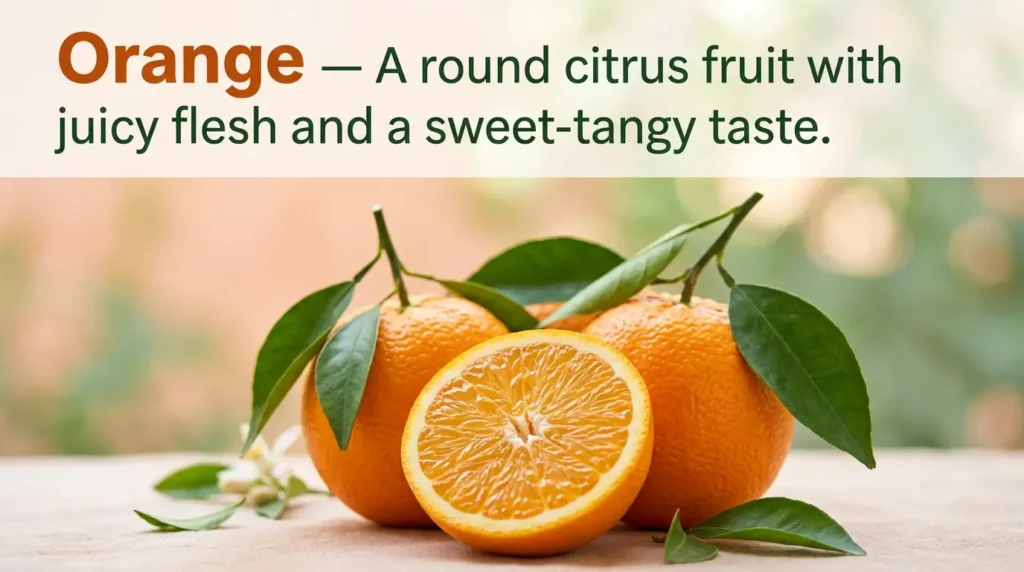
A synonym for orange varies depending on whether you mean the vibrant color between red and yellow or the sweet citrus fruit. For the warm hue, words like amber, peach, coral, tangerine, and pumpkin serve as precise alternatives. When referring to the fruit itself, terms like citrus, mandarin, clementine, or sweet orange fit perfectly into descriptive writing and daily communication.
A synonym for orange can instantly transform flat visual descriptions into vivid, image-rich sentences across your writing projects. Imagine describing a sunset as merely orange versus calling it a glowing expanse of burnt amber and radiant copper.
Using a precise synonym for orange helps students, bloggers, and content creators express specific shades without relying on repetitive color vocabulary. Mastering these color and fruit alternatives makes your spoken English far more engaging and natural.
What Does “Synonym for Orange” Really Mean?
Understanding a synonym for orange starts with identifying the core concept behind the target word. In the English language, “orange” functions primarily as a noun and an adjective. As a noun, it names a round, juicy citrus fruit or a primary secondary color on the visible light spectrum. As an adjective, it describes objects that carry this warm, glowing hue, situated neatly between red and yellow.
Native speakers view the word as warm, energetic, creative, and highly visual. Because “orange” is famous in English folklore for having no perfect natural rhyming partner, writers frequently turn to semantic variants to create lyrical cadence and artistic contrast in poetry, descriptive prose, and branding.
- Part of Speech: Noun / Adjective
- Simple Definition: A bright, warm color named after the round citrus fruit that sits between red and yellow on the color spectrum.
Connotative Meaning
(Connotation refers to the emotional feeling or cultural association that a word carries beyond its literal definition.)
- Positive tone: Energy, enthusiasm, warmth, autumn harvests, friendliness, creativity, and vitality.
- Negative tone: Garishness, loud warnings, artificiality, or intense heat.
- Neutral tone: Descriptive color labeling, scientific spectrum analysis, and dietary botany.
Etymology & Word History
The word “orange” traveled through a long multilingual journey before entering the English language. It originated from the Sanskrit word nāraṅga, which described the orange tree. This term migrated through Persian (nārang) and Arabic (nāranj) before reaching Old French as orenge.
- Old English (450–1100): The word did not exist in Old English. Speakers used the compound term geoluread (yellow-red) to describe the shade.
- Middle English (1100–1500): The fruit arrived in Europe, and the Middle English word orenge emerged around the 14th century to describe the imported citrus fruit.
- Modern English (1500–Present): By the early 16th century, the fruit’s name officially shifted to describe the color itself across art, literature, and general conversation.
Pronunciation
- US IPA: /ˈɔːr.ɪndʒ/ or /ˈɑːr.ɪndʒ/
- UK IPA: /ˈɒr.ɪndʒ/
Syllables & Structure
- Syllable division: or-ange
- Root: nārang (Sanskrit)
- Prefix: None
- Suffix: None
Synonyms List
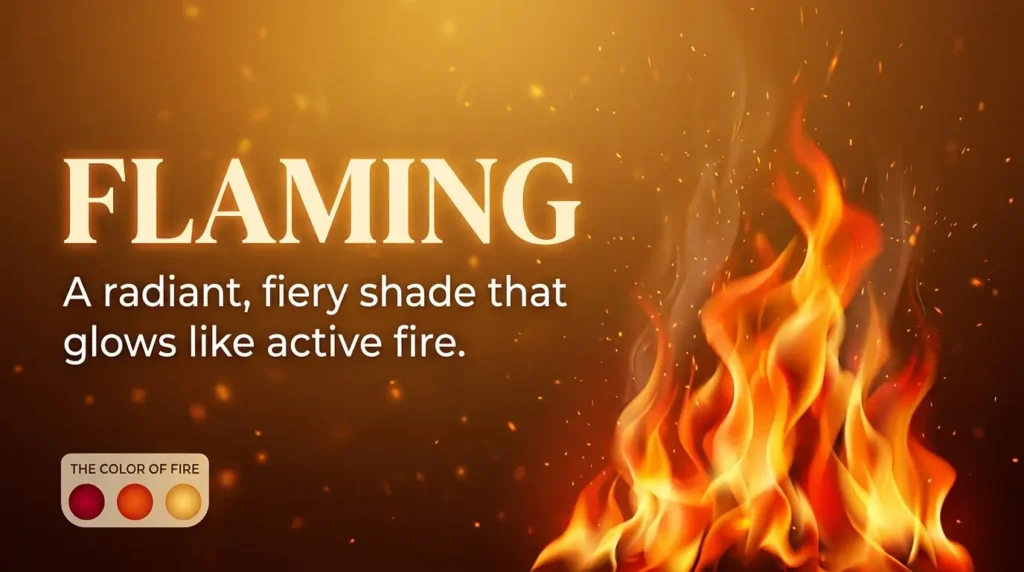
Flame Orange (Adjective) — US: /fleɪm ˈɔːr.ɪndʒ/ | UK: /fleɪm ˈɒr.ɪndʒ/
Meaning: A brilliant, radiant shade that simulates the bright glow of active fire.
Tone/Register: Dramatic, Descriptive, Modern
Examples: The rescue team wore flame orange vests to remain visible in dense forest fog.
A bright flame orange streak painted the horizon just before sunrise.
Ochre Orange (Adjective) — US: /ˈoʊ.kɚ ˈɔːr.ɪndʒ/ | UK: /ˈəʊ.kə ˈɒr.ɪndʒ/
Meaning: An earthy pigment tone combining deep orange with natural clay undertones.
Tone/Register: Artistic, Technical, Natural
Examples: The ceramic potter selected an ochre orange glaze for her rustic vase collection.
Dry earth hills displayed a rich ochre orange tone under the afternoon heat.
Coral-Orange (Adjective) — US: /ˈkɔːr.əl ˈɔːr.ɪndʒ/ | UK: /ˈkɒr.əl ˈɒr.ɪndʒ/
Meaning: A warm hybrid shade blending aquatic pink vibrancy with citrus tones.
Tone/Register: Fashion, Informal, Expressive
Examples: She picked coral-orange flowers to accent her summer dining room table.
The resort decor featured soft coral-orange cushions on light rattan chairs.
Cadmium Orange (Noun / Adjective) — US: /ˈkæd.mi.əm ˈɔːr.ɪndʒ/ | UK: /ˈkæd.mi.əm ˈɒr.ɪndʒ/
Meaning: An intense, pure, chemical-pigment orange widely recognized in oil painting.
Tone/Register: Academic, Fine Art, Technical
Examples:
The oil painter squeezed pure cadmium orange onto his wooden mixing palette.
This canvas utilizes cadmium orange to create strong focal contrast.
Safety Orange (Noun / Adjective) — US: /ˈseɪf.ti ˈɔːr.ɪndʒ/ | UK: /ˈseɪf.ti ˈɒr.ɪndʒ/
Meaning: An ultra-high-visibility orange shade used standardized for industrial caution.
Tone/Register: Practical, Industrial, Official
Examples: Highway workers set up safety orange cones around the open road construction zone.
His safety orange helmet gleamed under the bright site floodlights.
Neon Orange (Noun / Adjective) — US: /ˈniː.ɑːn ˈɔːr.ɪndʒ/ | UK: /ˈniː.ɒn ˈɒr.ɪndʒ/
Meaning: An extraordinarily bright fluorescent orange shade that catches immediate attention.
Tone/Register: Casual, Modern, Youthful
Examples: The runner laced up neon orange sneakers before starting her night marathon.
Retro poster art from the nineties frequently featured neon orange typography.
Papaya (Noun / Adjective) — US: pəˈpaɪ.ə / UK: pəˈpaɪ.ə
Meaning: A rich, soft tropical fruit shade blending light orange with yellow-pink warm tones.
Tone/Register:, Casual, Culinary
Examples: The bakery served smoothies tinted with a natural papaya hue.
She wore a tropical papaya dress for the beachside dinner party.
Mango (Noun / Adjective) — US: /ˈmæŋ.ɡoʊ/ | UK: /ˈmæŋ.ɡəʊ/
Meaning: A lush, sweet orange-yellow color matching the flesh of ripe tropical fruit.
Tone/Register: Warm, Friendly, Descriptive
Examples: The living room wall was painted a cheerful mango shade to brighten the dark hallway.
Fresh mango accents gave the summer collection a lively tropical appeal.
Sunset Orange (Noun / Adjective) — US: /ˈsʌn.set ˈɔːr.ɪndʒ/ | UK: /ˈsʌn.set ˈɒr.ɪndʒ/
Meaning: A warm, rich gradient orange evoking twilight skies and low sun horizons.
Tone/Register: Poetic, Evocative, Descriptive
Examples: The evening gradient faded gracefully from deep crimson into sunset orange.
Their honeymoon photo captured a glowing sunset orange sky over the ocean.
Clay (Noun / Adjective) — US: /kleɪ/ | UK: /kleɪ/
Meaning: A muted, matte orange-brown shade characteristic of unglazed, earth-born pottery.
Tone/Register: Earthy, Architectural, Natural
Examples: The trail led past giant clay cliffs carved by centuries of river water.
She picked clay wall paints to create a cozy, ground-connected living space.
Henna (Noun / Adjective) — US: /ˈhen.ə/ | UK: /ˈhen.ə/
Meaning: A reddish-orange plant dye color producing rich earthy orange tones on skin and hair.
Tone/Register: Cultural, Artistic, Traditional
Examples: Her hair gleamed with rich henna highlights after the natural tint treatment.
Traditional bridal patterns were drawn using dark henna paste across her hands.
Venetian Red (Noun / Adjective) — US: /vəˈniː.ʃən red/ | UK: /vəˈniː.ʃən red/
Meaning: A historic pigment hue sitting precisely on the border between deep orange and dark red.
Tone/Register: Historical, Fine Art, Formal
Examples: Classic Italian villas often feature facades painted in Venetian red earth tones.
The art restorer blended Venetian red to match the original Renaissance canvas.
Persimmon-Orange (Adjective) — US: pɚˈsɪm.ən ˈɔːr.ɪndʒ / UK: pəˈsɪm.ən ˈɒr.ɪndʒ
Meaning: A deep, glossy orange with heavy crimson undertones based on ripe winter fruit.
Tone/Register: Elegant, Seasonal, Specific
Examples: Autumn leaves shifted into a striking persimmon-orange shade overnight.
She chose persimmon-orange lipstick to go with her dark velvet evening gown.
Tiger Orange (Noun / Adjective) — US: /ˈtaɪ.ɡɚ ˈɔːr.ɪndʒ/ | UK: /ˈtaɪ.ɡə ˈɒr.ɪndʒ/
Meaning: A vivid, bold shade of orange striped with dark contrast, reminiscent of tiger fur.
Tone/Register: Bold, Casual, Visual
Examples: The sports team revealed new tiger orange jerseys for the championship game.
Black and tiger orange stripes decorated the promotional event banner.
Melon (Noun / Adjective) — US: /ˈmel.ən/ | UK: /ˈmel.ən/
Meaning: A soft, pastel orange tone modeled after the sweet flesh of cantaloupe.
Tone/Register: Soft, Gentle, Design
Examples: The bedroom interior used quiet melon tones to foster a relaxing environment.
A melon silk tie added a subtle touch of warmth to his grey suit.
Blood Orange (Noun / Adjective) — US: /blʌd ˈɔːr.ɪndʒ/ | UK: /blʌd ˈɒr.ɪndʒ/
Meaning: A deep, intense red-orange shade reminiscent of dark citrus flesh.
Tone/Register: Culinary, Dramatic, Modern
Examples: The mixologist crafted a cocktail using fresh blood orange juice and soda.
Deep blood orange hues swept across the storm clouds during dusk.
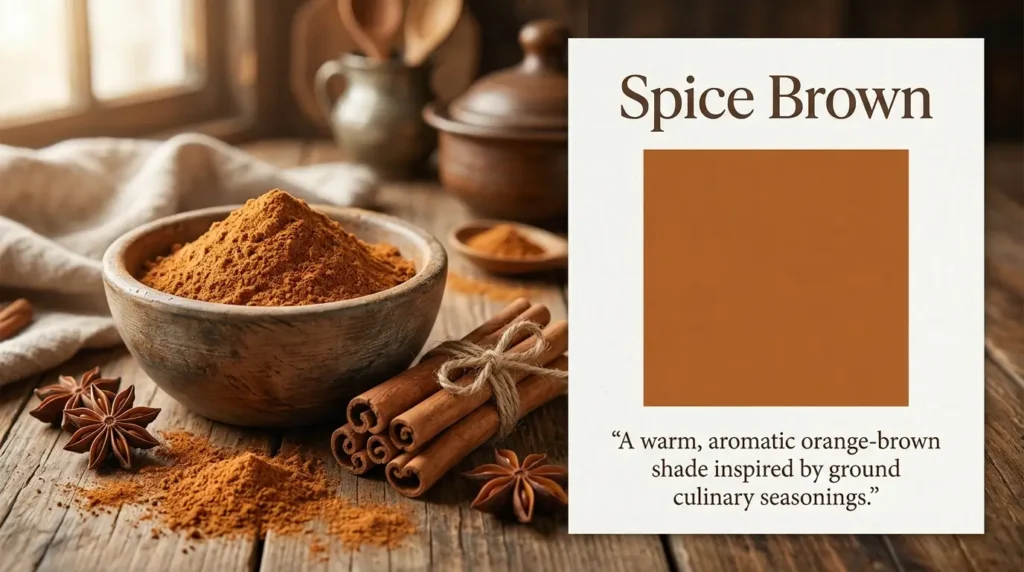
Spice (Noun / Adjective) — US: /spaɪs/ | UK: /spaɪs/
Meaning: A warm, aromatic orange-brown shade drawing inspiration from ground culinary seasonings. Tone/Register: Cozy, Interior Design, Earthy
Examples: The winter wardrobe collection featured rich spice tones and heavy knit sweaters.
A spice throw blanket added warmth to the dark leather armchair.
Caramel (Noun / Adjective) — US: /ˈkær.ə.mel/ | UK: /ˈkær.ə.mel/
Meaning: A smooth, rich golden-orange brown hue resembling melted, toasted sugar.
Tone/Register: Warm, Appetizing, Casual
Examples: Her caramel hair caught the sunlight while she sat near the window.
The boots were crafted from rich caramel leather that aged gracefully.
Bittersweet (Noun / Adjective) — US: /ˌbɪt̬.ɚˈswiːt/ | UK: /ˌbɪt.əˈswiːt/
Meaning: A classic reddish-orange color named after the vibrant berries of the bittersweet vine.
Tone/Register: Literary, Traditional, Botanical
Examples: The autumn wreath on the front door was decorated with bittersweet branches.
A bittersweet trim added contrast to the deep green curtains in the library.
Burnt Sienna (Noun / Adjective) — US: /bɝːnt siˈen.ə/ | UK: /bɜːnt siˈen.ə/
Meaning: A rich, warm reddish-orange earth pigment made by roasting raw sienna earth.
Tone/Register: Fine Art, Academic, Formal
Examples: The landscape artist used burnt sienna to sketch the mountain shadows.
Warm burnt sienna tiles covered the floor of the Mediterranean courtyard.
Kumquat (Noun / Adjective) — US: /ˈkʌm.kwɑːt/ | UK: /ˈkʌm.kwɒt/
Meaning: A small, bright, slightly golden-orange tone matching the small citrus fruit.
Tone/Register: Whimsical, Casual, Botanical
Examples: Bright kumquat accents added energy to the clean white kitchen design.
She peeled a tart kumquat fruit while walking through the orchard.
International Orange (Noun / Adjective) — US: /ˌɪn.t̬ɚˈnæʃ.ən.əl ˈɔːr.ɪndʒ/ | UK: /ˌɪn.təˈnæʃ.ən.əl ˈɒr.ɪndʒ/
Meaning: A specific engineering shade of deep reddish-orange used to set objects apart from surroundings. Tone/Register: Technical, Official, Engineering
Examples:
San Francisco’s Golden Gate Bridge is famous for its International Orange paint.
Aerospace equipment often utilizes International Orange for high field visibility.
Coral Reef (Noun / Adjective) — US: /ˈkɔːr.əl riːf/ | UK: /ˈkɒr.əl riːf/
Meaning: A vibrant, marine-inspired pastel orange shade with natural pink undertones.
Tone/Register: Creative, Decorative, Coastal
Examples:
The coastal resort painted its exterior shutters in a lively coral reef tone.
Sunlight filtered through the water, illuminating the coral reef colors below.
Goldenrod-Orange (Adjective) — US: /ˈɡoʊl.dən.rɑːd ˈɔːr.ɪndʒ/ | UK: /ˈɡəʊl.dən.rɒd ˈɒr.ɪndʒ/
Meaning: A deep, orange-leaning yellow shade inspired by late-summer wildflower blooms.
Tone/Register: Botanical, Natural, Rustic
Examples:
Wild fields bloomed with goldenrod-orange flora along the country roadside.
A goldenrod-orange knit scarf kept her warm during late October walks.
Indian Yellow (Noun / Adjective) — US: /ˈɪn.di.ən ˈjel.oʊ/ | UK: /ˈɪn.di.ən ˈjel.əʊ/
Meaning: A historically prized deep golden-orange pigment known for brilliant, warm transparency.
Tone/Register: Historic, Fine Art, Artistic
Examples:
The historical watercolor featured rich washes of warm Indian yellow.
Glazing the painting with Indian yellow gave the sky a luminescent glow.
Amber (Noun / Adjective) — US: /ˈæm.bɚ/ | UK: /ˈæm.bə/
Meaning: A warm, honey-like golden-orange shade reminiscent of fossilized tree resin.
Tone/Register: Literary, Descriptive, Formal
The evening light cast a rich amber glow across the brick terrace.
Her antique ring featured a polished resin bead that gleamed under the lamp.
Tangerine (Noun / Adjective) — US: /ˌtæn.dʒəˈriːn/ | UK: /ˌtæn.dʒəˈriːn/
Meaning: A bright, vivid orange with intense reddish undertones named after the sweet fruit.
Tone/Register: Informal, Artistic, Everyday
She wore a bright tangerine jacket that stood out against the grey city street.
The painter blended crimson and yellow to match the tangerine peel on the table.
Coral (Noun / Adjective) — US: /ˈkɔːr.əl/ | UK: /ˈkɒr.əl/
Meaning: A pinkish-orange tone inspired by marine coral reefs.
Tone/Register: Fashion, Informal, Descriptive
The bedroom walls were painted a soft coral that made the space feel warm and inviting.
He picked a coral tie to complement his dark navy suit for the spring wedding.
Peach (Noun / Adjective) — US: /piːtʃ/ | UK: /piːtʃ/
Meaning: A pale, soft orange shade blended with delicate pink and yellow tones.
Tone/Register: Gentle, Informal, Design
The baker frosted the cake in a subtle peach hue for the garden party.
Warm peach sunlight poured through the sheer curtains early in the morning.
Apricot (Noun / Adjective) — US: /ˈæp.rɪ.kɑːt/ | UK: /ˈeɪ.prɪ.kɒt/
Meaning: A muted, yellowish-orange tone resembling the skin of the ripe fruit.
Tone/Register: Descriptive, Literary, Culinary
The silk scarf featured delicate apricot patterns woven against a cream background.
Autumn leaves turned a gentle apricot shade before dropping from the branches.
Ochre (Noun / Adjective) — US: /ˈoʊ.kɚ/ | UK: /ˈəʊ.kə/
Meaning: An earthy, brownish-yellow or brownish-orange pigment derived from natural clay.
Tone/Register: Artistic, Academic, Technical
Ancient artists painted cave walls using rich ochre pigments gathered from clay deposits.
The desert hills glowed with an ochre warmth as the sun began to drop.
Copper (Noun / Adjective) — US: /ˈkɑː.pɚ/ | UK: /ˈkɒp.ə/
Meaning: A metallic orange-brown shade inspired by polished natural metal.
Tone/Register: Formal, Industrial, Descriptive
Her copper hair shone brightly whenever she walked into direct sunlight.
The newly installed gutters gave the rustic house a warm metallic border.
Rust (Noun / Adjective) — US: /rʌst/ | UK: /rʌst/
Meaning: A dark, reddish-brown orange hue matching oxidized iron.
Tone/Register: Casual, Industrial, Earthy
He selected a rust sweater that paired nicely with his dark blue denim jeans.
The old iron gate developed a deep rust patina over decades of rainy winters.
Terracotta (Noun / Adjective) — US: /ˌter.əˈkɑː.t̬ə/ | UK: /ˌter.əˈkɒt.ə/
Meaning: A brownish-red orange shade based on baked clay pottery.
Tone/Register: Architectural, Artistic, Design
The Mediterranean villa was topped with classic terracotta roof tiles.
She placed her indoor ferns in simple terracotta pots along the windowsill.
Pumpkin (Noun / Adjective) — US: /ˈpʌmp.kɪn/ | UK: /ˈpʌmp.kɪn/
Meaning: A deep, rich seasonal orange characteristic of mature fall squash.
Tone/Register: Seasonal, Casual, Expressive
Children picked bright pumpkin lanterns to place on the front steps for Halloween.
The kitchen smelled of cinnamon while a pumpkin pie baked in the oven.
Saffron (Noun / Adjective) — US: /ˈsæf.rən/ | UK: /ˈsæf.rən/
Meaning: A rich, intense golden-orange color named after the valuable spice.
Tone/Register: Literary,Culinary
Monks folded their saffron robes tightly before walking into the quiet temple.
The rice dish took on a brilliant saffron shade as it simmered on the stove.
Marigold (Noun / Adjective) — US: /ˈmær.ə.ɡoʊld/ | UK: /ˈmær.ɪ.ɡəʊld/
Meaning: A bright, energetic yellow-orange hue matching the blooming flower.
Tone/Register: Cheerful, Descriptive, Casual
A cheerful marigold dress lit up her summer wardrobe with warm color.
Bright marigold flowers lined the walkway leading to the neighborhood library.
Burnt Orange (Adjective) — US: /bɝːnt ˈɔːr.ɪndʒ/ | UK: /bɜːnt ˈɒr.ɪndʒ/
Meaning: A dark, saturated orange mixed with brown and red pigments.
Tone/Register: Modern, Design, Academic
The university sports team adopted burnt orange as their official uniform color.
Autumn tree canopies displayed striking burnt orange foliage across the mountain range.
Flame (Noun / Adjective) — US: /fleɪm/ | UK: /fleɪm/
Meaning: A fiery, intensely brilliant red-orange color resembling burning fire.
Tone/Register: Dramatic, Poetic, Vivid
The runner dashed across the finish line wearing a flame orange athletic shirt.
A flame sky signaled the start of a scorching midsummer day.
Citrus (Noun / Adjective) — US: /ˈsɪt.rəs/ | UK: /ˈsɪt.rəs/
Meaning: A broad noun or color descriptor referencing orange-family fruits and zesty tones.
Tone/Register: General, Commercial, Botanical
She added fresh citrus slices to the pitcher of iced water.
The clean room spray carried a sharp citrus scent that refreshed the kitchen.
Mandarin (Noun / Adjective) — US: /ˈmæn.dɚ.ɪn/ | UK: /ˈmæn.dər.ɪn/
Meaning: A bright, reddish-orange shade named after the small sweet fruit.
Tone/Register: Descriptive, Specific, Culinary
He peeled a sweet mandarin to share with his desk mate during lunch break.
The interior designer picked mandarin accent pillows for the neutral grey sofa.
Clementine (Noun / Adjective) — US: /ˈklem.ən.tiːn/ | UK: /ˈklem.ən.tiːn/
Meaning: A juicy, vibrant orange tone tied directly to small seedless citrus fruits.
Tone/Register: Casual, Friendly, Descriptive
She packed two small clementine fruits in her child’s daily school lunch box.
The graphics artist selected a bold clementine background for the summer sale banner.
Marmalade (Noun / Adjective) — US: /ˈmɑːr.mə.leɪd/ | UK: /ˈmɑː.mə.leɪd/
Meaning: A rich, translucent preserve-like orange tone with golden warmth.
Tone/Register: Whimsical, Cozy, British English
The sleeping tabby cat had thick marmalade stripes along its back.
They spread sweet orange marmalade across freshly toasted sourdough bread.
Carrot (Noun / Adjective) — US: /ˈkær.ət/ | UK: /ˈkær.ət/
Meaning: A direct, vivid orange shade associated with root vegetables.
Tone/Register: Everyday, Informal, Visual
The cartoon character featured a bright carrot nose made of molded felt.
He pulled a fresh carrot straight from the backyard vegetable garden bed.
Bronze (Noun / Adjective) — US: /brɑːnz/ | UK: /brɒnz/
Meaning: A dark reddish-brown orange with metallic undertones.
Tone/Register: Professional, Formal, Descriptive
The afternoon sunlight turned the smooth ocean surface into liquid bronze.
A polished bronze statue stood proudly in the center of the historic courtyard.
Persimmon (Noun / Adjective) — US: pɚˈsɪm.ən / UK: pəˈsɪm.ən
Meaning: A deep, glossy red-orange color typical of autumn fruit.
Tone/Register: Refined, Artistic, Seasonal
The twilight horizon faded into a stunning persimmon shade above the lake.
She selected a persimmon silk blouse to wear to the formal dinner event.
Titian (Adjective) — US: /ˈtɪʃ.ən/ | UK: /ˈtɪʃ.ən/
Meaning: A brownish-orange color commonly associated with red-orange hair in fine art.
Tone/Register: Literary, Formal, Fine Art
The painter captured his subject’s flowing Titian hair under dramatic studio lighting.
Classic portraiture frequently highlighted models with warm Titian ringlets.
Ginger (Noun / Adjective) — US: /ˈdʒɪn.dʒɚ/ | UK: /ˈdʒɪn.dʒə/
Meaning: A reddish-yellow or light orange-brown shade used often for hair and fur.
Tone/Register: Everyday, Casual, Descriptive
A friendly ginger cat curled up on the sunny porch bench.
He brushed his ginger beard before leaving the house for his job interview.
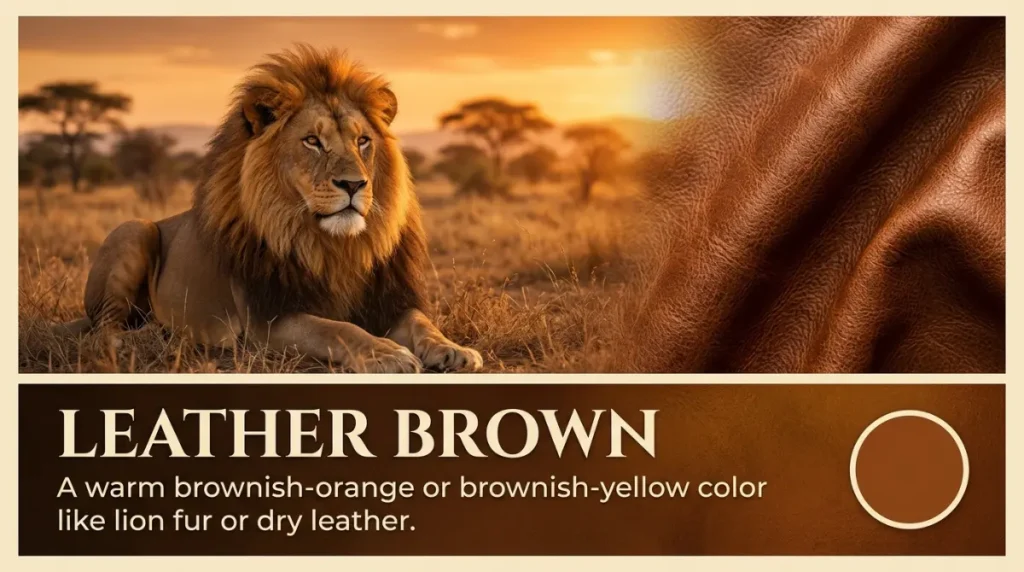
Tawny (Adjective) — US: /ˈtɑː.ni/ | UK: /ˈtɔː.ni/
Meaning: A warm brownish-orange or brownish-yellow color typical of lion fur or dry leather.
Tone/Register: Literary, Nature, Formal
The tawny owl blended seamlessly against the dry oak tree bark.
His favorite vintage jacket was crafted from soft, tawny leather.
Sunset (Noun / Adjective) — US: /ˈsʌn.set/ | UK: /ˈsʌn.set/
Meaning: An evocative blended tone combining fiery orange, pink, and red hues.
Tone/Register: Poetic, Evocative, Creative
The graphic artist created a gradient background inspired by a dramatic ocean sunset.
Warm sunset tones filled the art gallery during the evening exhibition opening.
Synonyms by Tone
Grouping synonyms by tone helps you choose the perfect option for your specific writing project:
                  ┌───────────────────────────────┐
                  │   SYNONYMS BY TONAL CATEGORY  │
                  └───────────────┬───────────────┘
                                  │
       ┌──────────────────────────┼──────────────────────────┐
       ▼                          ▼                          ▼
  POSITIVE                   NEUTRAL                    NEGATIVE
 (Warm/Lively)              (Descriptive)             (Harsh/Muted)
 ─────────────              ─────────────             ─────────────
 • Amber                    • Citrus                  • Rust
 • Tangerine                • Copper                  • Burnt Orange
 • Peach                    • Ochre                   • Garish Orange
 • Coral                    • Terracotta
 • Saffron                  • Apricot
Positive / Energetic:
Tangerine, Coral, Peach, Saffron, Marigold, Sunset, Clementine.
Neutral / Descriptive:
Citrus, Copper, Ochre, Terracotta, Apricot, Bronze, Amber.
Negative / Muted / Harsh:
Rust, Burnt Orange, Garish Orange (when describing overwhelming neon shades).
Playful / Informal:
Ginger, Marmalade, Pumpkin, Carrot.
Tone shapes how readers perceive your writing. Calling hair “ginger” feels casual and warm, while describing it as “Titian” adds artistic elegance.
Mini Comparison: Amber vs. Tangerine vs. Terracotta
Understanding subtle differences between close shades prevents vocabulary errors in descriptive writing.
| Feature | Amber | Tangerine | Terracotta |
|---|---|---|---|
| Core Color | Golden-orange with honey tones | High-energy reddish-orange | Earthy reddish-brown orange |
| Primary Tone | Warm, glowing, elegant | Vivid, energetic, playful | Natural, rustic, architectural |
| Best Used For | Lighting, eyes, jewelry, liquid | Fashion, summer themes, pop art | Pottery, interior design, land |
| Example | “An amber lamp glowed.” | “A tangerine dress popped.” | “Terracotta tiles lined the yard.” |
Context-Based Usage
Daily Conversation
In everyday speech, stick to simple fruit-based or clear descriptors like peach, tangerine, or ginger. Telling a friend someone has “persimmon hair” can sound unnaturally formal, whereas “ginger hair” sounds completely natural.
Writing & Blogging
Blogging thrives on sensory details. Instead of writing “the orange sunset,” use amber skylines, burnt orange foliage, or fiery copper horizons to capture reader interest and keep bounce rates low.
Professional & Academic Tone
In academic papers, design briefs, or business presentations, use precise terms like terracotta, ochre, copper, or citrus family. These words communicate precise color specifications without sounding overly dramatic.
Creative Writing & Storytelling
Fiction writing benefits from rich, evocative shades like saffron, titian, marmalade, and tawny. These words evoke mood and texture simultaneously.
Common Mistakes & Native Usage
- Confusing Peach and Coral: Peach has soft pink-yellow undertones, while coral leans toward bold reddish-pink orange.
- Overusing Fruit Names: Using “carrot,” “pumpkin,” and “mandarin” too close together in a single paragraph makes prose feel like a grocery list.
- Misusing Rust: “Rust” carries an earthy, oxidized, aged tone. Avoid using it for clean, bright, modern objects.
- Register Slip: Using “titian” in a casual text message sounds overly formal, while using “carrot-colored” in formal art criticism can sound childish.
For deeper insights on vocabulary structure, review standard linguistic frameworks provided on Merriam-Webster.
Real-Life Mini Scenarios
- Workplace: An interior designer presents a mood board using terracotta tiles and copper light fixtures to build a rustic office breakroom.
- Social Situations: A friend compliments an autumn sweater by noting how the burnt orange fabric complements the crisp October weather.
- Media & Pop Culture: A film reviewer describes a movie’s cinematography as built on amber lighting and warm desert visuals.
- Storytelling: A fantasy author describes a dragon’s eyes as glowing like molten saffron in the dark cave.
Interactive Practice Quiz
Test your understanding of synonyms for orange across different contexts and tones. Choose the best word for each scenario:
- Which synonym best describes an ancient clay pot found in an archaeological dig?
- A) Peach
- B) Terracotta
- C) Tangerine
- D) Coral
- Choose the ideal term for a warm, soft, pinkish-orange shade suitable for a spring nursery wall.
- A) Rust
- B) Ochre
- C) Peach
- D) Burnt Orange
- Which word fits best when describing a high-energy, vivid red-orange athletic shoe?
- A) Tangerine
- B) Amber
- C) Tawny
- D) Apricot
- What is the most natural word to describe a friendly domesticated cat with orange stripes?
- A) Saffron
- B) Marmalade
- C) Titian
- D) Ochre
- Which color term works best for describing metallic morning sunlight reflection on ocean water?
- A) Carrot
- B) Copper
- C) Clementine
- D) Pumpkin
- Which synonym carries an earthy, rusty, darker tone suitable for autumn leaf fall descriptions?
- A) Coral
- B) Burnt Orange
- C) Peach
- D) Citrus
- Select the shade most closely connected to a precious golden fossil resin.
- A) Amber
- B) Terracotta
- C) Ginger
- D) Rust
- Which term is traditional in fine art history for red-orange hair portraits?
- A) Pumpkin
- B) Titian
- C) Carrot
- D) Mandarin
- What word best describes a pale, yellowish-orange tone inspired by stone fruit?
- A) Apricot
- B) Flame
- C) Rust
- D) Saffron
- Which word fits a culinary context describing the zesty aroma of mixed orange peels?
- A) Tawny
- B) Citrus
- C) Titian
- D) Ochre
Reflection Task
Write a 2-sentence description of an autumn forest walk using at least two different synonyms for orange from this guide.
Answer Key: 1: B | 2: C | 3: A | 4: B | 5: B | 6: B | 7: A | 8: B | 9: A | 10: B
Frequently Asked Questions
1. What is the most accurate single-word synonym for orange?
The most accurate synonym depends on context. For colors, “amber” or “tangerine” work best for bright shades, while “terracotta” fits dark tones. For fruit, “citrus” or “mandarin” are ideal.
2. Is there a true rhyming word for orange in English?
No perfect natural rhyming word exists for orange in standard English. That is why poets and lyricists frequently use near-synonyms like amber, gold, or coral to maintain poetic rhythm and imagery.
3. What is the difference between amber and orange?
Amber is a specific golden-yellow shade of orange inspired by fossilized resin. Plain orange spans the entire spectrum between yellow and red, whereas amber strictly refers to warm, honeyed tones.
4. Can citrus be used as a direct synonym for orange?
Yes, “citrus” acts as a broad category synonym when referring to the fruit family. However, in color contexts, “citrus” usually implies a sharp, energetic yellow-green or bright yellow-orange shade.
5. Why did the color orange get named after the fruit?
Before the fruit arrived in Europe from Asia during the Middle Ages, English speakers called the color “yellow-red.” Once oranges became popular trade goods, people adopted the fruit’s name for the shade.
Conclusion
Expanding your vocabulary with descriptive synonyms turns everyday writing into vibrant sensory prose. Replacing plain color labels with precise alternatives allows you to express exact shades, moods, and visual details effortlessly.
Practicing these varied color terms will improve your essays, blog posts, professional emails, and daily conversations. You will notice immediate gains in your descriptive confidence across all communication channels.
Try incorporating three new synonyms from this guide into your next writing project or journal entry today to permanently lock them into your active vocabulary!

Esha loves exploring English words and finding simple ways to explain them. She writes about synonyms, vocabulary, word meanings, and everyday language in a clear and friendly style. Through vocaneest.com, Esha shares useful tips and easy-to-follow language guides for students, writers, and anyone looking to improve their English. Her goal is simple: to help readers choose better words, express their ideas clearly, and feel more confident when writing or communicating.