
Outright usually means completely, openly, directly, or without hesitation, depending on context. Common synonyms include completely, entirely, totally, directly, openly, plainly, explicitly, absolutely, and unreservedly. The best choice depends on whether outright describes degree, honesty, rejection, or manner.
A synonym for outright becomes useful when you want to avoid repeating the same word while keeping your meaning precise. For example, “She gave an outright refusal” can become “She gave a direct refusal.”
A synonym for outright can also make everyday English more natural. A student might write “He openly admitted his mistake,” while a blogger could choose “completely false” instead of “outright false.”
Learning a synonym for outright helps students, bloggers, content writers, and daily English users choose words that match the exact tone they want.
What Does “Outright” Really Mean?
Outright has several closely related meanings. The most common are completely, openly, directly, or without qualification or reservation.
When outright means completely, it emphasizes the full extent of something:
The claim was outright false.
Here, outright means completely or plainly false.
When it means openly or directly, it describes an action that is not hidden or indirect:
She rejected the proposal outright.
This means she rejected it directly and completely, without leaving room for uncertainty.
When native speakers hear outright, they often understand it as a strong word. It can make a statement sound firm, definite, or emphatic.
Part of Speech
Outright can function mainly as an adverb and an adjective.
The word “outright” can be used in two main ways.
As an adverb:
He denied the accusation outright.
As an adjective:
It was an outright lie.
When used as an adjective, “outright” usually comes before a noun. Such as rejection, refusal, lie, victory, ban, failure, or attack.
Connotative Meaning
Connotation (the feeling or association a word carries beyond its basic dictionary meaning) can change how outright sounds.
Positive tone:
It can suggest complete success or certainty, as in “an outright victory.”
Negative tone:
It can strengthen criticism, as in “an outright lie” or “an outright rejection.”
Neutral tone:
It can simply express completeness or directness, depending on the sentence.
The word itself is not always negative. Its emotional effect depends strongly on the noun or verb around it.
Etymology of “Outright”
Outright developed from the combination of out and right. The basic idea was something done openly, completely, or without concealment.
Old English: 450–1100
The individual elements out and right have Old English roots. Out is related to Old English ūt, meaning “outside” or “out.” Right comes from Old English riht, meaning “correct, straight, or just.”
Middle English: 1100–1500
During Middle English, combinations involving out developed meanings connected with completeness, openness, and directness. The modern sense gradually became more established.
Modern English: 1500–Present
In Modern English, outright developed its current uses, including completely, directly, and openly. Today, it is common in conversation, journalism, academic writing, business communication, and storytelling.
Pronunciation
US: /ˈaʊtˌraɪt/
UK: /ˈaʊtˌraɪt/
Syllables
out-right
Affixation Pattern
Root: out + right
Prefix: none
Suffix: none
The word is a compound formed from two existing words rather than a root with a conventional prefix or suffix.
Synonyms List
The best synonym for outright depends on the specific meaning. Some alternatives express completeness, while others emphasize openness, directness, or certainty.
Completely (Adverb) — US /kəmˈpliːtli/ | UK /kəmˈpliːtli/
Meaning: Completely means entirely or with nothing left out.
Tone/Register: Neutral, common.
Example:
The plan was completely rejected.
She completely changed her opinion.
Entirely (Adverb) — US /ɪnˈtaɪərli/ | UK /ɪnˈtaɪəli/
Meaning: Entirely means wholly or in every part.
Tone/Register: Neutral to formal.
Example:
The decision was entirely unexpected.
I entirely agree with your point.
Totally (Adverb) — US /ˈtoʊtəli/ | UK /ˈtəʊtəli/
Meaning: Totally means completely and is especially common in informal speech.
Tone/Register: Informal, conversational.
Example:
That explanation is totally wrong.
I totally understand your concern.
Fully (Adverb) — US /ˈfʊli/ | UK /ˈfʊli/
Meaning: Fully means completely or to the greatest possible extent.
Tone/Register: Neutral, professional.
Example:
The risks were fully explained.
She fully supported the decision.
Absolutely (Adverb) — US /ˈæbsəluːtli/ | UK /ˈæbsəluːtli/
Meaning: Absolutely emphasizes complete certainty or agreement.
Tone/Register: Neutral, emphatic.
Example:
The statement is absolutely false.
I absolutely agree with you.
Directly (Adverb) — US /dəˈrektli/ | UK /daɪˈrektli/
Meaning: Directly means in a straightforward or immediate manner.
Tone/Register: Neutral, professional.
Example:
She directly addressed the problem.
He directly rejected the suggestion.
Openly (Adverb) — US /ˈoʊpənli/ | UK /ˈəʊpənli/
Meaning: Openly means publicly or without trying to hide something.
Tone/Register: Neutral.
Example:
He openly criticized the policy.
She openly discussed her concerns.
Plainly (Adverb) — US /ˈpleɪnli/ | UK /ˈpleɪnli/
Meaning: Plainly means clearly, directly, or without ambiguity.
Tone/Register: Neutral to formal.
Example:
The evidence plainly contradicts the claim.
She plainly stated her position.
Explicitly (Adverb) — US /ɪkˈsplɪsətli/ | UK /ɪkˈsplɪsətli/
Meaning: Explicitly means in a clear and specific way.
Tone/Register: Formal, academic, professional.
Example:
The instructions explicitly forbid outside help.
The author explicitly mentions this concern.
Unreservedly (Adverb) — US /ˌʌnrɪˈzɜːrvɪdli/ | UK /ˌʌnrɪˈzɜːvədlɪ/
Meaning: Unreservedly means completely and without hesitation or qualification.
Tone/Register: Formal.
Example:
She unreservedly accepted responsibility.
He unreservedly supported the proposal.
Unequivocally (Adverb) — US /ˌʌnɪˈkwɒkəbli/ | UK /ˌʌnɪˈkwɒkəbli/
Meaning: Unequivocally means in a way that leaves no doubt.
Tone/Register: Formal, academic.
Example:
The report unequivocally rejects the claim.
She unequivocally supported the decision.
Decisively (Adverb) — US /dɪˈsaɪsɪvli/ | UK /dɪˈsaɪsɪvli/
Meaning: Decisively means firmly and without uncertainty.
Tone/Register: Neutral, formal.
Example:
The team won decisively.
The manager acted decisively.
Firmly (Adverb) — US /ˈfɜːrmli/ | UK /ˈfɜːmli/
Meaning: Firmly means with strength, certainty, or determination.
Tone/Register: Neutral.
Example:
She firmly rejected the accusation.
He firmly defended his decision.
Unconditionally (Adverb) — US /ˌʌnkənˈdɪʃənəli/ | UK /ˌʌnkənˈdɪʃənəli/
Meaning: Unconditionally means without requirements, limits, or conditions.
Tone/Register: Formal.
Example:
They unconditionally accepted the offer.
She unconditionally supported her friend.
Undeniably (Adverb) — US /ˌʌndɪˈnaɪəbli/ | UK /ˌʌndɪˈnaɪəbli/
Meaning: Undeniably means in a way that cannot reasonably be disputed.
Tone/Register: Neutral to formal.
Example:
She is undeniably talented.
The result was undeniably impressive.
Unmistakably (Adverb) — US /ˌʌnmɪˈsteɪkəbli/ | UK /ˌʌnmɪˈsteɪkəbli/
Meaning: Unmistakably means in a way that is extremely clear and cannot easily be confused.
Tone/Register: Neutral to formal.
Example:
His voice was unmistakably familiar.
The message was unmistakably clear.
Frankly (Adverb) — US /ˈfræŋkli/ | UK /ˈfræŋkli/
Meaning: Frankly means honestly and directly, often when saying something difficult.
Tone/Register: Conversational.
Example:
Frankly, I disagree with the decision.
She spoke frankly about the problem.
Bluntly (Adverb) — US /ˈblʌntli/ | UK /ˈblʌntli/
Meaning: Bluntly means in a very direct way, without softening the message.
Tone/Register: Informal to neutral.
Example:
Bluntly, the proposal will not work.
He bluntly refused the invitation.
Candidly (Adverb) — US /ˈkændɪdli/ | UK /ˈkændɪdli/
Meaning: Candidly means honestly and openly.
Tone/Register: Neutral to formal.
Example:
She candidly described her experience.
He candidly admitted his mistake.
Definitely (Adverb) — US /ˈdefɪnətli/ | UK /ˈdefɪnətli/
Meaning: Definitely expresses strong certainty about something.
Tone/Register: Neutral, common.
Example:
I definitely remember that conversation.
The answer is definitely correct.
Surely (Adverb) — US /ˈʃʊrli/ | UK /ˈʃʊəli/
Meaning: Surely expresses strong confidence or expectation.
Tone/Register: Neutral.
Example:
Surely, there must be another option.
She surely knew the risks.
Absolute (Adjective) — US /ˈæbsəluːt/ | UK /ˈæbsəluːt/
Meaning: Absolute means complete, total, or unrestricted.
Tone/Register: Neutral to formal.
Example:
The decision was an absolute success.
They demanded absolute certainty.
Complete (Adjective) — US /kəmˈpliːt/ | UK /kəmˈpliːt/
Meaning: Complete means having all parts or being total.
Tone/Register: Neutral.
Example:
It was a complete surprise.
The project was a complete failure.
Total (Adjective) — US /ˈtoʊtəl/ | UK /ˈtəʊtəl/
Meaning: Total means entire or complete.
Tone/Register: Neutral.
Example:
The announcement caused total confusion.
It was a total misunderstanding.
Unqualified (Adjective) — US /ʌnˈkwɒləfaɪd/ | UK /ʌnˈkwɒlɪfaɪd/
Meaning: Unqualified means complete and not limited by conditions or reservations.
Tone/Register: Formal.
Example:
She received unqualified support.
The leader gave unqualified approval.
Undisputed (Adjective) — US /ˌʌndɪˈspjuːtɪd/ | UK /ˌʌndɪˈspjuːtɪd/
Meaning: Undisputed means accepted as true or valid without serious disagreement.
Tone/Register: Neutral to formal.
Example:
He became the undisputed leader.
Her expertise is undisputed.
Flatly (Adverb) — US /ˈflætli/ | UK /ˈflætli/
Meaning: Flatly means in a firm and definite manner, especially when refusing or denying something.
Tone/Register: Neutral, emphatic.
Example:
She flatly denied the accusation.
He flatly refused the request.
Positively (Adverb) — US /ˈpɑːzətɪvli/ | UK /ˈpɒzətɪvli/
Meaning: Positively can emphasize certainty or complete assurance.
Tone/Register: Neutral.
Example:
I positively remember meeting him.
The result was positively remarkable.
Unambiguously (Adverb) — US /ˌʌnæmˈbɪɡjuəsli/ | UK /ˌʌnæmˈbɪɡjuəsli/
Meaning: Unambiguously means in a way that has only one clear interpretation.
Tone/Register: Formal, academic.
Example:
The rule unambiguously applies here.
Her answer was unambiguously clear.
Unquestionably (Adverb) — US /ʌnˈkwestʃənəbli/ | UK /ʌnˈkwestʃənəbli/
Meaning: Unquestionably means without reasonable doubt.
Tone/Register: Formal.
Example:
She is unquestionably qualified.
The discovery was unquestionably important.
Forthrightly (Adverb) — US /ˈfɔːrθraɪtli/ | UK /ˈfɔːθraɪtli/
Meaning: Forthrightly means honestly, directly, and without avoiding difficult issues.
Tone/Register: Formal.
Example:
The director forthrightly addressed the criticism.
She forthrightly explained her concerns.
Wholly (Adverb) — US /ˈhoʊlli/ | UK /ˈhəʊlli/
Meaning: Wholly means completely or entirely, with no part excluded.
Tone/Register: Formal, academic.
Example:
The argument was wholly unsupported.
She was wholly responsible for the decision.
Thoroughly (Adverb) — US /ˈθɜːroʊli/ | UK /ˈθʌrəli/
Meaning: Thoroughly means completely or in a detailed and comprehensive way.
Tone/Register: Neutral, formal.
Example:
The proposal was thoroughly examined.
He was thoroughly convinced by the evidence.
Utterly (Adverb) — US /ˈʌtərli/ | UK /ˈʌtəli/
Meaning: Utterly means completely, often with strong emotional emphasis.
Tone/Register: Neutral to formal.
Example:
The accusation was utterly ridiculous.
She was utterly shocked by the news.
Perfectly (Adverb) — US /ˈpɜːrfɪktli/ | UK /ˈpɜːfɪktli/
Meaning: Perfectly can mean completely or exactly, especially when emphasizing certainty or suitability.
Tone/Register: Neutral.
Example:
That explanation is perfectly reasonable.
I perfectly understand your concern.
Invariably (Adverb) — US /ɪnˈveriəbli/ | UK /ɪnˈveəriəbli/
Meaning: Invariably means always or without exception.
Tone/Register: Formal.
Example:
His predictions are invariably accurate.
The process invariably produces similar results.
Categorically (Adverb) — US /ˌkætəˈɡɔːrɪkli/ | UK /ˌkætəˈɡɒrɪkli/
Meaning: Categorically means in a definite and unconditional way.
Tone/Register: Formal, professional.
Example:
The spokesperson categorically denied the allegation.
She categorically rejected the accusation.
Peremptorily (Adverb) — US /pəˈremptərɪli/ | UK /pəˈremptərɪli/
Meaning: Peremptorily means in a commanding manner that leaves little opportunity for discussion.
Tone/Register: Formal.
Example:
The request was peremptorily dismissed.
He peremptorily ordered them to leave.
Unreserved (Adjective) — US /ˌʌnrɪˈzɜːrvd/ | UK /ˌʌnrɪˈzɜːvd/
Meaning: Unreserved means complete and given without hesitation or limitation.
Tone/Register: Formal, neutral.
Example:
She offered her unreserved approval.
The project received unreserved support.
Unmitigated (Adjective) — US /ˌʌnˈmɪtɪɡeɪtɪd/ | UK /ˌʌnˈmɪtɪɡeɪtɪd/
Meaning: Unmitigated means complete and not reduced or softened in any way.
Tone/Register: Formal.
Example:
The decision was an unmitigated disaster.
The policy caused unmitigated damage.
Unalloyed (Adjective) — US /ˌʌnəˈlɔɪd/ | UK /ˌʌnəˈlɔɪd/
Meaning: Unalloyed means pure, complete, and without anything that weakens or diminishes it.
Tone/Register: Formal, literary.
Example:
The announcement brought unalloyed joy.
She expressed unalloyed admiration for the artist.
Unconditional (Adjective) — US /ˌʌnkənˈdɪʃənəl/ | UK /ˌʌnkənˈdɪʃənəl/
Meaning: Unconditional means complete and not dependent on requirements or restrictions.
Tone/Register: Neutral to formal.
Example:
He received unconditional support from his family.
The agreement offered unconditional approval.
Unrestricted (Adjective) — US /ˌʌnrɪˈstrɪktɪd/ | UK /ˌʌnrɪˈstrɪktɪd/
Meaning: Unrestricted means not limited, controlled, or restricted.
Tone/Register: Neutral, professional.
Example:
Members have unrestricted access to the facility.
The agreement provided unrestricted use of the property.
Unmitigatedly (Adverb) — US /ˌʌnˈmɪtɪɡeɪtɪdli/ | UK /ˌʌnˈmɪtɪɡeɪtɪdli/
Meaning: Unmitigatedly means completely and without anything reducing the effect.
Tone/Register: Formal, uncommon.
Example:
The policy was unmitigatedly harmful.
His response was unmitigatedly negative.
Decidedly (Adverb) — US /dɪˈsaɪdɪdli/ | UK /dɪˈsaɪdɪdli/
Meaning: Decidedly means clearly, definitely, or noticeably.
Tone/Register: Formal to neutral.
Example:
The atmosphere was decidedly tense.
Her response was decidedly negative.
Resolutely (Adverb) — US /ˈrezəluːtli/ | UK /ˈrezəluːtli/
Meaning: Resolutely means with strong determination and firmness.
Tone/Register: Formal, literary.
Example:
She resolutely defended her position.
He resolutely refused to change his mind.
Unflinchingly (Adverb) — US /ʌnˈflɪntʃɪŋli/ | UK /ʌnˈflɪntʃɪŋli/
Meaning: Unflinchingly means firmly and without showing fear, hesitation, or avoidance.
Tone/Register: Formal, literary.
Example:
She unflinchingly faced the criticism.
He unflinchingly defended his principles.
Unwaveringly (Adverb) — US /ʌnˈweɪvərɪŋli/ | UK /ʌnˈweɪvərɪŋli/
Meaning: Unwaveringly means with constant firmness and without changing position.
Tone/Register: Formal.
Example:
She unwaveringly supported the project.
He unwaveringly defended his decision.
Synonyms for “Outright” by Tone
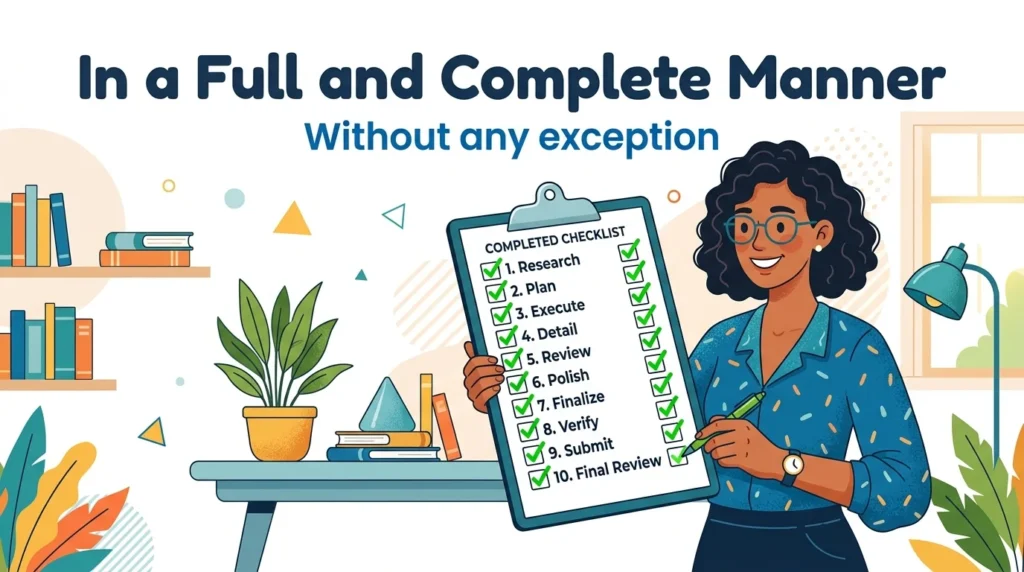
Plenarily (Adverb) — US: /ˈplɛn.ə.rəl.i/ | UK: /pləˈnɛr.ə.li/
- Meaning: In a full, complete, or unqualified manner without exception.
- Tone/Register: Formal / Legal
- Example 1: The council authorized the budget plenarily during the morning session.
- Example 2: Members participated plenarily in drafting the new organizational charter.
Exclusively (Adverb) — US: /ɪkˈskluː.sɪv.li/ | UK: /ɪkˈskluː.sɪv.li/
- Meaning: To the exclusion of all else; only and entirely.
- Tone/Register: Professional / Standard
- Example 1: The study focused exclusively on modern economic trends.
- Example 2: VIP tickets granted entry exclusively to the main auditorium.
Undivided (Adjective) — US: /ˌʌn.dɪˈvaɪ.dɪd/ | UK: /ˌʌn.dɪˈvaɪ.dɪd/
- Meaning: Not split or shared with others; complete and whole.
- Tone/Register: Warm / Expressive
- Example 1: The teacher captured the students’ undivided attention during the story.
- Example 2: He gave his undivided focus to finishing the urgent report.
Integrally (Adverb) — US: /ˈɪn.tə.ɡrəl.i/ | UK: /ɪnˈtɛɡ.rəl.i/
- Meaning: In a way that forms an essential or complete part of something.
- Tone/Register: Academic / Technical
- Example 1: Environmental issues are woven integrally into modern urban planning.
- Example 2: Both systems function integrally to power the manufacturing plant.
Imperatively (Adverb) — US: /ɪmˈpɛr.ə.tɪv.li/ | UK: /ɪmˈpɛr.ə.tɪv.li/
- Meaning: Of vital importance; crucially and without alternative.
- Tone/Register: Formal / Urgent
- Example 1: Safety protocols must be followed imperatively on the construction site.
- Example 2: The document needed review imperatively before the morning deadline.
Definitive (Adjective) — US: /dɪˈfɪn.ɪ.tɪv/ | UK: /dɪˈfɪn.ɪ.tɪv/
- Meaning: Reached decisively and with authority, leaving no doubt.
- Tone/Register: Professional / Authoritative
- Example 1: Scientists published definitive proof of the chemical reaction.
- Example 2: The coach made a definitive statement about the upcoming game roster.
Point-blank (Adverb/Adjective) — US: /ˌpɔɪntˈblæŋk/ | UK: /ˌpɔɪntˈblæŋk/
- Meaning: Said or done directly and plainly without attempt to disguise.
- Tone/Register: Direct / Conversational
- Example 1: She asked the candidate point-blank about his past experience.
- Example 2: The suspect issued a point-blank refusal to answer questions.
Incontestable (Adjective) — US: /ˌɪn.kənˈtɛs.tə.bəl/ | UK: /ˌɪn.kənˈtɛs.tə.bl/
- Meaning: Not able to be disputed, challenged, or questioned.
- Tone/Register: Legal / Formal
- Example 1: Forensics provided incontestable evidence linking the suspect to the scene.
- Example 2: The team established an incontestable lead in the second half.
Unassailable (Adjective) — US: /ˌʌn.əˈseɪ.lə.bəl/ | UK: /ˌʌn.əˈseɪ.lə.bl/
- Meaning: Unable to be attacked, questioned, or defeated.
- Tone/Register: Formal / Literary
- Example 1: The research paper built an unassailable argument for climate action.
- Example 2: Their market position remained unassailable despite new competition.
Unquestionable (Adjective) — US: /ʌnˈkwɛs.tʃə.nə.bəl/ | UK: /ʌnˈkwɛs.tʃə.nə.bl/
- Meaning: Not able to be doubted; certain and obvious.
- Tone/Register: Formal / Standard
- Example 1: Her dedication to animal welfare is unquestionable.
- Example 2: The historical archives provided unquestionable proof of the event.
Straight (Adverb) — US: /streɪt/ | UK: /streɪt/
- Meaning: Without delay, diversion, or hesitation; directly.
- Tone/Register: Conversational / Standard
- Example 1: He went straight to the office after landing at the airport.
- Example 2: She told him straight what she thought of the plan.
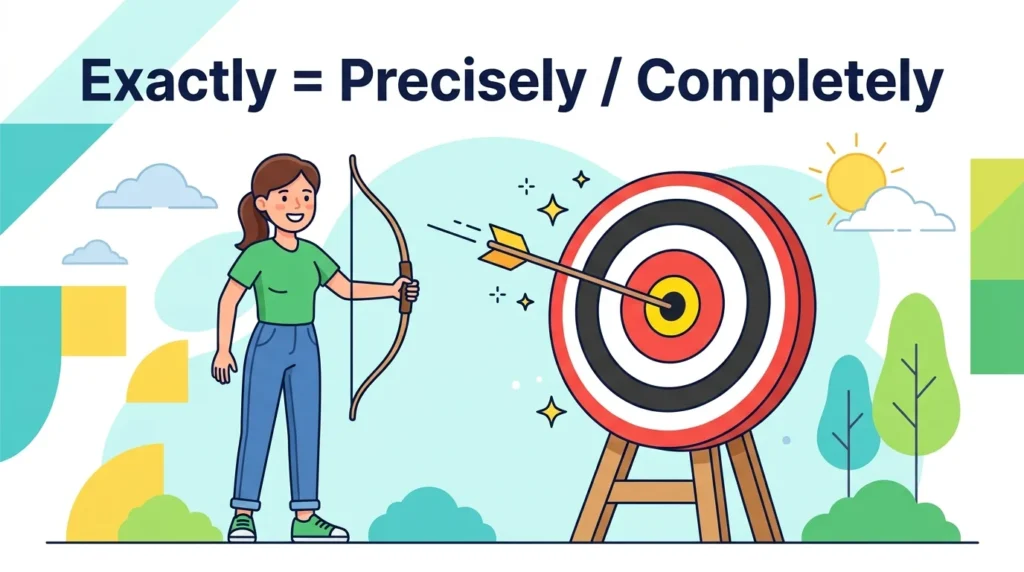
Dead (Adverb) — US: /dɛd/ | UK: /dɛd/
- Meaning: Exactly or completely; precisely in manner or direction.
- Tone/Register: Informal / Direct
- Example 1: The compass pointed dead north across the snowy terrain.
- Example 2: Traffic came to a dead stop during the rush hour storm.
Stone (Adverb modifier) — US: /stoʊn/ | UK: /stəʊn/
- Meaning: Used as an intensifier meaning completely or thoroughly.
- Tone/Register: Idiomatic / Descriptive
- Example 1: The freezing travelers were stone cold after the blizzard.
- Example 2: He sat stone silent throughout the long administrative hearing.
Cock-sure (Adjective) — US: /ˈkɑːk.ʃʊər/ | UK: /ˈkɒk.ʃʊə/
- Meaning: Excessively confident or entirely certain about something.
- Tone/Register: Informal / Descriptive
- Example 1: He felt cock-sure about winning the chess tournament.
- Example 2: The young trader was too cock-sure regarding market trends.
Down-right (Adjective/Adverb) — US: /ˈdaʊn.raɪt/ | UK: /ˈdaʊn.raɪt/
- Meaning: Thorough, absolute, and unmitigated in every respect.
- Tone/Register: Conversational / Emphatic
- Example 1: His rude behavior was down-right unacceptable at the dinner.
- Example 2: The presentation was a downright success with the clients.
Root-and-branch (Adjective) — US: /ˌruːt.ənˈbræntʃ/ | UK: /ˌruːt.ənˈbrɑːntʃ/
- Meaning: Comprehensive, complete, and total in scope or reform.
- Tone/Register: Formal / Political
- Example 1: The company announced root-and-branch reforms of its management structure.
- Example 2: Lawmakers proposed root-and-branch changes to tax regulations.
Clean (Adverb) — US: /kliːn/ | UK: /kliːn/
- Meaning: Completely or entirely; straight through an obstacle.
- Tone/Register: Informal / Standard
- Example 1: The arrow missed the target clean and hit the wall behind.
- Example 2: He forgot clean about the appointment scheduled for noon.
Slickly (Adverb) — US: /ˈslɪk.li/ | UK: /ˈslɪk.li/
- Meaning: Smoothly, efficiently, and completely without apparent effort.
- Tone/Register: Business / Descriptive
- Example 1: The new marketing campaign ran slickly across all platforms.
- Example 2: The automated system handled inquiries slickly and quickly.
Smashingly (Adverb) — US: /ˈsmæʃ.ɪŋ.li/ | UK: /ˈsmæʃ.ɪŋ.li/
- Meaning: Exceptionally well or completely successfully.
- Tone/Register: Enthusiastic / Informal
- Example 1: The charity event turned out smashingly well last weekend.
- Example 2: Their new product launch performed smashingly in global markets.
Out-and-out (Adjective) — US: /ˈaʊt.ənˌaʊt/ | UK: /ˈaʊt.ənˌaʊt/
- Meaning: Complete, absolute, and unmitigated without reservation.
- Tone/Register: Idiomatic / Expressive
- Example 1: The rumor proved to be an out-and-out fabrication.
- Example 2: He is an out-and-out professional when managing projects.
Flat-out (Adverb) — US: /ˌflætˈaʊt/ | UK: /ˌflætˈaʊt/
- Meaning: At top speed or with absolute, uncompromising directness.
- Tone/Register: Informal / Energetic
- Example 1: The delivery van drove flat-out to reach the warehouse on time.
- Example 2: She went flat-out to finish the book manuscript before autumn.
Straightforward (Adjective) — US: /ˈstreɪtˌfɔːr.wərd/ | UK: /ˈstreɪtˌfɔː.wəd/
- Meaning: Uncomplicated and easy to understand or honest in manner.
- Tone/Register: Practical / Professional
- Example 1: The assembly instructions were simple and straightforward.
- Example 2: He gave a straightforward answer to a complex question.
Undeniable (Adjective) — US: /ˌʌn.dɪˈnaɪ.ə.bəl/ | UK: /ˌʌn.dɪˈnaɪ.ə.bl/
- Meaning: Unable to be challenged or questioned; certain.
- Tone/Register: Persuasive / Formal
- Example 1: There was undeniable evidence supporting the scientific theory.
- Example 2: Her musical talent remained undeniable to everyone.
Explicit (Adjective) — US: /ɪkˈsplɪs.ɪt/ | UK: /ɪkˈsplɪs.ɪt/
- Meaning: Stated clearly and in detail, leaving no room for confusion.
- Tone/Register: Professional / Direct
- Example 1: The teacher gave explicit instructions for the writing assignment.
- Example 2: Safety manuals provide explicit warnings about machine parts.
Decisive (Adjective) — US: /dɪˈsaɪ.sɪv/ | UK: /dɪˈsaɪ.sɪv/
- Meaning: Settling an issue or producing a definite result.
- Tone/Register: Professional / Dynamic
- Example 1: The general made a decisive move to end the conflict.
- Example 2: Voting results provided a decisive victory for the mayor.
Thorough (Adjective) — US: /ˈθɜːr.oʊ/ | UK: /ˈθʌr.ə/
- Meaning: Performed with great care and completeness.
- Tone/Register: Standard / Diligent
- Example 1: Mechanics performed a thorough inspection of the vehicle’s brakes.
- Example 2: She conducted a thorough review of the manuscript drafts.

Synonyms by Tone
Choosing the right word depends heavily on the emotional tone you wish to convey.
Positive Tone:
Use unconditionally, decisively, thoroughly, and openly to highlight honesty, success, and complete support.
Neutral Tone:
Use completely, fully, directly, and straightforwardly for clear, objective descriptions of actions and facts.
Negative Tone:
Use utterly or unmitigated when describing overwhelming challenges or severe failures.
Playful/Informal Tone:
Use totally in casual daily conversations.
Tone guides reader expectations and sets the emotional mood of your writing.
Mini Comparison: Outright vs. Completely vs. Utterly
- Outright: Focuses on total directness, immediate cash purchases, or absolute denial without hesitation.
- Completely: Focuses on fullness and completion across general actions or states of being.
- Utterly: Focuses on extreme intensity, often highlighting total confusion or absolute emotional states.
Use outright for purchases or absolute denials, completely for general completion, and utterly for emotional emphasis.
Context-Based Usage
In daily conversation, native speakers use words like totally or completely naturally. You might say you are completely ready for a weekend trip.
When writing blogs or essays, terms like thorough, straightforward, or directly add elegance. They elevate your prose without sounding overly complex.
In professional or academic writing, terms like categorically, wholly, or explicitly fit technical reports, research papers, and legal arguments.
Common Mistakes & Native Usage
Learners often misuse utterly when describing positive financial achievements. Remember that utterly usually intensifies negative or extreme states, whereas outright describes complete and direct facts.
Another common error involves confusing outright with out loud. Outright means completely or immediately, while out loud means spoken audibly.
Keep your register consistent. Avoid using informal terms like totally in formal legal contracts. (For more vocabulary tips, check out our guide on finding precise synonyms for everyday adverbs.)
Real-Life Mini Scenarios
- Workplace: The director gave explicit instructions on how to handle client accounts.
- Social Situations: They agreed completely on travel plans for their summer vacation.
- Media / Pop Culture: The movie review called the thriller an unmitigated success at the box office.
- Writing / Storytelling: The detective rejected the suspect’s alibi categorically during the interview.
Conclusion
Mastering vocabulary transforms how you write, blog, and speak in daily life. Every new word gives you better tools to express complete clarity with total confidence.
Practicing these terms in your emails, essays, and conversations builds natural fluency over time. Small daily habits lead to massive improvements in your communication skills.
Start integrating these varied terms into your writing today to engage your readers effortlessly. Keep exploring language, stay curious, and enjoy your writing journey!
Interactive Practice Quiz
1. Which synonym best describes a total and unreserved agreement?
- A) Utterly
- B) Completely
- C) Partially
- D) Barely
2. Which term fits a formal legal denial of allegations?
- A) Categorically
- B) Totally
- C) Plainly
- D) Openly
3. What is the best alternative when describing a cash purchase of a home?
- A) Outright
- B) Partial
- C) Conditional
- D) Delayed
4. Which synonym carries an extreme emotional intensity like shock?
- A) Utterly
- B) Directly
- C) Fully
- D) Wholly
5. Which word describes clear and unambiguous instructions?
- A) Explicit
- B) Vague
- C) Hidden
- D) Complex
6. What term works best for an unmitigated disaster?
- A) Total
- B) Minor
- C) Slight
- D) Partial
7. Which synonym refers specifically to speaking without hiding facts?
- A) Openly
- B) Secretly
- C) Quietly
- D) Softly
8. Which word is ideal for describing a thorough inspection?
- A) Complete
- B) Quick
- C) Brief
- D) Shallow
Answer Key: 1 (B), 2 (A), 3 (A), 4 (A), 5 (A), 6 (A), 7 (A), 8 (A)
Frequently Asked Questions
What is the best synonym for outright in business writing?
- Categorically, wholly, and explicitly serve as the best alternatives when discussing corporate policies, absolute agreements, and professional statements in modern writing.
How do outright and completely differ in meaning?
- Outright often emphasizes immediacy, directness, or permanent status (such as buying something outright), whereas completely refers broadly to fullness or total completion.
Can outright be used for physical purchases?
- Yes, native speakers frequently use outright to describe buying goods with cash immediately rather than using financing or installment payment plans.
What is the historical origin of outright?
- The word originates from Middle English components combining out and right, initially describing direct, unhesitating movement before expanding to modern financial and absolute uses.
Which synonym works best in formal academic writing?
- Terms like wholly, entirely, and categorically provide professional and formal alternatives depending on whether you discuss research findings, facts, or denials.
Positive
Words such as absolutely, undeniably, unquestionably, decisively, and unmistakably can work well when the context is favorable.
She was undeniably talented.
Neutral
Completely, entirely, fully, directly, openly, clearly, and definitely are useful in ordinary communication.
He completely understood the instructions.
Negative
Bluntly, flatly, frankly, and plainly can sound stronger when describing rejection, criticism, or disagreement.
She flatly rejected the accusation.
Playful or Informal
Totally is especially common in casual speech.
That movie was totally unexpected.
Tone matters because two words can have similar dictionary meanings but create different impressions. Choosing the right synonym makes your English sound more natural and precise.
“Outright” vs. Close Alternatives
Understanding Outright vs. Completely
Outright can suggest directness or an absolute action, while completely mainly emphasizes degree.
He rejected the offer outright.
This sounds firm and direct.
He completely rejected the offer.
This focuses more strongly on the completeness of the rejection.
Outright vs. Openly
Outright can mean directly and without hesitation. Openly focuses more on something being public or not hidden.
She criticized the plan outright.
She openly criticized the plan.
Both work, but openly highlights the lack of secrecy.
Outright vs. Absolutely
Absolutely strongly emphasizes certainty or degree. Outright often carries an additional sense of directness.
That is absolutely impossible.
He rejected the proposal outright.
The first emphasizes certainty. The second emphasizes a firm, complete rejection.
How “Outright” Changes by Context
Daily Conversation
In everyday speech, outright often appears with words describing rejection, denial, or strong reactions.
“She turned down the invitation outright.”
The expression sounds natural and emphasizes that the decision was immediate and firm.
Writing and Blogging
Bloggers can use outright to make statements more precise.
Instead of repeatedly writing completely, a writer might say:
The claim is outright false.
This creates a stronger and more emphatic statement.
Professional or Academic Writing
In professional writing, outright can work well when the meaning is precise.
The committee did not outright reject the proposal.
This sentence means the committee did not completely or directly reject it.
For highly formal writing, unequivocally, explicitly, or unambiguously may sometimes be more precise.
Creative or Informal Use
In storytelling, outright can add force and emotion.
He laughed outright when he heard the joke.
Here, the word suggests a clear, unrestricted reaction.
Common Mistakes Learners Make
One common mistake is assuming that every synonym for outright can replace it in every sentence. They cannot.
For example:
She rejected the idea outright.
You can use:
She rejected the idea completely.
But openly changes the meaning slightly:
She rejected the idea openly.
This suggests that her rejection was public or visible.
Another mistake is overusing strong words such as absolutely, totally, and unequivocally. Strong vocabulary is useful, but too much emphasis can make writing sound unnatural.
Native Usage Note
Native speakers commonly use outright with words such as reject, deny, refuse, lie, false, ban, victory, attack, failure, and admit.
The exact meaning should always be checked from the surrounding sentence.
Real-Life Mini Scenarios
Workplace
A manager might say:
“We cannot reject the proposal outright.”
This means the proposal should not be completely dismissed.
Social Situation
A friend might say:
“She refused the invitation outright.”
The sentence shows a firm and direct refusal.
Media and Pop Culture
A journalist may write:
“The actor denied the rumor outright.”
The expression makes the denial sound clear and definite.
Writing and Storytelling
A novelist might write:
“He laughed outright at the unexpected comment.”
Here, outright strengthens the image of a completely open reaction.
Conclusion
Learning a synonym for outright gives you more control over tone and meaning. Words such as completely, directly, openly, and unequivocally each add a different shade to your writing.
Strong vocabulary is not about using the most difficult word. It is about choosing the word that expresses your exact idea clearly, naturally, and confidently.
Students, bloggers, writers, and everyday English users can improve communication by practicing these alternatives in real sentences, emails, and essays.
Try using one new synonym today in a sentence of your own. Small vocabulary choices can make your English clearer, more flexible, and much more expressive.
Interactive Practice Quiz
Choose the word that best fits each situation.
1. The manager ___ rejected the proposal and ended the discussion.
A) openly
B) outright
C) partly
D) cautiously
2. Which word best means “completely”?
A) entirely
B) indirectly
C) vaguely
D) partly
3. “She ___ denied the accusation” suggests a firm and definite denial.
A) flatly
B) quietly
C) accidentally
D) rarely
4. Which word is especially common in informal conversation?
A) totally
B) unequivocally
C) unambiguously
D) unreservedly
5. “He openly criticized the decision” mainly emphasizes that the criticism was:
A) secret
B) public
C) uncertain
D) accidental
6. Which word best fits formal academic writing when something leaves no doubt?
A) totally
B) unequivocally
C) kinda
D) frankly
7. “The statement was ___ false” strongly emphasizes complete falseness.
A) outright
B) slowly
C) mildly
D) partly
8. Which word means “honestly and directly”?
A) candidly
B) completely
C) quietly
D) gradually
Answer Key: 1-B | 2-A | 3-A | 4-A | 5-B | 6-B | 7-A | 8-A
Frequently Asked Questions
1. What is the best synonym for outright in most sentences?
There is no single best synonym because outright has several meanings. Completely is a strong choice when outright means entirely. Directly works when it means in a firm manner, while openly works when the idea is public or not hidden. Always choose the synonym that preserves the original sentence’s exact meaning.
2. What is a synonym for outright rejection?
Good alternatives include complete rejection, total rejection, direct rejection, flat refusal, and unqualified rejection, depending on the sentence. If someone rejects something firmly and immediately, flatly refused can sound natural. If the focus is simply on completeness, completely rejected is usually clearer.
3. Is outright a formal or informal word?
Outright is a neutral English word and works in both everyday speech and formal writing. It is common in journalism, professional communication, essays, and conversation. However, some alternatives, such as unequivocally and unambiguously, sound more formal and may be preferable in academic contexts.
4. Can outright mean completely?
Yes. One important meaning of outright is completely or entirely. For example, “The claim was rejected outright” means the claim was completely rejected. However, outright can also mean directly or openly, so the surrounding sentence determines which meaning is intended.
5. What is the difference between outright and absolutely?
Both can emphasize strong degree or certainty, but they are not interchangeable everywhere. Absolutely commonly emphasizes certainty or complete agreement, while outright often emphasizes complete or direct action. “Absolutely impossible” is natural, while “rejected outright” emphasizes a firm and complete rejection.
6. What is a good synonym for outright in academic writing?
Useful academic alternatives include unequivocally, explicitly, unambiguously, entirely, completely, and unconditionally. The right choice depends on the intended meaning. For example, unequivocally is useful when something is expressed without doubt, while entirely focuses on completeness.
7. Is totally a good synonym for outright?
Sometimes. Totally can replace outright when the meaning is “completely,” especially in casual speech. However, it cannot always replace outright when the word emphasizes directness or openness. “He totally rejected the idea” is possible, while “He rejected the idea outright” sounds more firm and emphatic

Aqsa Rani is the founder and lead writer at VocaNeest.com, a trusted platform dedicated to helping people improve their English vocabulary and communication skills. She creates well-researched, accurate, and easy-to-understand content covering synonyms, antonyms, word meanings, idioms, phrases, and everyday vocabulary. Her goal is to make learning English simple, practical, and accessible for students, writers, professionals, and lifelong learners.
At VocaNeest.com, every article is carefully researched, fact-checked, and written with a strong focus on accuracy, clarity, and real-world usage. Content is regularly reviewed and updated to ensure it remains helpful, relevant, and aligned with modern language standards. Through reliable vocabulary guides and practical examples, Aqsa aims to help readers write with confidence, expand their vocabulary, and communicate more effectively.