
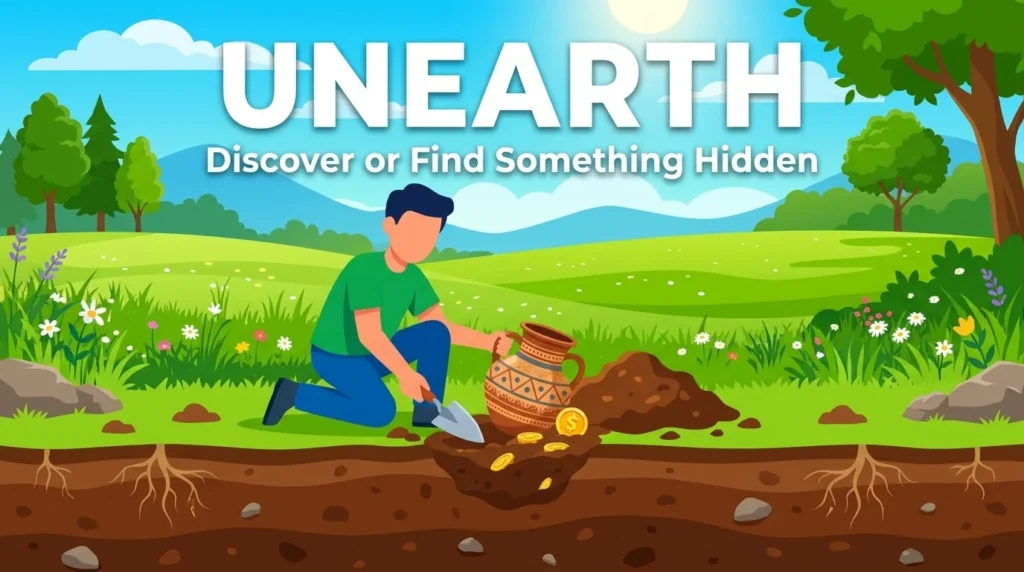
Finding a precise synonym for unearth helps writers uncover hidden details and discover buried information with greater clarity. Whether you research ancient history or dig up old family photos, selecting the right verb transforms your sentence. Mastering this vocabulary elevates your overall writing quality significantly.
Every writer wants to unearth fresh insights when crafting compelling stories or professional reports. A well-chosen synonym for unearth breathes life into your writing by adding precision, nuance, and emotional depth.
Mastering a synonym for unearth empowers students, bloggers, and content creators to communicate complex discoveries more effectively. Native speakers often use these terms to describe finding lost items or revealing secrets.
Delving into these linguistic alternatives allows you to refine your personal voice and adapt your tone to any audience. Whether you are drafting a formal academic paper or a casual blog post, having the right words at your disposal makes all the difference.
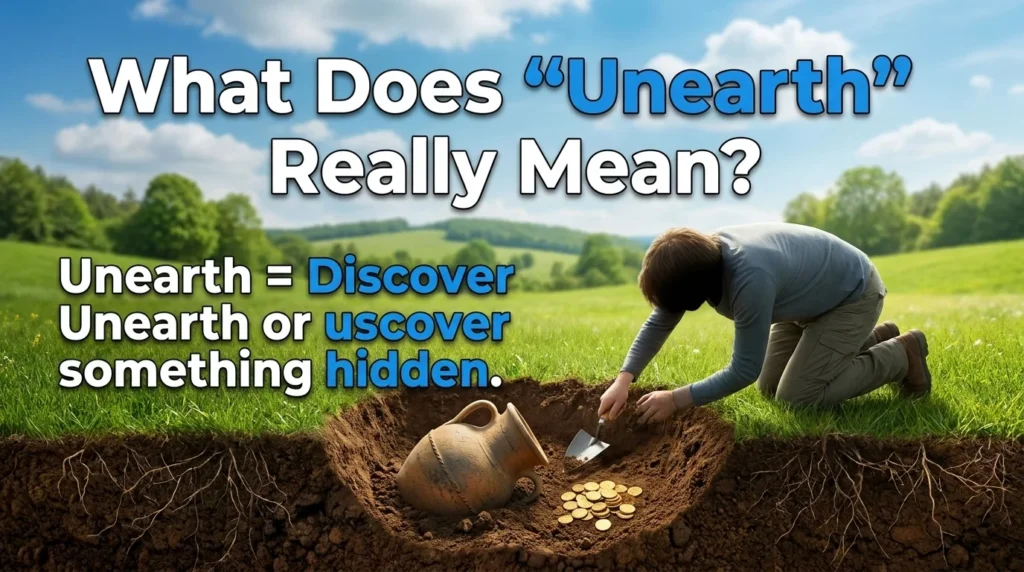
What Does “Unearth” Really Mean?
Unearth literally means to dig something up out of the earth, but it is frequently used metaphorically to describe discovering or revealing something that was hidden, lost, or forgotten.
The emotional tone of the word is often dramatic, investigative, or revelatory, carrying a sense of surprise or hard-won knowledge. Native speakers use it when talking about archaeology, journalism, historical research, or uncovering long-kept secrets.
As a transitive verb, it requires an object that is being brought to light.
🧠 Connotative Meaning
- Positive tone: Revealing forgotten wisdom, uncovering historical treasures, or finding inspiring personal memories. (Connotation refers to the emotional or cultural association attached to a word beyond its literal definition.)
- Negative tone: Exposing damaging secrets, uncovering painful past mistakes, or bringing scandalous evidence to light.
- Neutral tone: Locating misplaced documents, finding missing data, or discovering routine facts during an audit.
📖 Etymology
Unearth originates from the late 16th century, combining the native English prefix un- (meaning “release from” or “deprive of”) and the noun earth (derived from Old English eorþe).
- Old English (450–1100): The root word eorþe referred strictly to the ground, soil, or dry land.
- Middle English (1100–1500): The base noun evolved into erthe, used primarily in agricultural and physical digging contexts.
- Modern English (1500–Present): The prefix was attached to form a verb, quickly shifting from literal soil excavation to metaphorical revelation by the Elizabethan era.
Pronunciation (US & UK – IPA)
- US: /ʌnˈɜːrθ/
- UK: /ʌnˈɜːθ/
Syllables
- un-earth
Affixation Pattern
- Root: earth (Noun / Verb)
- Prefix: un- (Reversal of an action or removal)
- Suffix: None
SYNONYMS LIST
Excavate (Verb) — US: /ˈɛk.skə.veɪt/ | UK: /ˈɛk.skə.veɪt/
Meaning: To dig out and remove material from the ground, especially to find historical artifacts.
Tone/Register: Academic / Formal
Example 1: Archaeologists plan to excavate the ancient courtyard next spring.
Example 2: Crews began to excavate the muddy site after heavy rains stopped.
Exhume (Verb) — US: /ɪɡˈzuːm/ | UK: /ɪɡˈzuːm/
Meaning: To dig out something buried, particularly a corpse, from the ground for investigation.
Tone/Register: Formal / Legal
Example 1: Detectives requested permission to exhume the body for new forensic testing.
Example 2: Court orders allowed officials to legally exhume the historical remains.
Mine (Verb) — US: /maɪn/ | UK: /maɪn/
Meaning: To extract valuable ores or minerals from deep underground through tunneling.
Tone/Register: Industrial / Technical
Example 1: Local workers continue to mine coal in the rugged mountain region.
Example 2: Tech companies mine massive datasets to improve user experiences daily.
Quarry (Verb) — US: /ˈkwɔːr.i/ | UK: /ˈkwɒr.i/
Meaning: To extract stone, slate, or other building materials from an open-air pit.
Tone/Register: Industrial / Descriptive
Example 1: Masons gathered to quarry large blocks of limestone for the cathedral.
Example 2: Workers use heavy machinery to quarry granite from the hillside.
Dig up (Phrasal verb) — US: /dɪɡ ʌp/ | UK: /dɪɡ ʌp/
Meaning: To break the ground surface to find or remove something hidden underneath.
Tone/Register: Informal / Conversational
Example 1: Gardeners dug up old roots to prepare the flowerbed for planting.
Example 2: He managed to dig up some fascinating childhood photographs from storage.
Root out (Phrasal verb) — US: /ruːt aʊt/ | UK: /ruːt aʊt/
Meaning: To search thoroughly and find something or someone that is hidden or unwanted.
Tone/Register: Conversational / General
Example 1: Auditors tried to root out financial corruption within the department.
Example 2: She worked hard to root out bad habits from her daily routine.
Turn up (Phrasal verb) — US: /tɜːrn ʌp/ | UK: /tɜːn ʌp/
Meaning: To find or discover something unexpectedly after a period of searching.
Tone/Register: Informal / Casual
Example 1: My missing car keys finally turned up under the living room couch.
Example 2: New clues might turn up once investigators review the security footage.
Expose (Verb) — US: /ɪkˈspoʊz/ | UK: /ɪkˈspəʊz/
Meaning: To make something visible by uncovering it or revealing a hidden truth.
Tone/Register: Standard / Formal
Example 1: Investigative journalists worked tirelessly to expose corporate fraud.
Example 2: Heavy winds helped expose the hidden rocks along the shoreline.
Reveal (Verb) — US: /rɪˈviːl/ | UK: /rɪˈviːl/
Meaning: To make previously unknown or secret information known to others.
Tone/Register: Standard / General
Example 1: The company plans to reveal its new smartphone design next month.
Example 2: Close friends helped reveal the surprise birthday party details early.
Disclose (Verb) — US: /dɪsˈkloʊz/ | UK: /dɪsˈkləʊz/
Meaning: To share sensitive or confidential information with the public or authorities.
Tone/Register: Formal / Business
Example 1: Officials refused to disclose details regarding the ongoing financial audit.
Example 2: Employees must disclose any potential conflicts of interest before signing.
Uncover (Verb) — US: /ʌnˈkʌv.ər/ | UK: /ʌnˈkʌv.ə/
Meaning: To remove a cover from something or discover a hidden fact.
Tone/Register: Standard / General
Example 1: Detectives worked quickly to uncover the truth behind the mysterious theft.
Example 2: She lifted the blanket to uncover the sleeping puppy beneath.
Bring to light (Idiom) — US: /brɪŋ tuː laɪt/ | UK: /brɪŋ tuː laɪt/
Meaning: To make previously hidden facts or evidence known to the public.
Tone/Register: Formal / Literary
Example 1: Recent documents bring to light serious errors in the original report.
Example 2: Historians managed to bring to light forgotten letters from the war.
Ferret out (Phrasal verb) — US: /ˈfɛr.ɪt aʊt/ | UK: /ˈfɛr.ɪt aʊt/
Meaning: To discover information or search out a person through persistent questioning.
Tone/Register: Conversational / Journalistic
Example 1: The reporter tried to ferret out the source of the government leak.
Example 2: She used her research skills to ferret out answers to tricky questions.
Smoke out (Phrasal verb) — US: /smoʊk aʊt/ | UK: /sməʊk aʊt/
Meaning: To force someone or something out of hiding by using pressure or exposure.
Tone/Register: Informal / Idiomatic
Example 1: Investigators hoped to smoke out the remaining suspects using new evidence.
Example 2: The clever detective set a trap to smoke out the clever thief.
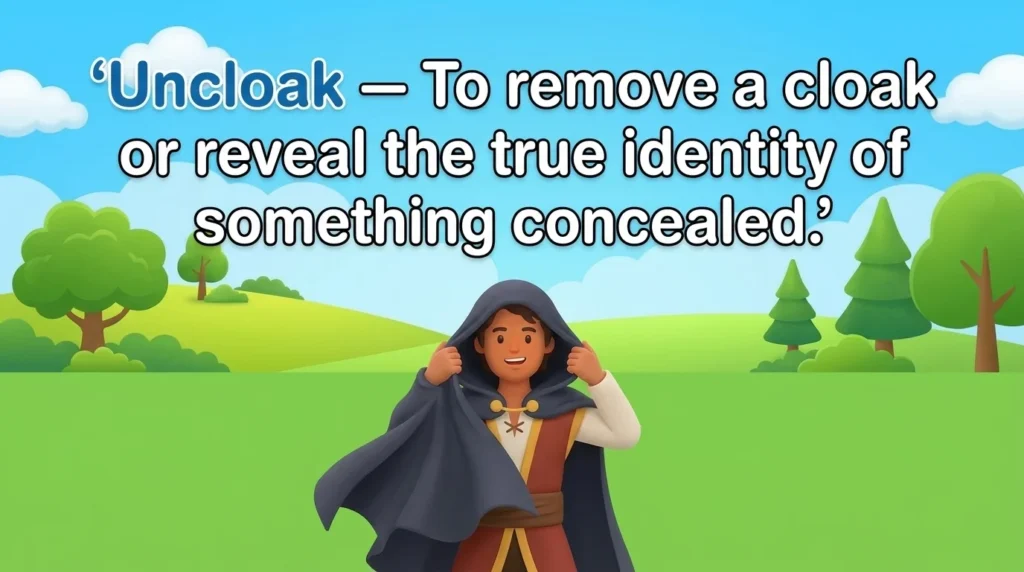
Uncloak (Verb) — US: /ʌnˈkloʊk/ | UK: /ʌnˈkləʊk/
Meaning: To remove a cloak or reveal the true identity of something concealed.
Tone/Register: Literary / Formal
Example 1: The mysterious stranger decided to uncloak his true intentions.
Example 2: Fantasy writers love to uncloak magical secrets in their final chapters.
Untomb (Verb) — US: /ʌnˈtuːm/ | UK: /ʌnˈtuːm/
Meaning:
To take something or someone out of a tomb or grave.
Tone/Register: Literary / Poetic
Example 1: Ancient legends spoke of wizards trying to untomb fallen kings.
Example 2: The poet wrote about efforts to untomb lost historical memories.
Excavate (Verb) — US: /ˈɛk.skə.veɪt/ | UK: /ˈɛk.skə.veɪt/
Meaning: To dig out and remove material from the ground, especially to find historical artifacts.
Tone/Register: Academic / Formal
Example 1: Archaeologists plan to excavate the ancient courtyard next spring.
Example 2: Crews began to excavate the muddy site after heavy rains stopped.
Exhume (Verb) — US: /ɪɡˈzuːm/ | UK: /ɪɡˈzuːm/
Meaning: To dig out something buried, particularly a corpse, from the ground for investigation.
Tone/Register: Formal / Legal
Example 1: Detectives requested permission to exhume the body for new forensic testing.
Example 2: Court orders allowed officials to legally exhume the historical remains.
Mine (Verb) — US: /maɪn/ | UK: /maɪn/
Meaning: To extract valuable ores or minerals from deep underground through tunneling.
Tone/Register: Industrial / Technical
Example 1: Local workers continue to mine coal in the rugged mountain region. Example 2: Tech companies mine massive datasets to improve user experiences daily.
Quarry (Verb) — US: /ˈkwɔːr.i/ | UK: /ˈkwɒr.i/
Meaning: To extract stone, slate, or other building materials from an open-air pit.
Tone/Register: Industrial / Descriptive
Example 1: Masons gathered to quarry large blocks of limestone for the cathedral.
Example 2: Workers use heavy machinery to quarry granite from the hillside.
Dig up (Phrasal verb) — US: /dɪɡ ʌp/ | UK: /dɪɡ ʌp/
Meaning: To break the ground surface to find or remove something hidden underneath.
Tone/Register: Informal / Conversational
Example 1: Gardeners dug up old roots to prepare the flowerbed for planting.
Example 2: He managed to dig up some fascinating childhood photographs from storage.
Root out (Phrasal verb) — US: /ruːt aʊt/ | UK: /ruːt aʊt/
Meaning: To search thoroughly and find something or someone that is hidden or unwanted.
Tone/Register: Conversational / General
Example 1: Auditors tried to root out financial corruption within the department.
Example 2: She worked hard to root out bad habits from her daily routine.
Turn up (Phrasal verb) — US: /tɜːrn ʌp/ | UK: /tɜːn ʌp/
Meaning: To find or discover something unexpectedly after a period of searching.
Tone/Register: Informal / Casual
Example 1: My missing car keys finally turned up under the living room couch.
Example 2: New clues might turn up once investigators review the security footage.
Expose (Verb) — US: /ɪkˈspoʊz/ | UK: /ɪkˈspəʊz/
Meaning: To make something visible by uncovering it or revealing a hidden truth.
Tone/Register: Standard / Formal
Example 1: Investigative journalists worked tirelessly to expose corporate fraud.
Example 2: Heavy winds helped expose the hidden rocks along the shoreline.
Reveal (Verb) — US: /rɪˈviːl/ | UK: /rɪˈviːl/
Meaning: To make previously unknown or secret information known to others.
Tone/Register: Standard / General
Example 1: The company plans to reveal its new smartphone design next month.
Example 2: Close friends helped reveal the surprise birthday party details early.
Disclose (Verb) — US: /dɪsˈkloʊz/ | UK: /dɪsˈkləʊz/
Meaning: To share sensitive or confidential information with the public or authorities.
Tone/Register: Formal / Business
Example 1: Officials refused to disclose details regarding the ongoing financial audit.
Example 2: Employees must disclose any potential conflicts of interest before signing.
Uncover (Verb) — US: /ʌnˈkʌv.ər/ | UK: /ʌnˈkʌv.ə/
Meaning: To remove a cover from something or discover a hidden fact.
Tone/Register: Standard / General
Example 1: Detectives worked quickly to uncover the truth behind the mysterious theft.
Example 2: She lifted the blanket to uncover the sleeping puppy beneath.
Bring to light (Idiom) — US: /brɪŋ tuː laɪt/ | UK: /brɪŋ tuː laɪt/
Meaning: To make previously hidden facts or evidence known to the public.
Tone/Register: Formal / Literary
Example 1: Recent documents bring to light serious errors in the original report.
Example 2: Historians managed to bring to light forgotten letters from the war.
Ferret out (Phrasal verb) — US: /ˈfɛr.ɪt aʊt/ | UK: /ˈfɛr.ɪt aʊt/
Meaning: To discover information or search out a person through persistent questioning.
Tone/Register: Conversational / Journalistic
Example 1: The reporter tried to ferret out the source of the government leak.
Example 2: She used her research skills to ferret out answers to tricky questions.
Smoke out (Phrasal verb) — US: /smoʊk aʊt/ | UK: /sməʊk aʊt/
Meaning: To force someone or something out of hiding by using pressure or exposure.
Tone/Register: Informal / Idiomatic
Example 1: Investigators hoped to smoke out the remaining suspects using new evidence.
Example 2: The clever detective set a trap to smoke out the clever thief.
Uncloak (Verb) — US: /ʌnˈkloʊk/ | UK: /ʌnˈkləʊk/
Meaning: To remove a cloak or reveal the true identity of something concealed.
Tone/Register: Literary / Formal
Example 1: The mysterious stranger decided to uncloak his true intentions.
Example 2: Fantasy writers love to uncloak magical secrets in their final chapters.
Untomb (Verb) — US: /ʌnˈtuːm/ | UK: /ʌnˈtuːm/
Meaning: To take something or someone out of a tomb or grave.
Tone/Register: Literary / Poetic
Example 1: Ancient legends spoke of wizards trying to untomb fallen kings.
Example 2: The poet wrote about efforts to untomb lost historical memories.
Unmask (Verb) — US: /ʌnˈmæsk/ | UK: /ʌnˈmɑːsk/
Meaning: To strip away a disguise or reveal the true nature of a person or scheme.
Tone/Register: Dramatic / Literary
Example 1: The brave detective planned to unmask the corrupt official during the gala.
Example 2: The twist ending helped unmask the villain’s hidden identity.
Disinter (Verb) — US: /ˌdɪsɪnˈtɜːr/ | UK: /ˌdɪsɪnˈtɜː/
Meaning: To dig up something that has been buried, especially a corpse.
Tone/Register: Formal / Scientific
Example 1: Pathologists had to disinter the casket to perform toxicology tests.
Example 2: Scientists obtained permission to disinter the ancient skeletal remains.
Unstifle (Verb) — US: /ʌnˈstaɪ.fəl/ | UK: /ʌnˈstaɪ.fəl/
Meaning: To release something from being suppressed, smothered, or held back.
Tone/Register: Literary / Expressive
Example 1: She took a deep breath to unstifle her long-suppressed creativity.
Example 2: The new policies helped unstifle community discussions on local reform.
Detect (Verb) — US: /dɪˈtɛkt/ | UK: /dɪˈtɛkt/
Meaning: To notice or discover the presence of something hidden or obscure.
Tone/Register: Formal / Technical
Example 1: Highly sensitive sensors can detect minute traces of gas leaks.
Example 2: The software was designed to detect subtle coding anomalies.
Locate (Verb) — US: /ˈloʊ.keɪt/ | UK: /ləʊˈkeɪt/
Meaning: To discover the exact place or position of something lost or hidden.
Tone/Register: Standard / Professional
Example 1: Search parties worked through the night to locate the missing hikers.
Example 2: Archivists tried to locate the misplaced manuscript in the basement.
Uncork (Verb) — US: /ʌnˈkɔːrk/ | UK: /ʌnˈkɔːk/
Meaning: To release something that has been kept bottled up or tightly contained.
Tone/Register: Figurative / Informal
Example 1: Winning the championship seemed to uncork a wave of local excitement.
Example 2: He struggled to uncork his emotions during the difficult interview.
Unkennel (Verb) — US: /ʌnˈkɛn.əl/ | UK: /ʌnˈkɛn.əl/
Meaning: To drive or bring an animal or hidden entity out of its shelter.
Tone/Register: Literary / Archaic
Example 1: Hounds worked quickly to unkennel the fox from the dense thicket.
Example 2: The clever strategy helped unkennel hidden opposition within the ranks.
Unearthing (Verb) — US: /ʌnˈɜːr.θɪŋ/ | UK: /ʌnˈɜː.ðɪŋ/
Meaning: The active process of bringing buried or hidden items to the surface.
Tone/Register: Standard / Descriptive
Example 1: Unearthing the old time capsule brought back wonderful childhood memories.
Example 2: Volunteers spent the weekend unearthing debris from the old foundation.
Bring to light (Verb phrase) — US: /brɪŋ tuː laɪt/ | UK: /brɪŋ tuː laɪt/
Meaning: To illuminate or make known facts that were previously kept secret.
Tone/Register: Formal / Journalistic
Example 1: Investigative reporting helped bring to light systemic safety failures.
Example 2: The audit will bring to light any financial irregularities.
Disclose secrets (Verb phrase) — US: /dɪsˈkloʊz ˈsiː.krɪts/ | UK: /dɪsˈkləʊz ˈsiː.krɪts/
Meaning: To reveal confidential or classified information to unauthorized parties.
Tone/Register: Legal / Professional
Example 1: The former employee signed an agreement not to disclose secrets.
Example 2: Whistleblowers may face penalties if they disclose secrets improperly.
Uncap (Verb) — US: /ʌnˈkæp/ | UK: /ʌnˈkæp/
Meaning: To remove a lid or covering from a container to reveal its contents.
Tone/Register: General / Conversational
Example 1: She reached forward to uncap the marker and begin drawing.
Example 2: Workers uncap storage barrels to inspect the contents inside.
Unfold (Verb) — US: /ʌnˈfoʊld/ | UK: /ʌnˈfəʊld/
Meaning: To reveal or cause something hidden or folded to become clear.
Tone/Register: Standard / Narrative
Example 1: We watched the dramatic events unfold live on the news broadcast.
Example 2: The mystery began to unfold as detectives examined the clues.
Unroll (Verb) — US: /ʌnˈroʊl/ | UK: /ʌnˈrəʊl/
Meaning: To open or spread out something that was rolled up for inspection.
Tone/Register: Practical / Descriptive
Example 1: The historian carefully unroll the fragile parchment scroll.
Example 2: Workers unroll the protective matting across the gymnasium floor.
Unvail (Verb – Variant) — US: /ʌnˈveɪl/ | UK: /ʌnˈveɪl/
Meaning: To remove a veil or present something new to the public view.
Tone/Register: Formal / Ceremonial
Example 1: The museum will unvail the newly restored classical painting tonight.
Example 2: Engineers plan to unvail the prototype vehicle at the conference.
Extricate (Verb) — US: /ˈɛk.strɪ.keɪt/ | UK: /ˈɛk.strɪ.keɪt/
Meaning: To free or pull something out from a constrained or hidden position.
Tone/Register: Formal / Descriptive
Example 1: Rescue workers struggled to extricate the vehicle from the mud.
Example 2: She tried to extricate herself from the awkward conversation politely.
Dig out (Phrasal verb) — US: /dɪɡ aʊt/ | UK: /dɪɡ aʊt/
Meaning: To retrieve something buried or trapped by digging around it.
Tone/Register: Conversational / General
Example 1: Neighbors helped dig out cars trapped in the heavy winter snow.
Example 2: He had to dig out old files from the bottom of the drawer.
Scratch the surface (Idiom) — US: /skætʃ ðə ˈsɜːr.fɪs/ | UK: /skætʃ ðə ˈsɜː.fɪs/
Meaning: To begin finding or revealing only a small part of a much larger hidden truth.
Tone/Register: Idiomatic / Conversational
Example 1: Our preliminary investigation only scratches the surface of the problem.
Example 2: Researchers realize they have barely scratched the surface of the archive.
Fish out (Phrasal verb) — US: /fɪʃ aʊt/ | UK: /fɪʃ aʊt/
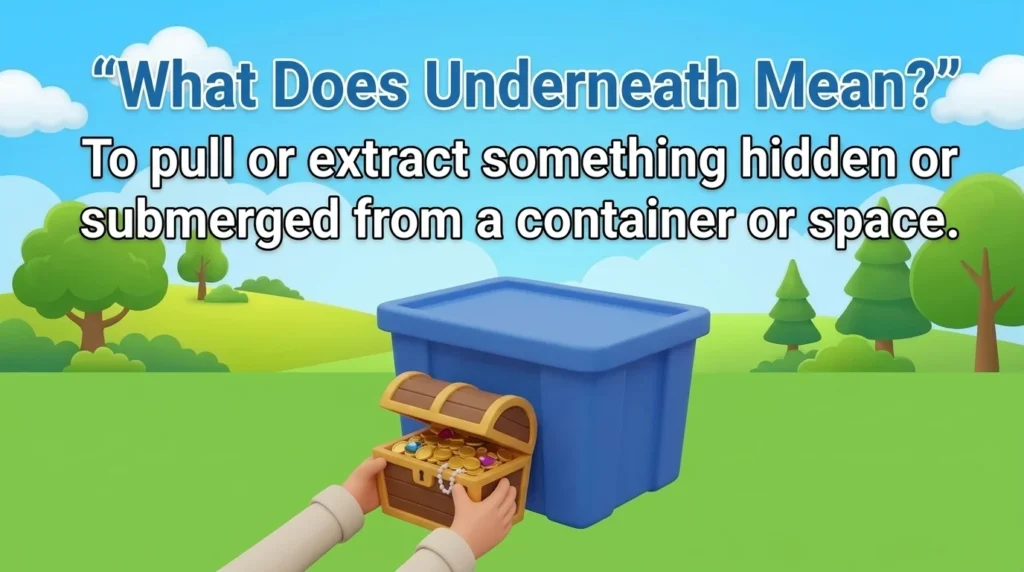
Meaning: To pull or extract something hidden or submerged from a container or space.
Tone/Register: Informal / Casual
Example 1: She managed to fish out her lost keys from the deep bag.
Example 2: He reached down to fish out a coin from the fountain.
Synonyms for “Unearth” by Tone
Understanding tone ensures you pick the right word for academic essays, casual chats, or dramatic storytelling. Choosing words that match your intended context prevents confusion and strengthens your message.
Positive:
Uncover, Reveal, Bring to light, Turn up
Neutral:
Excavate, Disclose, Dig up, Root out
Negative:
Expose, Ferret out, Smoke out
Playful/Informal:
Dig up, Turn up, Smoke out
MINI COMPARISON
Unearth vs Uncover vs Expose
- Meaning difference: Unearth suggests searching through layers or digging up something physical or hidden. Uncover simply means removing a barrier or revealing a secret. Expose implies bringing wrongdoing or vulnerability into harsh public view.
- Tone difference: Unearth feels investigative and rewarding. Uncover is neutral and direct. Expose often carries a sharp, revealing, or negative tone.
- When to use each: Use unearth when finding historical facts or lost items. Use uncover for general discoveries. Use exposing when dealing with scandals or secrets.
CONTEXT‑BASED USAGE
How “Unearth” Changes by Context
In daily conversation, speakers use casual terms like dig up or turn up to talk about lost objects or everyday discoveries.
When writing blog posts or articles, creators prefer vivid words like uncover or reveal to keep readers engaged.
In professional or academic settings, researchers rely on formal vocabulary such as excavate, disclose, or exhume to maintain scholarly authority and precision.
COMMON MISTAKES & NATIVE USAGE
Common Mistakes Learners Make
- Misuse scenarios: Using exhume for finding lost keys instead of corpses.
- Confusing tone: Using harsh words like expose when describing pleasant discoveries.
- Overuse warnings: Repeating unearth in every paragraph instead of varying synonyms.
Register Notes
Formal writing demands precise verbs like disclose or excavate, whereas casual speech naturally welcomes phrasal verbs like dig up or turn up. Choosing the appropriate register ensures your message resonates well with your intended audience.
REAL‑LIFE MINI SCENARIOS
Real‑Life Examples Using “Unearth”
- Workplace: Analysts managed to unearth critical discrepancies in the quarterly financial report.
- Social situations: She managed to unearth some hilarious childhood photos at the family reunion.
- Media / pop culture: Documentarians worked for months to unearth rare footage of the legendary musician.
- Writing or storytelling: The author loved to unearth forgotten myths to build her fantasy world.
CONCLUSION
Mastering vocabulary and discovering a precise synonym for unearth enhances your writing, blogging, and daily speaking skills. Exploring diverse words allows you to communicate your exact meaning with confidence and style.
Practicing these terms in your daily emails, essays, and conversations transforms your language abilities. Start experimenting with these creative alternatives today and watch your writing come alive.
INTERACTIVE PRACTICE QUIZ
- Which synonym best fits an archaeological dig?
- A) Expose
- B) Excavate
- C) Disclose
- D) Reveal
- Which phrasal verb means to find something unexpectedly?
- A) Turn up
- B) Ferret out
- C) Smoke out
- D) Exhume
- What tone does the word “exhume” typically carry?
- A) Playful
- B) Formal / Legal
- C) Casual
- D) Humorous
- Which term is best used when revealing corporate fraud?
- A) Turn up
- B) Expose
- C) Untomb
- D) Dig up
- What prefix is attached to “earth” to form the base verb?
- A) Re-
- B) Un-
- C) Dis-
- D) Mis-
- Which synonym is most appropriate for sharing confidential financial data?
- A) Dig up
- B) Disclose
- C) Smoke out
- D) Ferret out
- Which word implies removing a literal covering?
- A) Uncover
- B) Mine
- C) Quarry
- D) Exhume
- Which term describes searching out a hidden person through questioning?
- A) Turn up
- B) Ferret out
- C) Excavate
- D) Reveal
- What is the primary register of the phrasal verb “dig up”?
- A) Academic
- B) Informal
- C) Literary
- D) Legal
- Which word fits a poetic or literary description of removing someone from a grave?
- A) Untomb
- B) Unearth
- C) Disclose
- D) Mine
Reflection Task: Write one short sentence using the synonym uncover to describe finding a hidden talent.
Answer Key: 1-B | 2-A | 3-B | 4-B | 5-B | 6-B | 7-A | 8-B | 9-B | 10-A
FREQUENTLY ASKED QUESTIONS
What is the best synonym for unearth in formal writing?
Words like excavate, disclose, and reveal offer formal alternatives depending on whether you are discussing physical digging, shared information, or hidden facts.
Can unearth be used for abstract concepts?
Yes, native speakers frequently use it metaphorically to describe discovering hidden memories, forgotten history, or concealed secrets.
How do unearth and uncover differ?
Unearth usually implies digging or a deeper investigative search, while uncover simply means removing a cover or revealing something hidden.
Is unearth considered a formal word?
It sits comfortably in standard professional and literary English, making it suitable for both journalism and creative storytelling.
What phrasal verbs mean the same as unearth?
Common phrasal verbs include dig up, turn up, root out, and ferret out, which are often used in everyday conversation.

Aqsa Rani is the founder and lead writer at VocaNeest.com, a trusted platform dedicated to helping people improve their English vocabulary and communication skills. She creates well-researched, accurate, and easy-to-understand content covering synonyms, antonyms, word meanings, idioms, phrases, and everyday vocabulary. Her goal is to make learning English simple, practical, and accessible for students, writers, professionals, and lifelong learners.
At VocaNeest.com, every article is carefully researched, fact-checked, and written with a strong focus on accuracy, clarity, and real-world usage. Content is regularly reviewed and updated to ensure it remains helpful, relevant, and aligned with modern language standards. Through reliable vocabulary guides and practical examples, Aqsa aims to help readers write with confidence, expand their vocabulary, and communicate more effectively.