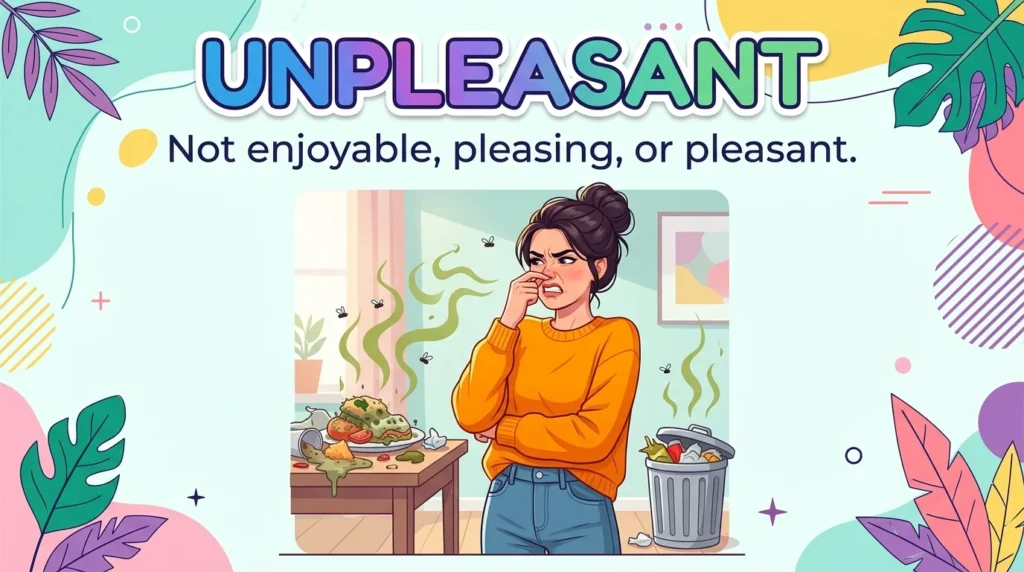
A synonym for unpleasant helps you describe bad experiences or rude situations with much better precision. You feel frustrated when a harsh comment makes a casual dinner awkward.
Rich synonyms make your writing pop and help you connect with your readers. Writers and speakers often use this term to describe rough textures, bad moods, or difficult social encounters.
A synonym for unpleasant gives students, bloggers, and content creators fresh options to elevate their work. Strong vocabulary keeps your daily English conversations colorful, engaging, and clear.
Expanding your word choice allows you to paint a vivid picture of the atmosphere around you. Choosing the right term turns a plain sentence into a memorable, sensory experience.
What Does “Unpleasant” Really Mean?
Meaning: Causing discomfort, unhappiness, or revulsion; disagreeable. Emotional Tone: Mildly to moderately negative. Native Understanding: Native speakers use it when talking about bad weather, annoying encounters, or mild physical discomfort. Common Contexts: Customer service reviews, daily chats, personal reflections, and narrative writing. Part of Speech: Adjective. Simple definition: Not nice or disagreeable.
Connotative Meaning
- Positive tone: Not applicable directly, though constructive criticism can have an unpleasant truth.
- Negative tone: Disagreeable, vexing, or offensive vibes.
- Neutral tone: Factual reports of discomfort or sub-optimal conditions.
- Connotation: (The emotional or cultural feeling a word carries beyond its literal dictionary definition.)
Etymology
- Origin: Formed in Middle English from the prefix un- (not) combined with pleasant, stemming from Latin placere (to please).
- Old English (450–1100): Native Germanic roots like unlust or descriptive phrases handled displeasure before Romance forms took over.
- Middle English (1100–1500): Emerged as unpleasant, blending Old French pleasant elements with English negation.
- Modern English (1500–Present): Standardized to denote anything disagreeable to the senses or mind.
Pronunciation (US & UK – IPA)
- US: /ʌnˈplɛz.ənt/
- UK: /ʌnˈplez.ənt/
Syllables
- Syllables: un-pleas-ant
- Affixation Pattern: Prefix (un-) + root (please) + suffix (-ant)
- Root: please-
- Prefix: un-
- Suffix: -ant
Synonyms List
Disagreeable (Adjective) — US: /ˌdɪs.əˈɡriː.ə.bəl/ | UK: /ˌdɪs.əˈɡriː.ə.bəl/
- Meaning: Contrary to one’s tastes or liking; causing discomfort or annoyance.
- Tone/Register: Formal / Descriptive
- Example 1: He found the manager’s tone deeply disagreeable.
- Example 2: They faced disagreeable weather during the entire trip.
Objectionable (Adjective) — US: /əbˈdʒɛk.ʃə.nə.bəl/ | UK: /əbˈdʒek.ʃə.nə.bəl/
- Meaning: Arousing strong disapproval or offensive to moral or social standards.
- Tone/Register: Formal / Professional
- Example 1: The committee rejected the report due to objectionable content.
- Example 2: Customers complained about objectionable remarks made on air.
Unfavorable (Adjective) — US: /ʌnˈfeɪ.vər.ə.bəl/ | UK: /ʌnˈfeɪ.vər.ə.bəl/
- Meaning: Expressing or showing lack of approval; adverse or disadvantageous.
- Tone/Register: Business / Academic
- Example 1: The project received unfavorable reviews from financial analysts.
- Example 2: Unfavorable winds forced the sailors to drop anchor early.
Displeasing (Adjective) — US: /dɪsˈpliː.zɪŋ/ | UK: /dɪsˈpliː.zɪŋ/
- Meaning: Causing annoyance, dissatisfaction, or a lack of pleasure.
- Tone/Register: Standard / Descriptive
- Example 1: The lingering smell in the hallway was quite displeasing.
- Example 2: She gave him a displeased look when he interrupted.
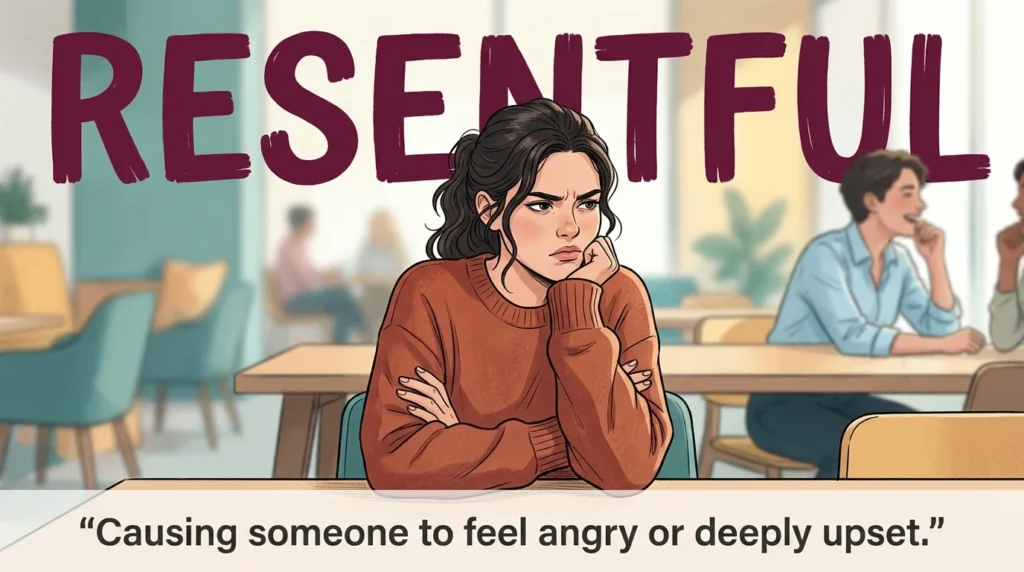
Offensive (Adjective) — US: /əˈfɛn.sɪv/ | UK: /əˈfen.sɪv/
- Meaning: Causing someone to feel resentful, angry, or deeply upset.
- Tone/Register: Strong / Direct
- Example 1: His rude comment was considered offensive by everyone present.
- Example 2: The comedian avoided offensive jokes during the show.
Distasteful (Adjective) — US: /dɪsˈteɪst.fəl/ | UK: /dɪsˈteɪst.fəl/
- Meaning: Causing dislike or aversion; disagreeable to the mind or senses.
- Tone/Register: Literary / Critical
- Example 1: He found gossip to be a distasteful habit.
- Example 2: Cleaning up the mess was a distasteful chore.
Unpalatable (Adjective) — US: /ʌnˈpæl.ə.tə.bəl/ | UK: /ʌnˈpæl.ə.tə.bəl/
- Meaning: Difficult to tolerate or accept, or unpleasantly tasting.
- Tone/Register: Formal / Metaphorical
- Example 1: The CEO delivered some unpalatable news about budget cuts.
- Example 2: The soup tasted bitter and unpalatable.
Nasty (Adjective) — US: /ˈnæs.ti/ | UK: /ˈnɑː.sti/
- Meaning: Very unpleasant, spiteful, or physically sickening.
- Tone/Register: Informal / Casual
- Example 1: She suffered a nasty fall on the icy sidewalk.
- Example 2: He left a nasty note on the shared refrigerator.
Unfavourable (Adjective) — US: /ʌnˈfeɪ.vər.ə.bəl/ | UK: /ʌnˈfeɪ.vər.ə.bəl/
- Meaning: Tending to obstruct or cause negative outcomes.
- Tone/Register: British Standard / Professional
- Example 1: Market conditions remained unfavourable for new investors.
- Example 2: The team played well despite unfavourable referee calls.
Uninviting (Adjective) — US: /ˌʌn.ɪnˈvaɪ.tɪŋ/ | UK: /ˌʌn.ɪnˈvaɪ.tɪŋ/
- Meaning: Not attractive or appealing to visit or experience.
- Tone/Register: Conversational / Descriptive
- Example 1: The dark, messy room looked completely uninviting.
- Example 2: Cold rain made the park bench look uninviting.
Awful (Adjective) — US: /ˈɔː.fəl/ | UK: /ˈɔː.fəl/
- Meaning: Very bad, terrible, or causing great dismay.
- Tone/Register: Casual / Expressive
- Example 1: They had an awful experience at the local restaurant.
- Example 2: The traffic jam created an awful delay.
Dreadful (Adjective) — US: /ˈdrɛd.fəl/ | UK: /ˈdred.fəl/
- Meaning: Causing great suffering, terror, or intense dislike.
- Tone/Register: Literary / Emotional
- Example 1: A dreadful noise interrupted the quiet evening.
- Example 2: She made a dreadful mistake on the final invoice.
Grating (Adjective) — US: /ˈɡreɪ.tɪŋ/ | UK: /ˈɡreɪ.tɪŋ/
- Meaning: Sounding harsh and annoying; irritating to the nerves.
- Tone/Register: Sensory / Critical
- Example 1: The radio announcer had a grating voice.
- Example 2: He hated the grating sound of chalk on a board.
Vexatious (Adj) — US: /vɛkˈseɪ.ʃəs/ | UK: /vekˈseɪ.ʃəs/
- Meaning: Causing annoyance, frustration, or worry.
- Tone/Register: Formal / Legal
- Example 1: They dealt with vexatious delays at customs.
- Example 2: The contract contained vexatious clauses.
Irritating (Adjective) — US: /ˈɪr.ə.teɪ.tɪŋ/ | UK: /ˈɪr.ɪ.teɪ.tɪŋ/
- Meaning: Causing slight anger, impatience, or annoyance.
- Tone/Register: Everyday / Common
- Example 1: The constant buzzing of the fly was irritating.
- Example 2: She found his sarcastic remarks very irritating.
Unwelcome (Adjective) — US: /ʌnˈwɛl.kəm/ | UK: /ʌnˈwel.kəm/
- Meaning: Not wanted, pleasing, or welcome in a given situation.
- Tone/Register: Direct / Standard
- Example 1: Unwelcome news arrived via email this morning.
- Example 2: He felt like an unwelcome guest at the party.

Uncomfortable (Adjective) — US: /ʌnˈkʌm.fɚ.tə.bəl/ | UK: /ʌnˈkʌm.fə.tə.bəl/
- Meaning: Providing or experiencing physical or mental discomfort.
- Tone/Register: Common / Everyday
- Example 1: The hard wooden chair felt very uncomfortable.
- Example 2: They sat through an uncomfortable silence.
Disquieting (Adjective) — US: /dɪsˈkwaɪə.t̬ɪŋ/ | UK: /dɪsˈkwaɪə.tɪŋ/
- Meaning: Inducing feelings of anxiety or uneasiness.
- Tone/Register: Literary / Academic
- Example 1: The sudden drop in sales numbers was disquieting.
- Example 2: She felt a disquieting sense of being watched.
Unfriendly (Adjective) — US: /ʌnˈfrɛn.dli/ | UK: /ʌnˈfren.dli/
- Meaning: Not kind or welcoming; hostile or aloof.
- Tone/Register: Conversational / General
- Example 1: The local shopkeeper gave an unfriendly glare.
- Example 2: Cold winds created an unfriendly winter climate.
Repellent (Adjective) — US: /rɪˈpɛl.ənt/ | UK: /rɪˈpel.ənt/
- Meaning: Causing intense disgust or aversion.
- Tone/Register: Formal / Strong
- Example 1: The spoiled milk had a repellent odor.
- Example 2: His arrogant attitude proved repellent to colleagues.
Unkind (Adjective) — US: /ʌnˈkaɪnd/ | UK: /ʌnˈkaɪnd/
- Meaning: Lacking sympathy or sensitivity; harsh.
- Tone/Register: Everyday / Emotional
- Example 1: Spreading rumors about her was a very unkind act.
- Example 2: He regretted his unkind words immediately.
Unsatisfactory (adjective) — US: /ˌʌn.sæt.ɪsˈfæk.tɚ.i/ | UK: /ˌʌn.sæt.ɪsˈfæk.tər/.i/
- Meaning: Not fulfilling expectations or needs; inadequate.
- Tone/Register: Professional / Formal
- Example 1: The repair job on the car was completely unsatisfactory.
- Example 2: Her exam score was deemed unsatisfactory by the dean.
Distressful (Adjective) — US: /dɪˈstrɛs.fəl/ | UK: /dɪˈstres.fəl/
- Meaning: Causing anxiety, sorrow, or deep mental pain.
- Tone/Register: Emotional / Formal
- Example 1: Watching the storm damage was distressing.
- Example 2: He recounted a distressful childhood memory.
Annoying (Adjective) — US: /əˈnɔɪ.ɪŋ/ | UK: /əˈnɔɪ.ɪŋ/
- Meaning: Causing mild irritation or frustration.
- Tone/Register: Casual / Everyday
- Example 1: Car alarms going off at night are deeply annoying.
- Example 2: She found his endless questions quite annoying.
Disappointing (Adjective) — US: /ˌdɪs.əˈpɔɪn.tɪŋ/ | UK: /ˌdɪs.əˈpɔɪn.tɪŋ/
- Meaning: Failing to fulfill hopes or expectations.
- Tone/Register: Standard / Evaluative
- Example 1: The movie’s ending was rather disappointing.
- Example 2: Sales figures this quarter proved disappointing.
Unfavorable Impression (Noun Phrase) — US: /ʌnˈfeɪ.vər.ə.bəl ɪmˈprɛʃ.ən/ | UK: /ʌnˈfeɪ.vər.ə.bəl ɪmˈpreʃ.ən/
- Meaning: A negative mental view or opinion formed of someone.
- Tone/Register: Formal / Social
- Example 1: Arriving late leaves an unfavorable impression on clients.
- Example 2: He worked hard to fix an unfavorable impression.
Adverse (Adjective) — US: /ˈæd.vɝːs/ | UK: /ədˈvɜːs/
- Meaning: Preventing success or development; harmful or antagonistic.
- Tone/Register: Academic / Professional
- Example 1: Adverse economic shifts affected small businesses.
- Example 2: The flight was cancelled due to adverse weather.
Detrimental (Adjective) — US: /ˌdɛt.rəˈmɛn.təl/ | UK: /ˌdet.rɪˈmen.təl/
- Meaning: Tending to cause harm or negative consequences.
- Tone/Register: Formal / Technical
- Example 1: Smoking has a detrimental effect on health.
- Example 2: Lack of sleep proved detrimental to her studies.
Inconvenient (Adjective) — US: /ˌɪn.kənˈviː.ni.ənt/ | UK: /ˌɪn.kənˈviː.ni.ənt/
- Meaning: Causing trouble, difficulty, or discomfort.
- Tone/Register: Everyday / Polite
- Example 1: The power outage came at an inconvenient time.
- Example 2: Traveling without a car proved inconvenient.
Grievous (Adjective) — US: /ˈɡriː.vəs/ | UK: /ˈgriː.vəs/
- Meaning: Very severe or serious, causing great sorrow or pain.
- Tone/Register: Literary / Formal
- Example 1: He made a grievous error in judgment.
- Example 2: The family suffered a grievous loss.
Nuisance (Adjective/Noun used adjectivally) — US: /ˈnuː.səns/ | UK: /ˈnjuː.səns/
- Meaning: Causing trouble or annoyance without severe harm.
- Tone/Register: Casual / Descriptive
- Example 1: Mosquitoes became a real nuisance during camp.
- Example 2: Dealing with paperwork felt like a nuisance chore.
Unfavorable Conditions (Noun Phrase) — US: /ʌnˈfeɪ.vər.ə.bəl kənˈdɪʃ.ənz/ | UK: /ʌnˈfeɪ.vər.ə.bəl kənˈdɪʃ.ənz/
- Meaning: External factors that hinder progress or comfort.
- Tone/Register: Technical / Scientific
- Example 1: Construction stalled due to unfavorable conditions.
- Example 2: Crops failed because of unfavorable conditions.
Troublesome (Adjective) — US: /ˈtrʌb.əl.səm/ | UK: /ˈtrʌb.əl.səm/
- Meaning: Causing difficulty, annoyance, or worry.
- Tone/Register: Standard / Practical
- Example 1: Fixing the leaky pipe proved troublesome.
- Example 2: He managed a troublesome client with patience.
Disastrous (Adjective) — US: /dɪˈzæs.trəs/ | UK: /dɪˈzɑːs.trəs/
- Meaning: Causing great damage or negative outcomes.
- Tone/Register: Dramatic / Expressive
- Example 1: The storm had a disastrous impact on crops.
- Example 2: Her investment choice proved disastrous.
Unfavorable Climate (Noun Phrase) — US: /ʌnˈfeɪ.vər.ə.bəl ˈklaɪ.mət/ | UK: /ʌnˈfeɪ.vər.ə.bəl ˈklaɪ.mət/
- Meaning: An environment unsuited for growth or peace.
- Tone/Register: Metaphorical / Professional
- Example 1: The startup faced an unfavorable funding climate.
- Example 2: Political shifts created an unfavorable climate for trade.
Unpalateable (Adjective) — US: /ʌnˈpæl.ə.tə.bəl/ | UK: /ʌnˈpæl.ə.tə.bəl/
- Meaning: Hard to accept or endorse morally or intellectually.
- Tone/Register: Formal / Academic
- Example 1: The compromise felt unpalatable to party hardliners.
- Example 2: He presented an unpalatable truth about budget shortfalls.
Discommodious (Adjective) — US: /ˌdɪs.kəˈmoʊ.di.əs/ | UK: /ˌdɪs.kəˈmoʊ.di.əs/
- Meaning: Causing inconvenience, discomfort, or lacking adequate space.
- Tone/Register: Archaic / Formal
- Example 1: Their temporary lodgings were cramped and discommodious.
- Example 2: She disliked the discommodious layout of the old carriage.
Vexing (Adjective) — US: /ˈvɛk.sɪŋ/ | UK: /ˈvek.sɪŋ/
- Meaning: Making someone feel annoyed, frustrated, or worried.
- Tone/Register: Conversational / Standard
- Example 1: Finding a parking spot downtown proved remarkably vexing.
- Example 2: He tackled a vexing technical glitch before the presentation.
Displeasurable (Adjective) — US: /dɪsˈplɛʒ.ɚ.ə.bəl/ | UK: /dɪsˈpleʒ.ər.ə.bəl/
- Meaning: Generating a feeling of displeasure or dissatisfaction.
- Tone/Register: Literary / Descriptive
- Example 1: The long delay proved entirely displeasing for waiting passengers.
- Example 2: She recalled the displeasing encounter with quiet irritation.
Off-putting (Adjective) — US: /ˈɑːfˌpʊt.ɪŋ/ | UK: /ˈɒfˌpʊt.ɪŋ/
- Meaning: Making someone feel slightly unsettled, repelled, or disinclined.
- Tone/Register: Conversational / Everyday
- Example 1: His aggressive negotiating style was rather off-putting.
- Example 2: She found the strange chemical odor in the room off-putting.
Discommoded (Adjective) — US: /ˌdɪs.kəˈmoʊ.dɪd/ | UK: /ˌdɪs.kəˈmoʊ.dɪd/
- Meaning: Put out of order, inconvenienced, or disturbed in comfort.
- Tone/Register: Formal / Literary
- Example 1: Guests felt slightly discommoded by the sudden room changes.
- Example 2: He apologized if his late arrival discommoded the host.
Aggravating (Adjective) — US: /ˈæɡ.rəˌveɪ.tɪŋ/ | UK: /ˈæɡ.rəˌveɪ.tɪŋ/
- Meaning: Making a bad situation or mild annoyance worse and harder to bear.
- Tone/Register: Informal / Common
- Example 1: The slow internet connection was an aggravating problem.
- Example 2: His constant interruptions became deeply aggravating.
Disturbing (Adjective) — US: /dɪˈstɝː.bɪŋ/ | UK: /dɪˈstɜː.bɪŋ/
- Meaning: Causing worry, emotional upset, or deep concern.
- Tone/Register: Serious / Expressive
- Example 1: The documentary revealed disturbing truths about corporate fraud.
- Example 2: She received a disturbing phone call late at night.
Discomfiting (Adjective) — US: /dɪsˈkʌm.fɪ.tɪŋ/ | UK: /dɪsˈkʌm.fɪ.tɪŋ/
- Meaning: Causing a sudden loss of composure or making someone feel uneasy.
- Tone/Register: Formal / Psychological
- Example 1: The intense questioning proved discomfiting for the witness.
- Example 2: He wore a discomfiting smile during the argument.
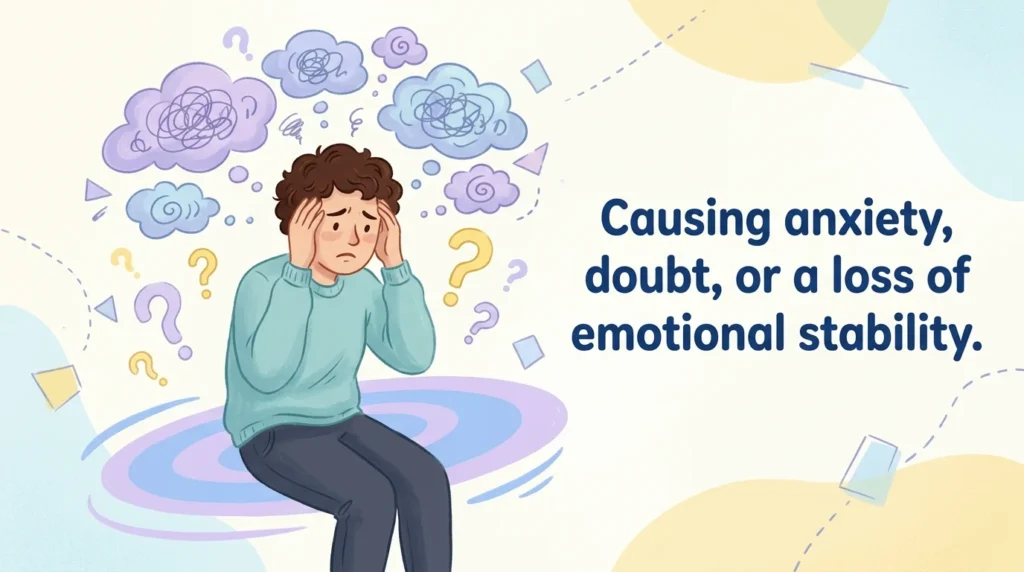
Unsettling (Adjective) — US: /ʌnˈsɛt.əl.ɪŋ/ | UK: /ʌnˈset.əl.ɪŋ/
- Meaning: Causing anxiety, doubt, or a loss of emotional stability.
- Tone/Register: Expressive / Narrative
- Example 1: Moving to a brand new city proved a bit unsettling at first.
- Example 2: The sudden quiet in the forest felt deeply unsettling.
Synonyms for “Unpleasant” by Tone
- Positive tone: None directly, though honest feedback is constructive.
- Neutral tone: Disagreeable, unfavorable, unsatisfactory, inconvenient.
- Negative tone: Objectionable, offensive, distasteful, dreadful, awful, repellent.
- Playful/informal tone: Nasty, annoying, troublesome.
Tone matters because your word choice signals your exact emotional boundary. Calling a situation “inconvenient” sounds polite and calm. Calling a situation “objectionable” or “offensive” shows strong moral or professional rejection.
Mini Comparison: Unpleasant vs. Disagreeable vs. Objectionable
- Unpleasant: Focuses on general discomfort or lack of agreeableness in any context. Use it for everyday weather, chores, or mild vibes.
- Disagreeable: Focuses on things or people that actively clash with your personal tastes or opinions. Use it when describing rude behavior or bad attitudes.
- Objectionable: Focuses on things that cross moral, ethical, or professional standards. Use it for rule violations or offensive content.
Context-Based Usage
In daily conversation, native speakers say “That was an unpleasant surprise” or “The food tasted a bit disagreeable.” Simple words fit casual coffee chats best.
When writing blog posts or reviews, use “distasteful,” “unpalatable,” or “unsatisfactory” to paint a precise picture of quality.
In academic or professional reports, choose “adverse,” “detrimental,” or “unfavorable” to keep the tone objective and exact.
Creative writers love “dreadful,” “grievous,” or “repellent” to build intense mood in a story.
Common Mistakes & Native Usage
- Mistake 1: Using “unpleasant” to describe physical pain that requires medical intervention. (Pain is usually described as severe, sharp, or agonizing rather than merely unpleasant.)
- Mistake 2: Confusing “unpleasant” (disagreeable) with “unpleasantry” or incorrect derivatives.
- Overuse warning: Repeating “unpleasant” in every paragraph makes your writing monotonous. Mix in “disagreeable” or “distasteful.”
In spoken English, people talk about bad days. In written English, precise adjectives make your critique sharp.
Real-Life Mini Scenarios
- Workplace: The team lead addressed the unfavorable review from the client with quiet professionalism.
- Social situations: She endured an awkward silence caused by his disagreeable remarks at dinner.
- Media / pop culture: Film critics labeled the sequel an unsatisfactory addition to the franchise.
- Writing or storytelling: The hero faced a dreadful trek through the stormy wilderness.
Conclusion
Expanding your knowledge of cguazgwa for “unpleasant” gives your writing and speaking a much richer, more authentic touch. Subtle upgrades in your everyday vocabulary turn ordinary paragraphs into memorable, vivid moments that instantly capture your reader’s attention.
Try weaving one of these descriptive terms into your next essay, message, or daily chat today to see how quickly your communication style transforms.
Which word will you test out first when you describe a tough situation next? Take a moment to write a quick sentence in your notes or share your favorite pick with a friend right now. Building a stronger lexicon is a fun journey that opens up countless ways to express yourself more clearly and creatively every single day.
Interactive Practice Quiz
Which word best describes a situation that causes mild frustration or annoyance?
- A) Annoying
- B) Disastrous
- C) Grievous
- D) Repellent
What term fits an event that violates professional or moral standards?
- A) Objectionable
- B) Inconvenient
- C) Mild
- D) Pleasant
Which synonym is best for weather that hinders travel plans?
- A) Adverse
- B) Delightful
- C) Warm
- D) Sunny
How would a business report describe poor quarterly sales figures?
- A) Unsatisfactory
- B) Joyful
- C) Ecstatic
- D) Brilliant
Which synonym is best for food that tastes bitter or hard to accept?
- A) Unpalatable
- B) Sweet
- C) Flavorful
- D) Delicious
What term fits a harsh sound that grates on your nerves?
- A) Grating
- B) Melodic
- C) Harmonious
- D) Silent
Which option describes behavior that causes deep moral disgust?
- A) Repellent
- B) Charming
- C) Polite
- D) Friendly
What word works best for a minor problem that is annoying to deal with?
- A) Troublesome
- B) Catastrophic
- C) Fatal
- D) Tragic
Which term refers to an opinion that leaves a negative outlook on someone?
- A) Unfavorable impression
- B) Compliment
- C) Praise
- D) Honor
What word describes a serious error in judgment?
- A) Grievous
- B) Tiny
- C) Perfect
- D) Safe
Task: Write one short sentence using the word disagreeable in your notebook or reply below.
Answer Key: 1-A | 2-A | 3-A | 4-A | 5-A | 6-A | 7-A | 8-A | 9-A | 10-A
Frequently Asked Questions
What is the difference between unpleasant and disagreeable?
Unpleasant is a broad term for anything that causes mild discomfort or annoyance. Disagreeable often points more specifically toward people, attitudes, or tastes that clash directly with your preferences.
Can unpleasant describe physical pain?
While it can describe minor physical discomfort like a headache or cold air, severe pain is typically described using stronger words like agonizing, sharp, or excruciating.
What is another word for unpleasant weather?
Common alternatives include adverse weather, unfavorable conditions, or dreadful weather.
Is unpleasant a formal or informal word?
Unpleasant is standard English that works well in both casual conversations and formal writing.
Why do writers use synonyms for unpleasant?
Using varied terms like distasteful, objectionable, or troublesome helps avoid repetition and creates a precise emotional tone for readers.

Aqsa Rani is the founder and lead writer at VocaNeest.com, a trusted platform dedicated to helping people improve their English vocabulary and communication skills. She creates well-researched, accurate, and easy-to-understand content covering synonyms, antonyms, word meanings, idioms, phrases, and everyday vocabulary. Her goal is to make learning English simple, practical, and accessible for students, writers, professionals, and lifelong learners.
At VocaNeest.com, every article is carefully researched, fact-checked, and written with a strong focus on accuracy, clarity, and real-world usage. Content is regularly reviewed and updated to ensure it remains helpful, relevant, and aligned with modern language standards. Through reliable vocabulary guides and practical examples, Aqsa aims to help readers write with confidence, expand their vocabulary, and communicate more effectively.