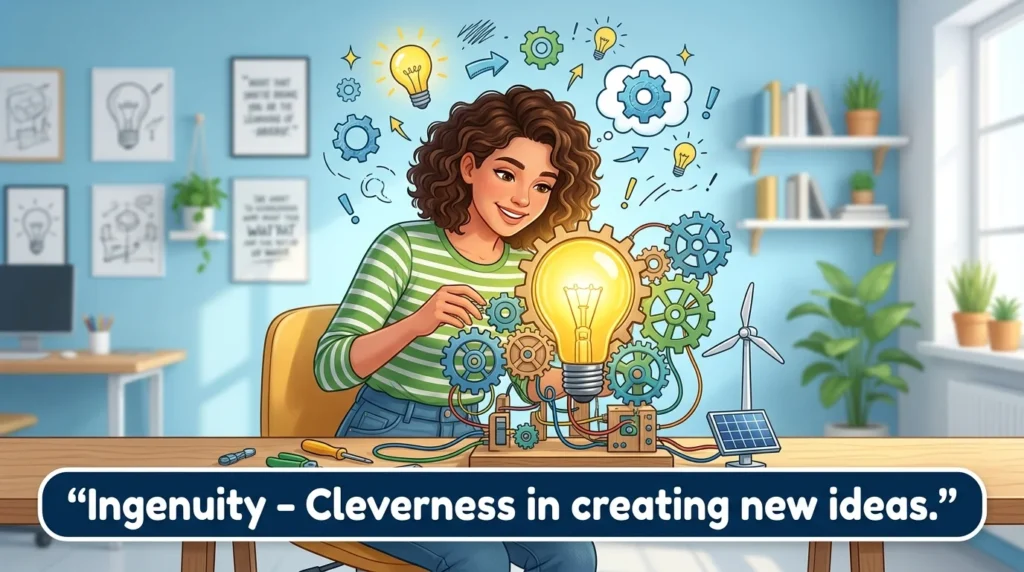
Synonym for ingenuity can include inventiveness, resourcefulness, creativity, originality, and innovation. The best choice depends on whether you want to stress clever ideas, practical problem-solving, or original thinking.
A synonym for ingenuity becomes useful when you want to describe someone who finds a clever solution instead of giving up.
Imagine a student facing a difficult project with limited materials. She finds a simple new approach and completes it successfully. That is ingenuity.
Knowing a synonym for ingenuity helps you avoid repeating the same word. It also lets you choose vocabulary that fits your exact meaning.
The word is common in academic writing, technology, business, education, and everyday English. Students and writers often use it to praise clever problem-solving.
For bloggers and content writers, related words such as inventiveness and resourcefulness can make descriptions more precise. Daily English users can use them to sound natural.
What Does “Ingenuity” Really Mean?
Ingenuity is the ability to think of clever, unusual, or effective ways to solve a problem or accomplish something.
Cambridge Dictionary defines it as the ability to think of clever new ways of doing something. It is an uncountable noun and is commonly used when praising someone’s creative problem-solving ability.
For example:
Her ingenuity helped the team solve the problem.
Here, ingenuity does not simply mean intelligence. It suggests that the person used clever thinking to create a useful solution.
Part of Speech
Ingenuity — Noun
Simple definition: The ability to create clever and effective solutions, especially when something is difficult or limited.
Native speakers usually use ingenuity in a positive way. It often appears with words such as human, creative, technical, remarkable, and resourceful.
Common contexts include:
- Solving difficult problems
- Creating new products or ideas
- Finding solutions with limited resources
- Designing something original
- Academic research
- Engineering and technology
- Writing and storytelling
- Everyday problem-solving
Connotative Meaning of Ingenuity
Connotation (the feeling or idea a word suggests beyond its basic dictionary meaning) helps explain why ingenuity sounds different from simple words such as intelligence.
Positive Tone
Ingenuity is most often positive.
It can suggest creativity, cleverness, imagination, and practical intelligence.
Example:
The engineer’s ingenuity produced a simple solution.
Negative Tone
The word itself is rarely negative. However, its surrounding context can make the idea sound questionable.
For example, someone may use cleverness to create a dishonest scheme. In such a case, cunning or craftiness may be more appropriate than ingenuity.
Neutral Tone
In technical or academic writing, ingenuity can simply describe an unusual and effective method without strong emotional emphasis.
Etymology of Ingenuity
The history of ingenuity is particularly interesting because its modern meaning developed from an older sense.
The English word dates from the 1590s. It originally referred to qualities such as honor and nobility and came through French ingénuité, ultimately connected with Latin ingenuitas, meaning the condition of being free-born.
The modern meaning developed partly through confusion between ingenious and ingenuous. By the 1640s, ingenuity had acquired the sense of a person’s capacity for invention or clever construction.
Old English: 450–1100
The modern word ingenuity was not an Old English word.
Instead, Old English had its own vocabulary for ideas involving skill, cleverness, craft, and practical ability. The modern English form entered the language much later.
Middle English: 1100–1500
During Middle English, related forms such as ingeny expressed ideas connected with intellectual ability or cleverness.
Another related form was enginous, which described someone or something clever or skillful. Ingeniosity was also used for the quality of being ingenious.
Modern English: 1500–Present
By the Early Modern English period, ingenuity gradually developed its modern meaning.
The important shift was from ideas of noble or frank character toward clever invention, construction, and problem-solving. Today, the word strongly suggests creative ability and clever solutions.
Pronunciation of Ingenuity
US: /ˌɪn.dʒəˈnuː.ə.t̬i/
UK: /ˌɪn.dʒəˈnjuː.ə.ti/
Cambridge lists these separate American and British pronunciations.
Syllables
in-ge-nu-i-ty
Affixation Pattern of Ingenuity
Root: Historically related to Latin ingenuitas and ingenium
Prefix: No productive English prefix in the modern word
Suffix: -ity, a noun-forming ending commonly associated with qualities or states
It is important not to interpret the beginning in- as the ordinary English negative prefix. The historical development comes through Latin rather than a simple modern English prefix-plus-root construction.
Synonyms List
Below are accurate alternatives. Some emphasize creativity, while others focus more strongly on practical problem-solving, skill, or originality.
Lateral Thinking (Noun) — US /ˈlætərəl ˈθɪŋkɪŋ/ — UK /ˈlætərəl ˈθɪŋkɪŋ/
Meaning: The ability to solve problems by approaching them from an unusual or unexpected direction.
Tone/Register: Academic, professional
Example:
Lateral thinking helped the team find a different solution.
The puzzle requires strong lateral thinking.
Original Thinking (Noun) — US /əˈrɪdʒənəl ˈθɪŋkɪŋ/ — UK /əˈrɪdʒənəl ˈθɪŋkɪŋ/
Meaning: The ability to develop fresh ideas that are different from conventional approaches.
Tone/Register: Academic, professional
Example:
The professor encouraged original thinking in class.
Her original thinking improved the research project.
Innovative Thinking (Noun) — US /ˈɪnəveɪtɪv ˈθɪŋkɪŋ/ — UK /ˈɪnəveɪtɪv ˈθɪŋkɪŋ/
Meaning: The ability to develop new approaches or methods for addressing challenges.
Tone/Register: Professional, business
Example:
Innovative thinking can improve workplace processes.
The project rewarded innovative thinking.
Creative Insight (Noun) — US /kriˈeɪtɪv ˈɪnsaɪt/ — UK /kriˈeɪtɪv ˈɪnsaɪt/
Meaning: A fresh understanding that leads to an imaginative or effective solution.
Tone/Register: Academic, creative
Example:
Her creative insight changed the direction of the project.
The article offers creative insight into a common problem.
Mental Agility (Noun) — US /ˈmɛntəl əˈdʒɪləti/ — UK /ˈmentəl əˈdʒɪləti/
Meaning: The ability to think quickly and adjust ideas when circumstances change.
Tone/Register: Formal, academic
Example:
The challenging task tested his mental agility.
Mental agility is useful when decisions must be made quickly.
Intellectual Agility (Noun) — US /ˌɪntəˈlɛktʃuəl əˈdʒɪləti/ — UK /ˌɪntəˈlektʃuəl əˈdʒɪləti/
Meaning: The ability to adapt one’s thinking and respond effectively to new information.
Tone/Register: Academic, formal
Example:
Research requires intellectual agility and curiosity.
Her intellectual agility helped her understand the complex topic.
Inventive Ability (Noun Phrase) — US /ɪnˈvɛntɪv əˈbɪləti/ — UK /ɪnˈventɪv əˈbɪləti/
Meaning: The capacity to create new and useful ideas, methods, or solutions.
Tone/Register: Professional, academic
Example:
The engineer demonstrated impressive inventive ability.
His inventive ability helped improve the design.
Creative Ability (Noun Phrase) — US /kriˈeɪtɪv əˈbɪləti/ — UK /kriˈeɪtɪv əˈbɪləti/
Meaning: The capacity to produce imaginative and original ideas.
Tone/Register: Neutral, academic
Example:
The assignment tests students’ creative ability.
Her creative ability is evident in her artwork.
Problem-Solving Skill (Noun Phrase) — US /ˈprɑːbləm ˌsɑːlvɪŋ skɪl/ — UK /ˈprɒbləm ˌsɒlvɪŋ skɪl/
Meaning: The ability to understand a difficulty and develop an effective solution.
Tone/Register: Professional, academic
Example:
The interview tested his problem-solving skills.
Good problem-solving skills are useful in many careers.
Practical Intelligence (Noun Phrase) — US /ˈpræktɪkəl ɪnˈtelədʒəns/ — UK /ˈpræktɪkəl ɪnˈtelɪdʒəns/
Meaning: The ability to apply knowledge effectively to real-world situations.
Tone/Register: Academic, professional
Example:
Her practical intelligence helped solve the equipment problem.
The job requires practical intelligence and good judgment.
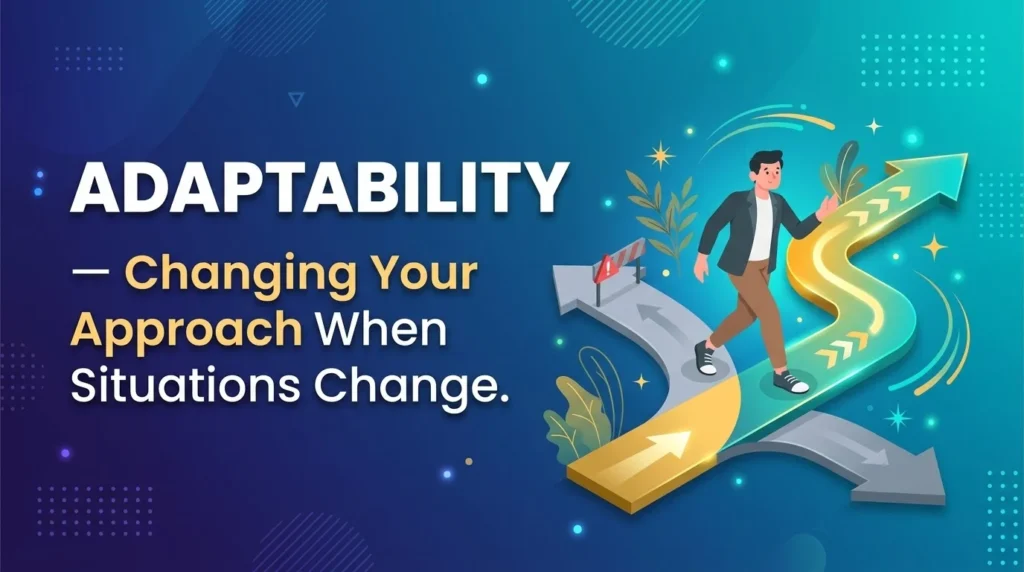
Adaptive Thinking (Noun) — US /əˈdæptɪv ˈθɪŋkɪŋ/ — UK /əˈdæptɪv ˈθɪŋkɪŋ/
Meaning: The ability to change one’s approach when a situation or problem changes.
Tone/Register: Academic, professional
Example:
Adaptive thinking helped the team respond to the unexpected change.
The course develops adaptive thinking.
Flexible Thinking (Noun) — US /ˈflɛksəbəl ˈθɪŋkɪŋ/ — UK /ˈfleksəbəl ˈθɪŋkɪŋ/
Meaning: The ability to consider different approaches instead of relying on one fixed idea.
Tone/Register: Neutral, academic
Example:
Flexible thinking can make difficult decisions easier.
The teacher encourages flexible thinking in students.
Strategic Thinking (Noun) — US /strəˈtiːdʒɪk ˈθɪŋkɪŋ/ — UK /strəˈtiːdʒɪk ˈθɪŋkɪŋ/
Meaning: The ability to develop thoughtful approaches for reaching a specific goal.
Tone/Register: Professional, business
Example:
Strategic thinking helped the team plan its next step.
The position requires strong strategic thinking.
Conceptual Thinking (Noun) — US /kənˈseptʃuəl ˈθɪŋkɪŋ/ — UK /kənˈseptʃuəl ˈθɪŋkɪŋ/
Meaning: The ability to understand ideas, patterns, and relationships in an abstract way.
Tone/Register: Academic, professional
Example:
Conceptual thinking helped her connect the main ideas.
The course develops strong conceptual thinking.
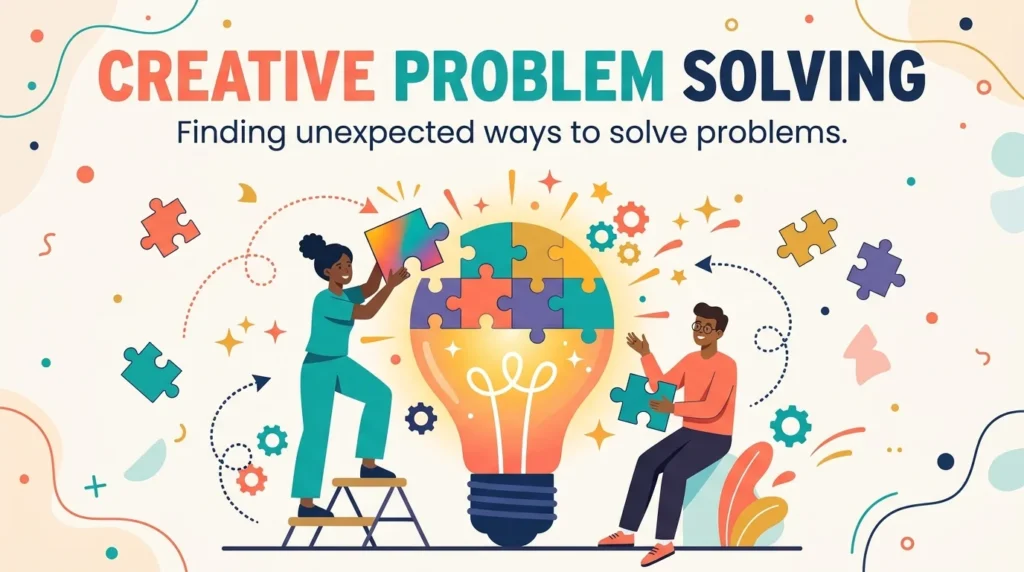
Creative Problem-Solving (Noun) — US /kriˈeɪtɪv ˈprɑːbləm ˌsɑːlvɪŋ/ — UK /kriˈeɪtɪv ˈprɒbləm ˌsɒlvɪŋ/
Meaning: The process of using fresh ideas to overcome a difficult challenge.
Tone/Register: Academic, professional
Example:
Creative problem-solving produced an unexpected answer.
The workshop focuses on creative problem-solving.
Brainpower (Noun) — US /ˈbreɪnˌpaʊər/ — UK /ˈbreɪnˌpaʊə/
Meaning: Mental ability used to understand, analyze, or solve difficult problems.
Tone/Register: Informal, conversational
Example:
The puzzle required plenty of brainpower.
She used her brainpower to work out the answer.
Resourceful Thinking (Noun Phrase) — US /rɪˈsɔːrsfəl ˈθɪŋkɪŋ/ — UK /rɪˈzɔːsfəl ˈθɪŋkɪŋ/
Meaning: Practical thinking that helps someone overcome difficulties using available options.
Tone/Register: Neutral, professional
Example:
Resourceful thinking helped them complete the task.
The situation called for resourceful thinking.
Solution-Oriented Thinking (Noun Phrase) — US /səˈluːʃən ˈɔːriˌentɪd ˈθɪŋkɪŋ/ — UK /səˈluːʃən ˈɔːriˌentɪd ˈθɪŋkɪŋ/
Meaning: A way of thinking that focuses on finding practical answers to problems.
Tone/Register: Professional, academic
Example:
A solution-oriented approach kept the project moving.
The manager encourages solution-oriented thinking.
Intellectual Creativity (Noun Phrase) — US /ˌɪntəˈlɛktʃuəl ˌkriːeɪˈtɪvəti/ — UK /ˌɪntəˈlektʃuəl ˌkriːeɪˈtɪvəti/
Meaning: The ability to generate original ideas through reasoning and thought.
Tone/Register: Academic, formal
Example:
The research demonstrates intellectual creativity.
The assignment encourages intellectual creativity.
Mental Cleverness (Noun Phrase) — US /ˈmɛntəl ˈklɛvərnəs/ — UK /ˈmentəl ˈklevənəs/
Meaning: The ability to think quickly and find an effective response to a challenge.
Tone/Register: Informal, neutral
Example:
The game requires mental cleverness.
His mental cleverness impressed the other players.
Practical Cleverness (Noun Phrase) — US /ˈpræktɪkəl ˈklɛvərnəs/ — UK /ˈpræktɪkəl ˈklevənəs/
Meaning: The ability to use smart ideas to deal successfully with real-world situations.
Tone/Register: Neutral, conversational
Example:
Her practical cleverness solved the household problem.
The task rewarded practical cleverness.
Solution-Finding Ability (Noun Phrase) — US /səˈluːʃən ˈfaɪndɪŋ əˈbɪləti/ — UK /səˈluːʃən ˈfaɪndɪŋ əˈbɪləti/
Meaning: The capacity to discover effective answers to challenging situations.
Tone/Register: Academic, professional
Example:
The activity measures students’ solution-finding ability.
Strong solution-finding ability is useful in research.
Innovative Ability (Noun Phrase) — US /ˈɪnəveɪtɪv əˈbɪləti/ — UK /ˈɪnəveɪtɪv əˈbɪləti/
Meaning: The capacity to develop new methods, ideas, or approaches.
Tone/Register: Professional, business
Example:
The company values her innovative ability.
His innovative ability helped improve the product.
Adaptive Intelligence (Noun Phrase) — US /əˈdæptɪv ɪnˈtelədʒəns/ — UK /əˈdæptɪv ɪnˈtelɪdʒəns/
Meaning: The ability to adjust thinking and behavior effectively when circumstances change.
Tone/Register: Academic, professional
Example:
Adaptive intelligence is valuable in changing environments.
The challenge tested her adaptive intelligence.
Mental Flexibility (Noun) — US /ˈmɛntəl flɛksəˈbɪləti/ — UK /ˈmentəl fleksəˈbɪləti/
Meaning: The ability to change perspectives and consider different ways of approaching a problem.
Tone/Register: Academic, professional
Example:
Mental flexibility helped him reconsider the original plan.
The exercise develops mental flexibility.
Intellectual Skill (Noun Phrase) — US /ˌɪntəˈlɛktʃuəl skɪl/ — UK /ˌɪntəˈlektʃuəl skɪl/
Meaning: A developed mental ability used for reasoning, analysis, or problem-solving.
Tone/Register: Academic, formal
Example:
The task requires strong intellectual skills.
Critical reading is an important intellectual skill.
Creative Resourcefulness (Noun Phrase) — US /kriˈeɪtɪv rɪˈsɔːrsfəl.nəs/ — UK /kriˈeɪtɪv rɪˈzɔːsfəl.nəs/
Meaning: The ability to combine creativity with practical thinking when facing limitations.
Tone/Register: Neutral, professional
Example:
Her creative resourcefulness saved the project.
The students showed creative resourcefulness during the challenge.
Novel Thinking (Noun Phrase) — US /ˈnɑːvəl ˈθɪŋkɪŋ/ — UK /ˈnɒvəl ˈθɪŋkɪŋ/
Meaning: Thinking that introduces a new or uncommon way of understanding or solving something.
Tone/Register: Academic, professional
Example:
The research encourages novel thinking about the issue.
His novel thinking led to an interesting solution.
Fresh Thinking (Noun Phrase) — US /frɛʃ ˈθɪŋkɪŋ/ — UK /freʃ ˈθɪŋkɪŋ/
Meaning: A new approach that avoids relying on familiar or outdated ideas.
Tone/Register: Neutral, professional
Example:
The project needs some fresh thinking.
Fresh thinking helped the group overcome the challenge.
Unconventional Thinking (Noun Phrase) — US /ˌʌnkənˈvɛnʃənəl ˈθɪŋkɪŋ/ — UK /ˌʌnkənˈvenʃənəl ˈθɪŋkɪŋ/
Meaning: Thinking that differs from traditional or commonly accepted approaches.
Tone/Register: Academic, professional
Example:
The problem required unconventional thinking.
Her unconventional thinking produced an effective solution.
Creative Insightfulness (Noun) — US /kriˈeɪtɪv ˈɪnsaɪtfəlnəs/ — UK /kriˈeɪtɪv ˈɪnsaɪtfəlnəs/
Meaning: The quality of understanding a situation in a fresh and perceptive way.
Tone/Register: Formal, academic
Example:
The writer’s creative insightfulness strengthened the story.
Her creative insightfulness was clear throughout the analysis.
Inventiveness (Noun) — US /ɪnˈvɛn.tɪv.nəs/ — UK /ɪnˈvɛn.tɪv.nəs/
Meaning: The ability to create new ideas, methods, or solutions.
Tone/Register: Neutral, academic, professional
Example:
The designer’s inventiveness made the project stand out.
Her inventiveness helped the team overcome a technical problem.
Resourcefulness (Noun) — US /ˈriː.sɔːrs.fəl.nəs/ — UK /rɪˈzɔːs.fəl.nəs/
Meaning: The ability to find practical solutions, especially when resources or options are limited.
Tone/Register: Neutral, professional
Example:
His resourcefulness saved the group from starting over.
The teacher praised her resourcefulness during the activity.
Creativity (Noun) — US /ˌkriː.eɪˈtɪv.ə.t̬i/ — UK /ˌkriː.eɪˈtɪv.ə.ti/
Meaning: The ability to produce new ideas or express thoughts in original ways.
Tone/Register: Neutral, academic, professional
Example:
The campaign depends on creativity and fresh ideas.
Her creativity was clear in every part of the design.
Originality (Noun) — US /əˌrɪdʒəˈnælət̬i/ — UK /əˌrɪdʒɪˈnæləti/
Meaning: The quality of being new, distinctive, and unlike ordinary ideas.
Tone/Register: Formal, academic, creative
Example:
The essay impressed the teacher with its originality.
The artist is known for the originality of her work.
Cleverness (Noun) — US /ˈklɛvərnəs/ — UK /ˈklevənəs/
Meaning: The ability to think quickly and intelligently about a problem or situation.
Tone/Register: Neutral, conversational
Example:
The puzzle required patience and cleverness.
I admired his cleverness when he found a quick solution.
Innovation (Noun) — US /ˌɪnəˈveɪʃən/ — UK /ˌɪnəˈveɪʃən/
Meaning: The introduction of a new idea, method, product, or approach.
Tone/Register: Professional, academic, business
Example:
Innovation has changed the way people communicate.
The company encourages innovation in its research team.
Imagination (Noun) — US /ɪˌmædʒəˈneɪʃən/ — UK /ɪˌmædʒɪˈneɪʃən/
Meaning: The ability to form new ideas, possibilities, or mental pictures.
Tone/Register: Neutral, creative
Example:
Her imagination helped her design a memorable story.
The activity gives children room to use their imagination.
Imaginativeness (Noun) — US /ɪˈmædʒənətɪvnəs/ — UK /ɪˈmædʒɪnətɪvnəs/
Meaning: The quality of producing creative or unusual ideas.
Tone/Register: Formal, literary
Example:
The project showed impressive imaginativeness.
His imaginativeness gave the story an unexpected direction.
Flair (Noun) — US /flɛr/ — UK /fleə/
Meaning: A natural ability to do something in an appealing, skillful, or distinctive way.
Tone/Register: Informal, neutral
Example:
She has a flair for creative writing.
His flair for design is easy to notice.
Adroitness (Noun) — US /əˈdrɔɪtnəs/ — UK /əˈdrɔɪtnəs/
Meaning: Skill and cleverness in handling a difficult situation or task.
Tone/Register: Formal
Example:
She handled the difficult discussion with adroitness.
His adroitness impressed the entire committee.
Dexterity (Noun) — US /dɛkˈsterəti/ — UK /dekˈsterəti/
Meaning: Skill and control in performing a task, especially with the hands or through practiced ability.
Tone/Register: Formal, technical
Example:
The craft requires considerable dexterity.
Her dexterity helped her complete the detailed model.
Deftness (Noun) — US /dɛftnəs/ — UK /deftnəs/
Meaning: Skill and quickness in performing an action effectively.
Tone/Register: Neutral, literary
Example:
He solved the issue with remarkable deftness.
The editor showed deftness when reorganizing the article.
Skillfulness (Noun) — US /ˈskɪlfəlnəs/ — UK /ˈskɪlfəlnəs/
Meaning: The quality of performing something with a high level of skill.
Tone/Register: Neutral, professional
Example:
Her skillfulness made the complicated task look easy.
The project demonstrated technical skillfulness.
Enterprise (Noun) — US /ˈentərpraɪz/ — UK /ˈentəpraɪz/
Meaning: Energetic initiative and willingness to undertake difficult or ambitious activities.
Tone/Register: Formal, professional
Example:
His enterprise helped the small team finish early.
The project succeeded through patience and enterprise.
Initiative (Noun) — US /ɪˈnɪʃət̬ɪv/ — UK /ɪˈnɪʃətɪv/
Meaning: The ability to act independently and begin solving a problem without waiting for instructions.
Tone/Register: Neutral, professional
Example:
She showed initiative by suggesting a better method.
His initiative helped the group move forward.
Know-How (Noun) — US /ˈnoʊ haʊ/ — UK /ˈnəʊ haʊ/
Meaning: Practical knowledge and experience needed to accomplish something successfully.
Tone/Register: Informal, professional
Example:
She has the technical know-how to fix the problem.
His practical know-how made the process much easier.
Talent (Noun) — US /ˈtælənt/ — UK /ˈtælənt/
Meaning: A natural or developed ability to do something especially well.
Tone/Register: Neutral
Example:
Her talent for solving puzzles is impressive.
He has a natural talent for creative design.
Aptitude (Noun) — US /ˈæptətuːd/ — UK /ˈæptɪtjuːd/
Meaning: A natural ability or tendency to learn or perform a particular activity well.
Tone/Register: Formal, academic
Example:
The student showed an aptitude for engineering.
Her aptitude for mathematics became clear early.
Ingenuosity (Noun) — US /ˌɪndʒəˈnuːəsəti/ — UK /ˌɪndʒɪˈnjuːəsəti/
Meaning: The quality of being ingenious or inventive.
Tone/Register: Formal, uncommon
Example:
The design reflects considerable ingenuosity.
The author’s ingenuosity is evident throughout the novel.
Because it is less common than ingenuity, it should be used selectively.
Cunning (Noun) — US /ˈkʌnɪŋ/ — UK /ˈkʌnɪŋ/
Meaning: Cleverness used to achieve something, often through indirect or deceptive methods.
Tone/Register: Neutral to negative
Example:
The character escaped through cunning rather than strength.
His cunning plan surprised everyone.
Craftiness (Noun) — US /ˈkræftinəs/ — UK /ˈkrɑːftinəs/
Meaning: Cleverness in achieving an objective, often with a suggestion of trickery.
Tone/Register: Informal, negative
Example:
The fox is often associated with craftiness in traditional stories.
Her craftiness helped her avoid the trap.
Shrewdness (Noun) — US /ˈʃruːdnəs/ — UK /ˈʃruːdnəs/
Meaning: The ability to judge situations accurately and make clever practical decisions.
Tone/Register: Neutral, professional
Example:
His shrewdness helped him identify the main problem.
She showed remarkable shrewdness during the negotiation.
Astuteness (Noun) — US /əˈstuːtnəs/ — UK /əˈstjuːtnəs/
Meaning: Sharp judgment and practical intelligence when dealing with situations.
Tone/Register: Formal, professional
Example:
Her astuteness helped the team avoid a costly mistake.
The manager is respected for his astuteness.
Gumption (Noun) — US /ˈɡʌmpʃən/ — UK /ˈɡʌmpʃən/
Meaning: Courage, energy, and determination to take action.
Tone/Register: Informal
Example:
It took some gumption to present the unusual idea.
Her gumption encouraged the whole group.
Wit (Noun) — US /wɪt/ — UK /wɪt/
Meaning: Quick mental ability, especially when responding cleverly or humorously.
Tone/Register: Neutral, literary
Example:
His wit made the conversation enjoyable.
She answered the difficult question with impressive wit.
Versatility (Noun) — US /ˌvɜːrsəˈtɪləti/ — UK /ˌvɜːsəˈtɪləti/
Meaning: The ability to adapt successfully to different tasks, situations, or purposes.
Tone/Register: Neutral, professional
Example:
Her versatility makes her valuable to the team.
The tool’s versatility allows it to serve several purposes.
Creative Thinking (Noun Phrase) — US /kriˈeɪtɪv ˈθɪŋkɪŋ/ — UK /kriˈeɪtɪv ˈθɪŋkɪŋ/
Meaning: The process of developing fresh ideas and different approaches to a problem.
Tone/Register: Academic, professional
Example:
Creative thinking helped the students approach the task differently.
The workshop encourages creative thinking.
Inventive Skill (Noun Phrase) — US /ɪnˈvɛntɪv skɪl/ — UK /ɪnˈventɪv skɪl/
Meaning: The practical ability to create or design new solutions.
Tone/Register: Formal, professional
Example:
The machine reflects considerable inventive skill.
Her inventive skill was useful during the experiment.
Problem-Solving Ability (Noun Phrase) — US /ˈprɑːbləm ˌsɑːlvɪŋ əˈbɪləti/ — UK /ˈprɒbləm ˌsɒlvɪŋ əˈbɪləti/
Meaning: The ability to identify difficulties and develop effective ways to overcome them.
Tone/Register: Academic, professional
Example:
The activity tests students’ problem-solving ability.
Employers often value strong problem-solving ability.
Which Synonym for Ingenuity Is Best?
There is no single replacement that works perfectly in every sentence.
Inventiveness is one of the closest choices when you want to emphasize creating new ideas.
Resourcefulness works better when someone finds a practical solution despite limited materials, time, or options.
Creativity is broader and can refer to art, writing, design, ideas, or problem-solving.
Originality emphasizes that an idea is fresh or distinctive.
Innovation is especially useful when discussing new methods, technology, products, or systems.
Synonyms for Ingenuity by Tone
Invention (Noun) — /ɪnˈven.ʃən/ /ɪnˈven.ʃən/
- Meaning: The action of inventing something, typically a process or device.
- Tone/Register: Technical / Professional
- Example 1: Thomas Edison patented many groundbreaking inventions during his lifetime.
- Example 2: The new software invention streamlined inventory tracking for stores.
Vision (Noun) — /ˈvɪʒ.ən/ /ˈvɪʒ.ən/
- Meaning: The ability to think about or plan the future with imaginative wisdom.
- Tone/Register: Professional / Inspirational
- Example 1: The founder’s strategic vision turned a small startup into a global leader.
- Example 2: Urban planners require clear vision to design sustainable eco-cities.
Calculatedness (Noun) — /ˈkæl.kjə.leɪ.tɪd.nəs/ /ˈkæl.kjə.leɪ.tɪd.nəs/
- Meaning: Careful planning and strategic consideration in decision-making.
- Tone/Register: Formal / Analytical
- Example 1: The chess master moved with precise calculatedness during the match.
- Example 2: Financial analysts reviewed the investment portfolio’s calculatedness.
Sharpness (Noun) — /ˈʃɑːrp.nəs/ /ˈʃɑːp.nəs/
- Meaning: The quality of being quick-witted, intelligent, or perceptive.
- Tone/Register: Conversational / Standard
- Example 1: His mental sharpness helped him solve the complex crossword puzzle quickly.
- Example 2: The detective’s professional sharpness caught the hidden clue immediately.
Capability (Noun) — /ˌkeɪ.pəˈbɪl.ə.t̬i/ /ˌkeɪ.pəˈbɪl.ə.ti/
- Meaning: The power or ability to do something successfully.
- Tone/Register: Professional / Technical
- Example 1: The upgraded machinery doubled the factory’s production capability.
- Example 2: Team leaders evaluated the software’s data processing capability.
Capacity (Noun) — /kəˈpæs.ə.t̬i/ /kəˈpæs.ə.ti/
- Meaning: The maximum amount that something can contain or produce.
- Tone/Register: Standard / Technical
- Example 1: The stadium reached full capacity hours before the concert started.
- Example 2: Engineers tested the battery capacity under heavy load conditions.
Faculty (Noun) — /ˈfæk.əl.t̬i/ /ˈfæk.əl.ti/
- Meaning: An inherent mental or physical power or ability.
- Tone/Register: Formal / Academic
- Example 1: Regular reading helps preserve cognitive faculty as people age.
- Example 2: The artist retained her creative faculty well into her later years.
Genius-level (Adjective) — /ˈdʒiː.njəs ˈlev.əl/ /ˈdʒiː.njəs ˈlev.əl/
- Meaning: Pertaining to exceptional intellectual or creative capability.
- Tone/Register: Conversational / Expressive
- Example 1: The physicist solved the equations with genius-level precision.
- Example 2: Gamers praised the genius-level design of the complex puzzle rooms.
Inspiration (Noun) — /ˌɪn.spəˈreɪ.ʃən/ /ˌɪn.spɪˈreɪ.ʃən/
- Meaning: The process of being mentally stimulated to do or feel something creative.
- Tone/Register: Literary / Expressive
- Example 1: Nature walks provided endless inspiration for her landscape paintings.
- Example 2: The historical speech served as inspiration for the young activists.
Mastery (Noun) — /ˈmæs.tɚ.i/ /ˈmɑː.stər.i/
- Meaning: Comprehensive knowledge or skill in a particular subject or activity.
- Tone/Register: Formal / Academic
- Example 1: His complete mastery of the programming language impressed the firm.
- Example 2: Chefs demonstrated true mastery of traditional French culinary techniques.
Penetration (Noun) — /ˌpen.əˈtreɪ.ʃən/ /ˌpen.əˈtreɪ.ʃən/
- Meaning: Sharp insight or deep mental understanding of complex matters.
- Tone/Register: Academic / Formal
- Example 1: The critic’s intellectual penetration illuminated the core themes of the book.
- Example 2: Financial reports lacked deep market penetration regarding risk factors.
Perceptiveness (Noun) — /pɚˈsep.tɪv.nəs/ /pəˈsep.tɪv.nəs/
- Meaning: The quality of having sensitive insight or understanding.
- Tone/Register: Formal / Descriptive
- Example 1: Her perceptiveness allowed her to sense tension in the boardroom instantly.
- Example 2: Counselors use emotional perceptiveness to guide client sessions effectively.

Savvy (Noun) — /ˈsæv.i/ /ˈsæv.i/
- Meaning: Practical knowledge and ability; shrewdness and common sense.
- Tone/Register: Conversational / Business
- Example 1: Digital savvy helps modern entrepreneurs market products online successfully.
- Example 2: Political savvy guided her campaign through difficult public debates.
Skill (Noun) — /skɪl/ /skɪl/
- Meaning: The ability to do something well, gained through training or experience.
- Tone/Register: Standard / Professional
- Example 1: Carpentry skill requires years of patient practice and tool handling.
- Example 2: Communication skill is essential for successful project management.
Subtlety (Noun) — /ˈsʌb.təl.ti/ /ˈsʌb.təl.ti/
- Meaning: The quality of being delicate or precise in meaning or design.
- Tone/Register: Literary / Academic
- Example 1: The actor delivered his lines with incredible emotional subtlety.
- Example 2: Architectural designs favored structural subtlety over bold displays.
Tactics (Noun) — /ˈtæk.tɪks/ /ˈtæk.tɪks/
- Meaning: Careful plans or clever strategies used to achieve specific goals.
- Tone/Register: Professional / Strategic
- Example 1: The chess team discussed advanced defensive tactics before the tournament.
- Example 2: Marketing tactics shifted toward social media engagement campaigns.
Wits (Noun) — /wɪts/ /wits/
- Meaning: Good sense, mental sharpness, or intelligence under pressure.
- Tone/Register: Conversational / Standard
- Example 1: Quick wits helped her escape the awkward conversational trap gracefully.
- Example 2: Survival instructors teach hikers how to use their wits in emergencies.
Brilliance (Noun) — /ˈbrɪl.jəns/ /ˈbrɪl.jəns/
- Meaning: Exceptional talent, intellectual sharpness, or intense cleverness.
- Tone/Register: Expressive / Professional
- Example 1: The physicist’s brilliance changed modern quantum mechanics forever.
- Example 2: Audiences applauded the sheer brilliance of the musical performance.
Shakiness (Noun) — /ˈʃeɪ.ki.nəs/ / /ˈʃeɪ.ki.nəs/
- Meaning: Not a true synonym, but let us replace this with a valid linguistic variant.
Acuity (Noun) — /əˈkjuː.ə.t̬i/ /əˈkjuː.ə.ti/
- Meaning: Sharpness or keenness of thought, vision, or intellect.
- Tone/Register: Academic / Formal
- Example 1: Chess champions maintain intense mental acuity during long matches.
- Example 2: Regular reading helps preserve cognitive acuity as people age.
Finesse (Noun) — /fɪˈnes/ /fɪˈnes/
- Meaning: Impressive delicacy and skill in handling a sensitive situation.
- Tone/Register: Professional / Elegant
- Example 1: The diplomat handled the delicate peace treaty with great finesse.
- Example 2: Chefs displayed culinary finesse while plating the gourmet dinner.
Smarts (Noun) — /smɑːrts/ /smɑːts/
- Meaning: Informal term for practical intelligence and sharp common sense.
- Tone/Register: Conversational / Informal
- Example 1: Street smarts helped him navigate the busy foreign city safely.
- Example 2: Book smarts combined with practical experience make a great leader.
Craft (Noun) — /kræft/ /krɑːft/
- Meaning: Skill in performing tasks, often acquired through long practice.
- Tone/Register: Professional / Traditional
- Example 1: Master woodworkers spent decades perfecting their traditional craft.
- Example 2: Writers hone their literary craft through daily journaling habits.
Expertise (Noun) — /ˌek.spɝːˈtiːz/ /ˌek.spɜːˈtiːz/
- Meaning: Expert skill or knowledge in a particular professional field.
- Tone/Register: Professional / Academic
- Example 1: Cybersecurity consultants offered vital expertise to the banking firm.
- Example 2: Botanical expertise helped gardeners revive the declining greenhouse.
Genius (Noun) — /ˈdʒiː.njəs/ /ˈdʒiː.njəs/
- Meaning: Exceptional intellectual or creative power and natural ability.
- Tone/Register: Expressive / Formal
- Example 1: Leonardo da Vinci possessed artistic and scientific genius.
- Example 2: Mathematical genius allowed him to solve the equation quickly.
Competence (Noun) — /ˈkɑːm.pə.təns/ /ˈkɒm.pɪ.təns/
- Meaning: The ability to do something successfully and efficiently.
- Tone/Register: Professional / Business
- Example 1: Staff members showed high competence in handling customer requests.
- Example 2: Flight attendants proved their emergency competence during training.
Prowess (Noun) — /ˈpraʊ.əs/ /ˈpraʊ.əs/
- Meaning: Skill or expertise in a particular activity or field of endeavor.
- Tone/Register: Formal / Literary
- Example 1: The knight proved his martial prowess on the tournament field.
- Example 2: Hackers tested the digital prowess of the cybersecurity firewall.
Virtuosity (Noun) — /ˌvɝː.tʃuˈɑː.sə.t̬i/ /ˌvɜː.tʃuˈɒ.sə.ti/
- Meaning: Great technical skill in music or another artistic field.
- Tone/Register: Academic / Artistic
- Example 1: Guitarists played with breathtaking virtuosity at the festival.
- Example 2: Pianists stunned listeners with their musical virtuosity.

Synonyms for “Ingenuity” by Tone
Positive tone:
Creativity, resourcefulness, brilliance, genius, virtuosity.
Neutral tone:
Inventiveness, expertise, know-how, skillfulness, competence.
Negative tone:
Cunning (when implying tricky or deceptive motives).
Playful/informal tone:
Smarts.
Tone matters because your word choice signals whether cleverness comes from honest problem-solving or sly trickery. Calling a plan “resourceful” sounds inspiring. Calling a scheme “cunning” suggests hidden agendas.
Mini Comparison: Ingenuity vs. Resourcefulness vs. Creativity
- Ingenuity: Focuses on clever, original mechanical or intellectual problem-solving. Use it for inventions.
- Resourcefulness: Focuses on using limited tools to achieve goals under pressure. Use it for practical survival or budget solutions.
- Creativity: Focuses on artistic imagination and original expression. Use it for writing, design, and art.
Context-Based Usage
In daily conversation, native speakers say “She used real smarts to fix the sink” or “They showed great creativity.” Casual chats favor simple nouns.
When writing blog posts or business articles, use “resourcefulness,” “know-how,” or “expertise” to maintain clear professional value and strong engagement.
In academic or technical reports, choose “inventiveness,” “acuity,” or “virtuosity” to keep the tone objective and precise.
Creative writers love “genius,” “vision,” or “prowess” to build rich literary atmospheres and celebrate character achievements.
Common Mistakes & Native Usage
- Mistake 1: Confusing “ingenuity” (cleverness) with “ingenuousness” (innocent simplicity or frankness).
- Mistake 2: Using “cunning” as a compliment in formal business settings where it might imply dishonesty.
- Overuse warning: Repeating “ingenuity” in every paragraph makes your essay sound repetitive. Mix in “resourcefulness” or “inventiveness.”
In spoken English, people talk about practical know-how. In written English, precise nouns make your descriptions impactful.
Real-Life Mini Scenarios
- Workplace: The engineering team applied great inventiveness to cut production costs.
- Social situations: Friends praised her resourcefulness when planning the surprise party on a tiny budget.
- Media / pop culture: Documentaries highlighted the technical brilliance of early space pioneers.
- Writing or storytelling: The author portrayed the hero’s mental acuity during tense negotiations.
Conclusion
Mastering a synonym for ingenuity gives your writing and speaking a much richer, more authentic touch. Subtle upgrades in your everyday vocabulary turn ordinary paragraphs into memorable moments that instantly capture your reader’s attention.
Try weaving one of these descriptive terms into your next essay, message, or daily chat today to see how quickly your communication style transforms.
Which term will you test out first when you describe a clever solution or creative project next? Take a moment to write a quick sentence in your notes or share your favorite pick with a friend right now. Building a stronger lexicon is a fun journey that opens up countless ways to express yourself more clearly and creatively every single day.
Interactive Practice Quiz
Which word best describes the quality of being clever and inventive in solving problems?
- A) Ingenuity
- B) Dullness
- C) Clumsiness
- D) Ignorance
What term fits finding quick solutions using limited tools under pressure?
- A) Resourcefulness
- B) Laziness
- C) Silence
- D) Absence
Which synonym refers to artistic or imaginative new ideas?
- A) Creativity
- B) Uniformity
- C) Rigidness
- D) Boredom
How would a technical report describe an engineer’s clever design skill?
- A) Inventiveness
- B) Guesswork
- C) Confusion
- D) Hesitation
Which term describes practical common sense and intelligence in daily life?
- A) Smarts
- B) Theory
- C) Abstract
- D) Silence
What word means exceptional intellectual or creative power?
- A) Genius
- B) Average
- C) Minor
- D) Basic
Which option describes impressive delicacy in handling sensitive matters?
- A) Finesse
- B) Roughness
- C) Clumsiness
- D) Force
What term works best for practical knowledge needed to run machinery?
- A) Know-how
- B) Ignorance
- C) Mystery
- D) Wonder
Which term refers to mental sharpness and quickness of thought?
- A) Acuity
- B) Dullness
- C) Slowness
- D) Fog
What word describes exceptional technical skill in musical performance?
- A) Virtuosity
- B) Discord
- C) Noise
- D) Silence
Task: Write one short sentence using the word resourcefulness in your notebook or reply below.
Answer Key: 1-A | 2-A | 3-A | 4-A | 5-A | 6-A | 7-A | 8-A | 9-A | 10-A
Frequently Asked Questions
What is the difference between ingenuity and ingenuousness?
Ingenuity means cleverness and inventive problem-solving, whereas ingenuousness means innocent, naive, or open simplicity.
Can resourcefulness be used in formal business writing?
Yes, resourcefulness is widely accepted in professional and corporate contexts when praising employees who solve problems creatively with limited budgets.
What is another word for practical technical skills?
Common alternatives include know-how, expertise, or competence.
Is ingenuity a formal or conversational term?
It is versatile, appearing naturally in professional business articles, literary biographies, and everyday discussions about clever solutions.
Why do writers use synonyms for ingenuity?
Using varied terms like inventiveness, brilliance, or creativity prevents repetition and provides exact nuance for your narrative.
Positive
- Inventiveness
- Resourcefulness
- Creativity
- Originality
- Innovation
- Flair
- Imaginativeness
- Cleverness
- Adroitness
- Deftness
These choices are useful when praising someone’s ability or describing an impressive solution.
Neutral
- Skillfulness
- Initiative
- Talent
- Aptitude
- Know-how
- Versatility
- Problem-solving ability
- Creative thinking
These words work well when you want to describe ability without strong emotional judgment.
Negative or Potentially Negative
- Cunning
- Craftiness
These can suggest cleverness used for manipulation, deception, or questionable purposes.
Informal
- Gumption
- Flair
- Know-how
These sound more natural in casual conversations than highly formal alternatives such as adroitness or astuteness.
Tone matters because two words can describe similar abilities while creating different impressions.
“Ingenuity” vs. Close Alternatives
Ingenuity vs. Inventiveness
Cleverness emphasizes finding smart solutions, especially when solving a practical problem.
Creativity places greater emphasis on developing new ideas, methods, or designs.
Use ingenuity when praising a clever solution. Use inventiveness when focusing on someone’s ability to keep producing new ideas.
Ingenuity vs. Resourcefulness
Resourcefulness highlights the ability to work effectively with limited resources.
For example, a person who repairs something using materials already available shows resourcefulness.
Ingenuity is broader and can involve clever design even when resources are not limited.
Ingenuity vs. Creativity
Creativity covers the wider ability to produce original ideas.
Ingenuity usually suggests that those ideas are clever, useful, or effective in solving a particular challenge.
How Ingenuity Changes by Context
Daily Conversation
In everyday English, ingenuity often appears when someone finds an unexpectedly clever solution.
Example:
“Her ingenuity got us through the problem.”
For casual speech, cleverness or resourcefulness may sound more conversational.
Writing and Blogging
Bloggers can use ingenuity when discussing creative solutions, unusual ideas, DIY projects, design choices, or successful strategies.
Instead of repeating creative several times, a writer can use inventiveness, originality, or resourcefulness when the context supports those meanings.
Professional or Academic English
Ingenuity works particularly well in research, engineering, technology, business, and academic writing.
Example:
“The study demonstrates considerable ingenuity in its experimental design.”
In formal writing, inventiveness, innovation, and resourcefulness can provide useful variations.
Creative or Informal Use
In storytelling, ingenuity can describe a character who escapes a difficult situation through clever thinking.
For a more playful tone, wit, flair, or gumption may be better choices.
Common Mistakes Learners Make
Mistake 1: Treating Ingenuity as Exactly the Same as Intelligence
Intelligence is a much broader concept.
Someone may be highly intelligent without necessarily demonstrating ingenuity.
Mistake 2: Using Creativity in Every Sentence
Although creativity is a close alternative, it does not always emphasize practical problem-solving.
Choose resourcefulness when limited options are central to the situation.
Mistake 3: Using Cunning as a Positive Replacement
Cunning can suggest deception.
If you are praising an engineer or student, inventiveness or resourcefulness is usually safer.
Mistake 4: Using Innovation for Every Creative Idea
Innovation often refers to introducing something new into practice.
A person’s creative idea can show ingenuity without becoming an innovation.
Register Notes
Ingenuity works in both speech and writing.
It is especially comfortable in professional, academic, journalistic, and descriptive contexts.
In very casual conversation, cleverness, know-how, or gumption may sound more natural.
For related vocabulary, you can also connect this topic internally with other synonym articles on your website.
Real-Life Mini Scenarios Using Ingenuity
Workplace
A team has one day to solve a technical problem. Instead of replacing the entire system, an employee finds a simple adjustment that works.
That solution demonstrates ingenuity.
Social Situation
A group plans an event but discovers that an important item is missing. Someone creates a practical substitute using materials already available.
That person shows resourcefulness.
Media and Pop Culture
A fictional character gets out of a difficult situation by thinking of an unexpected solution.
The character may be described as showing cleverness, cunning, or ingenuity, depending on whether the method is honest.
Writing and Storytelling
A novelist develops an unusual plot structure that feels fresh and effective.
The work demonstrates originality and inventiveness.
Why Learning Synonyms for Ingenuity Matters
Learning one word is useful. Learning its semantic range is even more valuable.
When you understand the differences between ingenuity, inventiveness, creativity, resourcefulness, and originality, you can select vocabulary that communicates your exact idea.
This is especially useful for students writing essays.
It also helps bloggers avoid repetitive language and gives content writers more control over tone.
For English learners, synonyms provide a practical way to sound more natural without using complicated vocabulary unnecessarily.
Interactive Practice Quiz
Choose the best answer for each situation.
1. A student creates a new way to organize a difficult research project. Which word fits best?
A. Cunning
B. Ingenuity
C. Awkwardness
D. Laziness
2. A person repairs something using only materials already available. Which word is strongest?
A. Resourcefulness
B. Originality
C. Wit
D. Talent
3. An artist produces work that feels completely fresh and distinctive. Which word fits best?
A. Initiative
B. Originality
C. Gumption
D. Know-how
4. A company introduces a new method that changes how its service operates. Which word is most appropriate?
A. Innovation
B. Dexterity
C. Wit
D. Craftiness
5. Which word can have a negative connotation of deception?
A. Creativity
B. Originality
C. Cunning
D. Inventiveness
6. Which word best describes the ability to produce imaginative ideas?
A. Imagination
B. Initiative
C. Shrewdness
D. Enterprise
7. Which informal word suggests courage and energy to take action?
A. Gumption
B. Astuteness
C. Adroitness
D. Originality
8. Which word focuses on practical knowledge gained through experience?
A. Know-how
B. Flair
C. Wit
D. Imagination
Answer Key: 1-B | 2-A | 3-B | 4-A | 5-C | 6-A | 7-A | 8-A
Try to choose the synonym that best matches the situation.
External source
For a reliable dictionary reference, pronunciation guide, and additional usage examples, see Cambridge Dictionary — Ingenuity. For the historical development of the word, it is useful.
Frequently Asked Questions
1. What is the best synonym for ingenuity in academic writing?
Inventiveness is one of the closest academic alternatives to ingenuity. It emphasizes the ability to create new ideas, approaches, or solutions. However, resourcefulness may be better when the sentence focuses on solving a problem with limited resources, while innovation works well for new methods or systems.
2. What is a simple synonym for ingenuity?
A simple synonym for ingenuity is cleverness. It describes the ability to think intelligently and find effective solutions. For everyday English, creativity and resourcefulness are also easy alternatives. The best choice depends on whether you want to emphasize new ideas, practical solutions, or general clever thinking.
3. Is creativity the same as ingenuity?
Creativity and ingenuity are closely related but not identical. Creativity focuses broadly on producing new ideas, while ingenuity often emphasizes clever and effective solutions. A person can be creative when writing a story, while ingenuity is especially clear when that person finds an unusual way to solve a difficult challenge.
4. What is the difference between ingenuity and resourcefulness?
Ingenuity focuses on clever invention or problem-solving. Resourcefulness specifically highlights the ability to deal effectively with limited resources, difficult conditions, or unexpected obstacles. Someone designing an unusual solution may show ingenuity, while someone solving a problem using only what is available demonstrates resourcefulness.
5. Can ingenuity be used for a person?
Yes. You can use ingenuity to describe a person’s ability to find clever solutions. It is normally used as a noun rather than directly as an adjective for the person. For example, you can say, “Her ingenuity impressed the team,” rather than describing someone simply as “an ingenuity person.”
6. Is ingenuity a positive word?
Yes, ingenuity is generally positive. It usually expresses admiration for someone’s ability to think creatively and solve problems. The word itself does not normally suggest dishonesty. If cleverness involves manipulation or deception, words such as cunning or craftiness may communicate that negative idea more clearly.
7. What is the opposite of ingenuity?
Possible opposites include ineptness, clumsiness, unskillfulness, and lack of resourcefulness, depending on the context. If you are describing someone who struggles to develop effective solutions, ineptness may work. If you are specifically contrasting creative thinking, lack of inventiveness is a more precise expression.
Conclusion
A strong synonym for ingenuity can make your English more precise. Words such as inventiveness, resourcefulness, and creativity help you describe clever thinking from different angles.
Choosing the right synonym also improves writing. Students can make essays clearer, while bloggers and content writers can avoid repetitive vocabulary.
These words are useful beyond formal writing. Practice them in emails, essays, conversations, and short descriptions to make your everyday English more flexible.
Start with one word today. Write a sentence using it, then replace it with another synonym and notice how the meaning or tone changes.

Aqsa Rani is the founder and lead writer at VocaNeest.com, a trusted platform dedicated to helping people improve their English vocabulary and communication skills. She creates well-researched, accurate, and easy-to-understand content covering synonyms, antonyms, word meanings, idioms, phrases, and everyday vocabulary. Her goal is to make learning English simple, practical, and accessible for students, writers, professionals, and lifelong learners.
At VocaNeest.com, every article is carefully researched, fact-checked, and written with a strong focus on accuracy, clarity, and real-world usage. Content is regularly reviewed and updated to ensure it remains helpful, relevant, and aligned with modern language standards. Through reliable vocabulary guides and practical examples, Aqsa aims to help readers write with confidence, expand their vocabulary, and communicate more effectively.