

A synonym for omit helps writers when they need to leave out unnecessary details from a busy project document. Imagine editing a long report before a strict morning deadline. Finding the right synonym for omit ensures your writing remains crisp and engaging.
Instead of panicking, you rely purely on careful editing. A common real-life example occurs when teachers trim word counts on essays. Exploring a great synonym for omit helps elevate your everyday writing style. Authors love this concept because it adds precision.
Naturally, mastering these lexical choices empowers students, bloggers, and content writers globally. Daily English users also benefit heavily from expanding their vocabulary. Ultimately, varying your writing prevents it from sounding repetitive or robotic.
Expanding your linguistic repertoire creates stronger habits for digital creators and students alike. Using varied vocabulary keeps readers hooked from the opening sentence to the final conclusion. Discovering new ways to express exclusion transforms ordinary writing into exceptional prose.
What Does “Omit” Really Mean?
The verb omit means to leave out or exclude someone or something, either intentionally or forgetfully.
Native speakers understand this term when pointing out missing details in documents, lists, or instructions. It frequently appears in formal writing, legal contracts, instructional guides, and editorial reviews.
As a standard transitive verb, it describes the deliberate or accidental removal of items.
Connotative Meaning
(Connotation refers to the wide array of positive, negative, or neutral emotional associations a word or phrase carries beyond its literal definition.)
- Positive tone: Implies careful curation, streamlining, and editorial clarity.
- Negative tone: Can suggest oversight, carelessness, negligence, or hiding information.
- Neutral tone: Simply states that a specific item was excluded from a group.
Etymology
The term originates from Latin ommittere, meaning to let go, send away, or leave off.
- Old English (450–1100): The exact Latin borrowing did not exist yet, though native terms expressed leaving out.
- Middle English (1100–1500): Borrowed directly from Latin roots into clerical and legal administration.
- Modern English (1500–Present): Standardized across literature and journalism to mean excluding or skipping elements.
Pronunciation & Syllables
- US:
/oʊˈmɪt/ - UK:
/əˈmɪt/ - Syllables: o-mit
- Affixation Pattern: Root: mit (to send). Prefix: ob- (changed to o-). No suffix.
Synonyms List
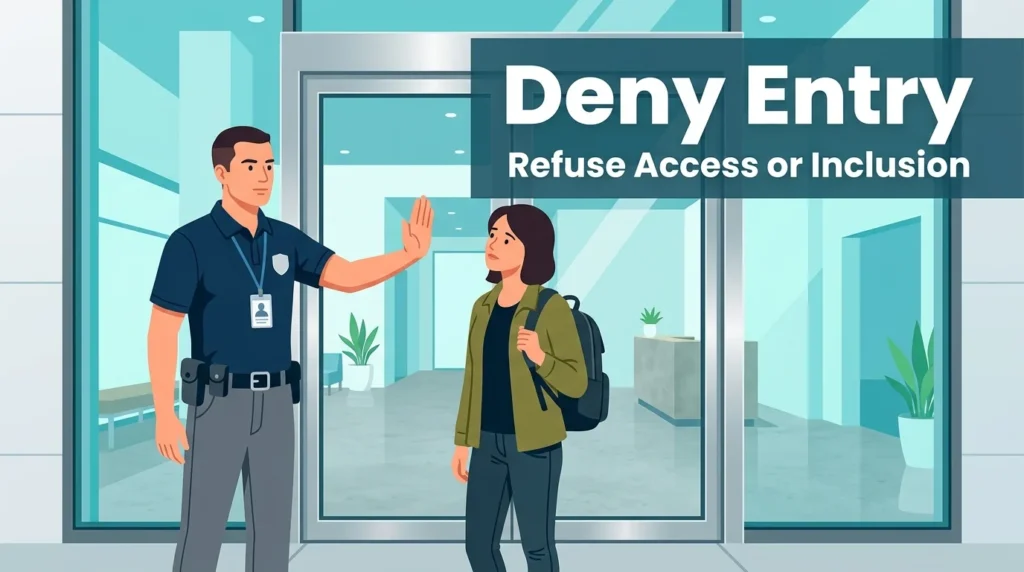
Exclude (Verb) — /ɪkˈskluːd/ /ɪkˈskluːd/
- Meaning: To deny someone or something entry or inclusion.
- Tone: Formal / Standard
- Example 1: The updated guest list will exclude unauthorized visitors.
- Example 2: Please do not exclude important financial details from the summary.
Skip (Verb) — /skɪp/ /skɪp/
- Meaning: To pass over or omit an item in a sequence.
- Tone: Informal / Conversational
- Example 1: Let us skip the introductory chapter and read the main case study.
- Example 2: She decided to skip the morning workout session due to fatigue.
Leave out (Verb Phrase) — /liːv aʊt/ /liːv aʊt/
- Meaning: To fail to include someone or something deliberately or accidentally.
- Tone: Everyday / Conversational
- Example 1: Do not leave out any crucial data points in your research paper.
- Example 2: He felt sad when friends left him out of weekend plans.
Drop (Verb) — /drɒp/ /drɒp/
- Meaning: To stop including or discontinue something from a plan.
- Tone: Business / Casual
- Example 1: Marketing teams decided to drop the underperforming product line.
- Example 2: You should drop unnecessary adjectives to make sentences cleaner.
Delete (Verb) — /dɪˈliːt/ /dɪˈliːt/
- Meaning: To remove or erase written or digital data.
- Tone: Technical / Modern
- Example 1: Remember to delete old temporary files to clear hard drive space.
- Example 2: The editor had to delete three redundant paragraphs.
Eliminate (Verb) — /ɪˈlɪm.ɪ.neɪt/ /ɪˈlɪm.ɪ.neɪt/
- Meaning: To completely remove or get rid of something entirely.
- Tone: Formal / Assertive
- Example 1: Efficient diets help eliminate unhealthy processed foods.
- Example 2: Engineers tried to eliminate all potential mechanical errors.
Leave off (Verb Phrase) — /liːv ɒf/ /liːv ɒf/
- Meaning: To omit something from a list or running order.
- Tone: Standard / Conversational
- Example 1: I accidentally left off two names from the invitation roster.
- Example 2: Make sure not to leave off your signature at the bottom.
Bypass (Verb) — /ˈbaɪ.pæs/ /ˈbaɪ.pɑːs/
- Meaning: To go past or avoid an official step or procedure.
- Tone: Professional / Direct
- Example 1: Technicians can bypass the security check during emergencies.
- Example 2: Frustrated customers often bypass customer support phone trees.
Expunge (Verb) — /ɪkˈspʌndʒ/ /ɪkˈspʌndʒ/
- Meaning: To erase or remove completely from memory or record.
- Tone: Legal / Formal
- Example 1: The judge ordered the court to expunge the minor charge.
- Example 2: He wanted to expunge all bitter memories from his past.
Edit out (Verb Phrase) — /ˈɛd.ɪt aʊt/ /ˈɛd.ɪt aʊt/
- Meaning: To remove unwanted sections from media or text.
- Tone: Editorial / Media
- Example 1: Producers had to edit out background noise from the interview.
- Example 2: Writers frequently edit out weak phrases during final drafts.
Overlook (Verb) — /ˌəʊ.vəˈlʊk/ /ˌəʊ.vəˈlʊk/
- Meaning: To fail to notice or intentionally pass over something.
- Tone: Standard / Professional
- Example 1: Reviewers might overlook minor typos in fast-paced articles.
- Example 2: Do not overlook the importance of proper safety gear.
Miss (Verb) — /mɪs/ /mɪs/
- Meaning: To fail to include, reach, or encounter something.
- Tone: Casual / Conversational
- Example 1: Careful readers will not miss the subtle metaphor.
- Example 2: She did not want to miss any instructions during class.

Blank out (Verb Phrase) — /blæŋ aʊt/ /blæŋ aʊt/
- Meaning: To erase or remove text visually from a document.
- Tone: Informal / Technical
- Example 1: Officials had to blank out sensitive names on the report.
- Example 2: He decided to blank out personal addresses before sharing scans.
Disregard (Verb) — /ˌdɪs.rɪˈɡɑːd/ /ˌdɪs.rɪˈɡɑːd/
- Meaning: To pay no attention to or leave out of consideration.
- Tone: Formal / Direct
- Example 1: Students should disregard instructions printed on the older test sheets.
- Example 2: Investors chose to disregard short-term market fluctuations.
Pass over (Verb Phrase) — /pɑːs ˈəʊ.və/ /pɑːs ˈəʊ.və/
- Meaning: To ignore or neglect someone or something intentionally.
- Tone: Professional / Literary
- Example 1: Committee members chose to pass over the unqualified applicant.
- Example 2: History books often pass over minor regional events.
Except (Verb / Preposition) — /ɪkˈsɛpt/ /ɪkˈsɛpt/
- Meaning: To exclude someone or something from a general rule.
- Tone: Legal / Formal
- Example 1: Regulations exempt small family-owned businesses from the tax.
- Example 2: You can except this rule during extraordinary emergencies.
Neglect (Verb) — /nɪˈɡlɛkt/ /nɪˈɡlɛkt/
- Meaning: To fail to care for or leave out necessary attention.
- Tone: Critical / Standard
- Example 1: Landlords must not neglect routine property maintenance tasks.
- Example 2: Busy schedules often cause people to neglect daily reading.
Side-step (Verb) — /ˈsaɪd.stɛp/ /ˈsaɪd.stɛp/
- Meaning: To avoid dealing with a specific topic or detail.
- Tone: Political / Conversational
- Example 1: Politicians often side-step difficult questions during debates.
- Example 2: She managed to side-step office gossip successfully.
Count out (Verb Phrase) — /kaʊnt aʊt/ /kaʊnt aʊt/
- Meaning: To exclude someone or something from an activity.
- Tone: Informal / Conversational
- Example 1: You can count me out of the late-night meeting.
- Example 2: The coach decided to count out injured players from travel.
Sanitize (Verb) — /ˈsæn.ɪ.taɪz/ /ˈsæn.ɪ.taɪz/
- Meaning: To remove objectionable or sensitive parts from text.
- Tone: Professional / Modern
- Example 1: Editors must sanitize corporate reports before public release.
- Example 2: Authors sanitize harsh dialogue for younger audiences.
Strip out (Verb Phrase) — /strɪp aʊt/ /strɪp aʊt/
- Meaning: To remove unnecessary internal elements from a structure.
- Tone: Technical / Practical
- Example 1: Remodelers had to strip out old wiring from the walls.
- Example 2: Programmers strip out unused code to speed up loading.
Cut out (Verb Phrase) — /kʌt aʊt/ /kʌt aʊt/
- Meaning: To remove something completely with or as if with scissors.
- Tone: Everyday / Conversational
- Example 1: Children love to cut out paper shapes during art class.
- Example 2: Doctors advised him to cut out sugary drinks completely.
Reserve (Verb) — /rɪˈzɜːv/ /rɪˈzɜːv/
- Meaning: To keep back or withhold something for later use.
- Tone: Formal / Business
- Example 1: The hotel will reserve specific rooms for VIP guests.
- Example 2: Judges reserve judgment until all evidence is reviewed.
Withhold (Verb) — /wɪðˈhəʊld/ /wɪðˈhəʊld/
- Meaning: To refuse to give or deliberately omit information.
- Tone: Formal / Legal
- Example 1: Witnesses should not withhold vital facts from investigators.
- Example 2: Companies might withhold bonuses during poor financial quarters.
Purge (Verb) — /pɜːdʒ/ /pɜːdʒ/
- Meaning: To rid a place or group of unwanted items or people.
- Tone: Formal / Dramatic
- Example 1: Spring cleaning is a great time to purge old clothes.
- Example 2: The system will purge deleted accounts after thirty days.
Elide (Verb) — /ɪˈlaɪd/ /ɪˈlaɪd/
- Meaning: To omit, suppress, or pass over something silently in speech or writing.
- Tone: Literary / Linguistic
- Example 1: Poets often elide vowels to maintain the rhythm of a verse.
- Example 2: The narrator chose to elide the minor details of their journey.
Suspend (Verb) — /səˈspɛnd/ /səˈspɛnd/
- Meaning: To temporarily leave out or hold off the application of a rule.
- Tone: Professional / Legal
- Example 1: The board decided to suspend standard protocols during the crisis.
- Example 2: Instructors may suspend grading criteria for special projects.

Wave (Verb) — /weɪv/ /weɪv/
- Meaning: To officially refrain from applying or enforcing a requirement.
- Tone: Business / Formal
- Example 1: Management agreed to waive the late fee for loyal customers.
- Example 2: Universities sometimes waive application fees for international applicants.
Drop out (Verb Phrase) — /drɒp aʊt/ /drɒp aʊt/
- Meaning: To withdraw or leave out participation from an ongoing group or event.
- Tone: Conversational / Standard
- Example 1: Several runners had to drop out due to heavy rain.
- Example 2: Do not drop out of the workshop before finishing the final project.
Step over (Verb Phrase) — /stɛp ˈəʊ.və/ /stɛp ˈəʊ.və/
- Meaning: To intentionally ignore or omit something standing in the way.
- Tone: Casual / Metaphorical
- Example 1: He tended to step over minor administrative complaints.
- Example 2: The team tried to step over old disagreements to find a solution.
Pass by (Verb Phrase) — /pɑːs baɪ/ /pɑːs baɪ/
- Meaning: To let an opportunity or detail go unheeded or unincluded.
- Tone: Literary / Reflective
- Example 1: We should not let such a golden chance pass by without action.
- Example 2: Time seemed to pass by while working on the creative brief.
Bracket (Verb) — /ˈbræk.ɪt/ /ˈbræk.ɪt/
- Meaning: To set aside or leave out of consideration temporarily.
- Tone: Academic / Analytical
- Example 1: Researchers need to bracket personal biases during data analysis.
- Example 2: Let us bracket that side question until we finish the core agenda.
Subtract (Verb) — /səbˈtrækt/ /səbˈtrækt/
- Meaning: To take away a part or element from a whole sum or list.
- Tone: Technical / Mathematical
- Example 1: You must subtract unnecessary expenses from the preliminary budget.
- Example 2: Subtracting faulty metrics will clarify the performance report.
Set aside (Verb Phrase) — /sɛt əˈsaɪd/ /sɛt əˈsaɪd/
- Meaning: To save or leave out something for a specific separate purpose.
- Tone: Practical / Standard
- Example 1: Always set aside a portion of your income for emergencies.
- Example 2: She decided to set aside personal feelings during the negotiation.
Forego (Verb) — /fɔːˈɡəʊ/ /fɔːˈɡəʊ/
- Meaning: To choose to do without or leave out an available option.
- Tone: Formal / Business
- Example 1: Candidates can choose to forego the preliminary orientation session.
- Example 2: Many travelers prefer to forego travel insurance to save money.
Pass up (Verb Phrase) — /pɑːs ʌp/ /pɑːs ʌp/
- Meaning: To decline or deliberately miss out on an offered opportunity.
- Tone: Casual / Conversational
- Example 1: It would be foolish to pass up such a great career offer.
- Example 2: She decided not to pass up the chance to study abroad.
Ignore (Verb) — /ɪɡˈnɔː/ /ɪɡˈnɔː/`
- Meaning: To refuse to take notice of or intentionally leave out of attention.
- Tone: Direct / Standard
- Example 1: Drivers must not ignore warning signs posted along the highway.
- Example 2: It is unwise to ignore customer feedback regarding product safety.
Overleap (Verb) — /ˌəʊ.vəˈliːp/ /ˌəʊ.vəˈliːp/
- Meaning: To jump over, pass by, or omit a stage in a sequence.
- Tone: Literary / Archaic
- Example 1: The ambitious plan tended to overleap fundamental regulatory checks.
- Example 2: Writers sometimes overleap crucial transitions in fast-moving plots.
Put aside (Verb Phrase) — /pʊt əˈsaɪd/ /pʊt əˈsaɪd/
- Meaning: To temporarily discard or leave out a topic or emotion.
- Tone: Conversational / Standard
- Example 1: We need to put aside our differences to finish this project.
- Example 2: Please put aside your phones while the speaker is presenting.
Rule out (Verb Phrase) — /ruːl aʊt/ /ruːl aʊt/
- Meaning: To exclude or eliminate someone or something as a possibility.
- Tone: Professional / Analytical
- Example 1: Investigators cannot rule out mechanical failure just yet.
- Example 2: Doctors performed tests to rule out any serious underlying conditions.
Shunt aside (Verb Phrase) — /ʃʌnt əˈsaɪd/ /ʃʌnt əˈsaɪd/
- Meaning: To push or leave something out of the main focus or priority.
- Tone: Journalistic / Critical
- Example 1: Important community concerns were shunted aside by city planners.
- Example 2: Do not let creative ideas get shunted aside during budget talks.
Scythe out (Verb Phrase) — /saɪð aʊt/ /saɪð aʊt/
- Meaning: To cut out or brutally remove unwanted elements from a system.
- Tone: Figurative / Expressive
- Example 1: The new director sought to scythe out inefficient bureaucratic layers.
- Example 2: Editors had to scythe out repetitive chapters from the manuscript.
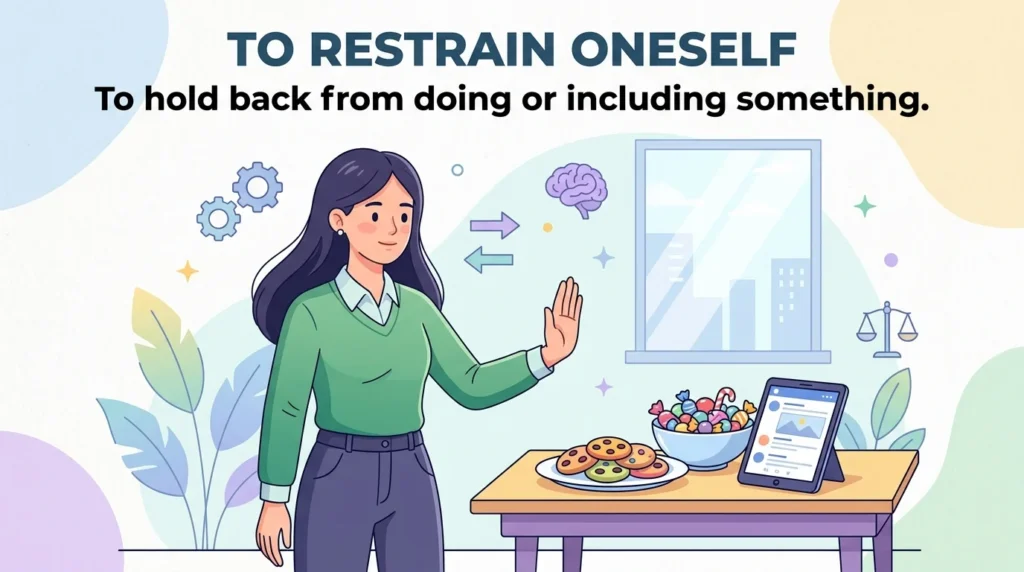
Abstain from (Verb Phrase) — /əbˈsteɪn frɒm/ /əbˈsteɪn frɒm/
- Meaning: To restrain oneself from doing or including something.
- Tone: Formal / Official
- Example 1: Members chose to abstain from voting on the controversial resolution.
- Example 2: Doctors advise patients to abstain from consuming sugary treats.
Synonyms for “Omit” by Tone
Understanding tone helps writers choose the exact shade of meaning.
Positive Tone:
Edit out, curate, streamline. These highlight professional improvement and clarity.
Neutral Tone:
Exclude, skip, leave out, drop. These simply denote a lack of inclusion.
Negative Tone:
Neglect, overlook, bypass. These can imply carelessness or intentional avoidance.
Playful / Informal Tone:
Count out, skip, leave off. These fit casual friend groups or relaxed settings.
“Omit” vs Close Alternatives
Compare three popular variations to choose correctly every time:
- Omit: Formal and precise. Use it in professional documents, academic writing, or policy manuals.
- Leave out: Conversational and everyday. Use it in spoken instructions, emails, or casual chats.
- Skip: Active and fast-paced. Use it when moving past steps, chapters, or agenda items quickly.
How “Omit” Changes by Context
Daily conversations welcome simple phrases like leave out or skip naturally. Friends often say, “Please leave out the spicy peppers.”
Writing or blogging requires more precise vocabulary. Authors swap casual words for terms like exclude or edit out to maintain professional polish.
Professional or academic settings demand formal terms like expunge, disregard, or withhold.
Creative storytelling thrives on active phrasing like cut out or drop.
Common Mistakes & Native Usage
Common Mistakes Learners Make
Learners frequently overuse formal terms like expunge in casual daily chats where simple words belong.
Another error involves mixing up omit with permit. While spelling looks slightly similar, their meanings are exact opposites.
Furthermore, speakers must avoid using forget when an omission was completely intentional.
Register Notes
Informal phrases work wonderfully in speech. Formal documents require academic register alternatives.
Real-Life Examples Using “Omit”
- Workplace: The manager decided to omit the last slide from the presentation.
- Social Situations: She tried to omit embarrassing details when retelling the story.
- Media / Pop Culture: The documentary had to omit several hours of raw footage.
- Writing or Storytelling: The author chose to omit unnecessary character backstories.
Conclusion
Learning powerful synonyms transforms your writing, blogging, speaking, and everyday communication.
Expanding your vocabulary lets you express precise shades of meaning effortlessly without sounding repetitive or dull.
Encourage yourself to practice these words in professional emails, academic essays, and casual daily conversations. Consistent practice builds natural confidence and long-term linguistic fluency.
Start integrating a brand-new synonym into your daily speech today. Master your communication skills now!
Interactive Practice Quiz
1. Which synonym best fits removing a digital file permanently?
- A) Delete
- B) Skip
- C) Miss
- D) Overlook
2. What does it mean to leave out a detail in a legal contract?
- A) Enhance
- B) Omit
- C) Amplify
- D) Decorate
3. If a teacher tells you to skip a chapter, what are you doing?
- A) Memorizing it
- B) Omitting it temporarily
- C) Rewriting it
- D) Publishing it
4. Which phrase describes accidentally failing to include a name on a roster?
- A) Leave off
- B) Expunge
- C) Purge
- D) Sanitize
5. What emotional connotation does the word expunge typically carry?
- A) Playful
- B) Legal or formal
- C) Silly
- D) Slang
6. When someone says “count me out,” what register are they using?
- A) Academic
- B) Informal
- C) Legal
- D) Archaic
7. Which term describes removing unwanted background noise from an audio interview?
- A) Edit out
- B) Neglect
- C) Bypass
- D) Withhold
8. Why do native speakers enjoy using precise verbs instead of repeating omit?
- A) To confuse readers
- B) To add exact shades of meaning
- C) To write longer sentences
- D) To follow strict laws
9. Which word means to completely remove or get rid of something?
- A) Eliminate
- B) Keep
- C) Retain
- D) Include
10. What is a key risk of omitting important data in a report?
- A) Complete accuracy
- B) Misunderstanding or confusion
- C) Faster reading speeds
- D) Better design layout
Reflection Task: Write one sentence using the synonym exclude to describe a revised membership policy.
Answer Key: 1-A, 2-B, 3-B, 4-A, 5-B, 6-B, 7-A, 8-B, 9-A, 10-B.
Frequently Asked Questions
What is the exact definition of omit?
To omit means to leave out or exclude someone or something intentionally or accidentally from a text, list, or conversation.
Can I use omit in casual everyday conversations?
While grammatically correct, native speakers usually prefer simpler alternatives like leave out or skip during casual speech.
What is the difference between omit and exclude?
Omit often implies leaving something out by oversight or deliberate choice, whereas exclude specifically means keeping someone or something out deliberately.
How can ESL learners practice these synonyms effectively?
Learners should practice substituting one synonym per day in writing exercises, journaling entries, or editorial tasks to build active retention.
Is omit considered a formal vocabulary word?
Yes, it belongs to standard and formal registers commonly found in business, academic, and professional writing contexts.

Aleesha Rani is a passionate language writer focused on making English vocabulary simple, useful, and engaging. She creates clear content on synonyms, word meanings, and practical language use.
Through vocaneest.com, Aleesha Rani shares original, reader-friendly resources that help students, writers, and English learners choose better words and communicate with confidence.