Synonym for outlet serves as a vital search phrase for writers and speakers looking to describe a channel for release, expression, or commerce. Imagine a busy artist spending hours painting in a quiet studio to release stress. That creative release acts as a true emotional outlet.
Finding the right synonym for outlet helps you describe vents, stores, and emotional releases with total clarity. Students, bloggers, and daily English users frequently search for these words. Fresh vocabulary stops your writing from feeling flat or repetitive.
Every effective synonym for outlet adds specific nuance and descriptive power to your sentences. Mastering these choices elevates your communication skills across every platform. Let us explore the best alternatives to describe release valves, retail hubs, and communication channels.
What Does “Outlet” Really Mean?
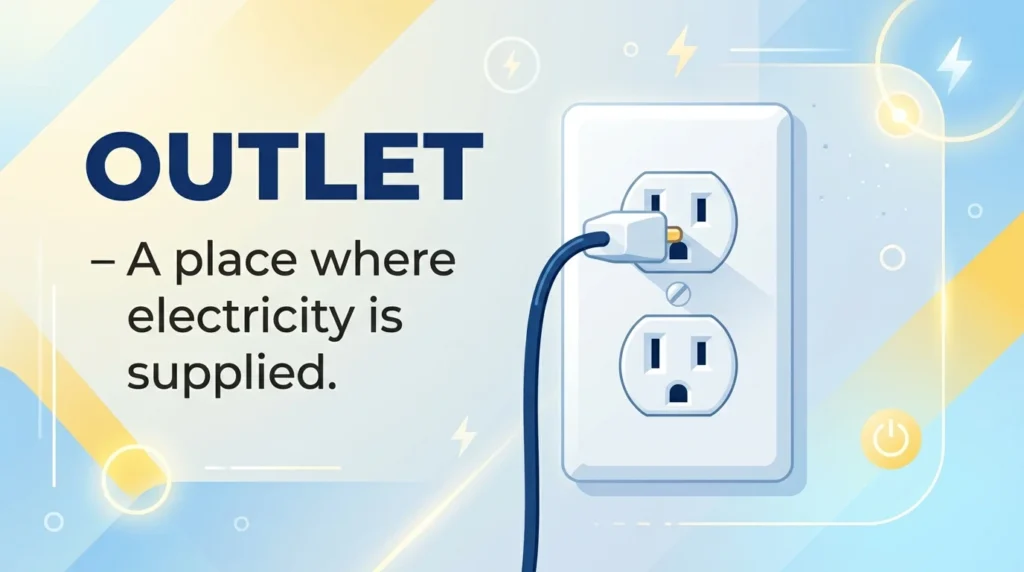
An outlet refers to a pipe or hole through which something may escape or be released. It also describes a market for goods or a socket in a wall for electric current.
Native speakers often use this noun to describe emotional release or retail stores. It carries neutral, practical, or slightly emotional tones depending on the context.
Understanding its part of speech helps you choose exact semantic variants for your essays and blogs.
Connotative Meaning
- Positive tone: Represents healthy expression, clever retail expansion, or efficient energy flow.
- Negative tone: Implies uncontrolled venting or aggressive release of frustration.
- Neutral tone: Denotes a physical opening, electrical socket, or standard retail storefront. (Connotation refers to the wide array of positive, negative, or neutral emotional associations connected to a word beyond its strict literal meaning.)
Etymology
The word outlet originates from Middle English elements combining out and leten, meaning to let out.
- Old English (450–1100): Rooted in ancient Germanic terms for moving outward and releasing bounds.
- Middle English (1100–1500): Evolved into compound forms describing water exits and draining paths.
- Modern English (1500–Present): Expanded to include electrical sockets, retail stores, and psychological release channels.
Pronunciation (US & UK – IPA)
- US: /ˈaʊt.lɛt/
- UK: /ˈaʊt.lɛt/
Syllables
- Syllables: out-let
- Root: let
- Prefix: out-
- Suffix: None
Synonyms List
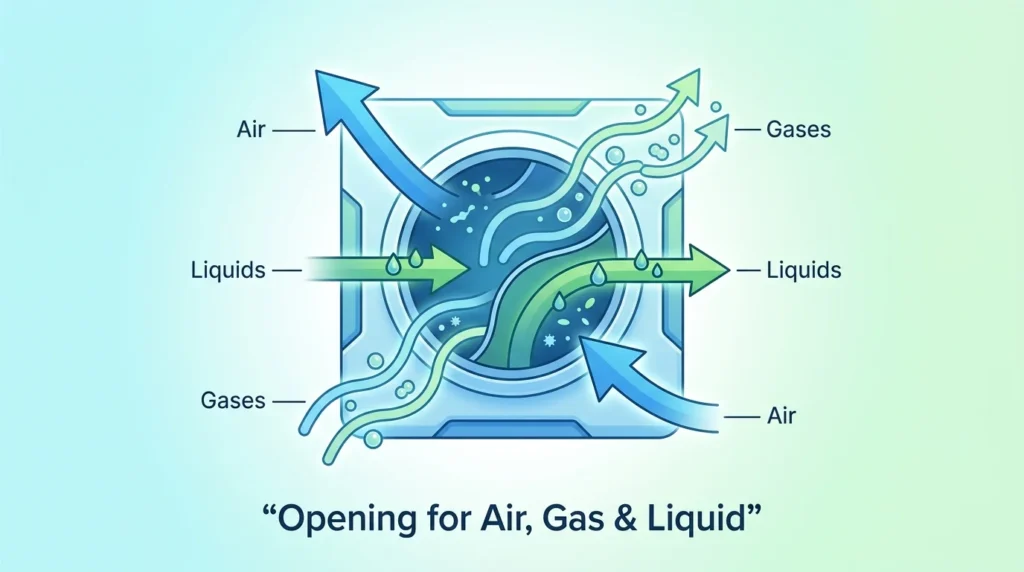
Vent (Noun) — US: /vɛnt/ | UK: /vɛnt/
- Meaning: An opening that allows air, gas, or liquid to pass out or in.
- Tone/Register: Technical / Standard
- Example 1: The rooftop vent released warm steam from the bakery kitchen.
- Example 2: He opened the floor vent to let cool air circulate.
Release (Noun) — US: /rɪˈliːs/ | UK: /rɪˈliːs/
- Meaning: The action or process of freeing someone or something from constraint or restriction.
- Tone/Register: Standard / Formal
- Example 1: Painting served as her daily release from work stress.
- Example 2: The artist felt a deep release upon finishing the mural.
Channel (Noun) — US: /ˈtʃæn.əl/ | UK: /ˈtʃæn.əl/
- Meaning: A band of frequencies used for communication or a course for progress.
- Tone/Register: Professional / Standard
- Example 1: Email became their primary channel for customer support.
- Example 2: She sought a creative channel for her poetry writing.
Valve (Noun) — US: /vælv/ | UK: /vælv/
- Meaning: A device for controlling the passage of fluid or air through a pipe.
- Tone/Register: Technical / Scientific
- Example 1: The safety valve opened automatically to reduce high pressure.
- Example 2: He twisted the brass valve to stop the water leak.
Duct (Noun) — US: /dʌkt/ | UK: /dʌkt/
- Meaning: A tubular structure or conduit for conveying air or other substances.
- Tone/Register: Technical / Engineering
- Example 1: Technicians cleaned dust from the air conditioning duct.
- Example 2: A hidden wire duct ran along the baseboard.
Opening (Noun) — US: /ˈoʊ.pən.ɪŋ/ | UK: /ˈəʊ.pən.ɪŋ/
- Meaning: A space or gap through which passage is possible.
- Tone/Register: General / Standard
- Example 1: Sunlight streamed through the narrow opening in the blinds.
- Example 2: He squeezed through the small opening in the fence.
Exits (Noun) — US: /ˈɛɡ.zɪts/ | UK: /ˈɛɡ.zɪts/
- Meaning: A door or way out of a building or room.
- Tone/Register: Standard / Practical
- Example 1: Ushers checked all emergency exits before the concert started.
- Example 2: The building layout clearly marked every side exit.
Gateway (Noun) — US: /ˈɡeɪt.weɪ/ | UK: /ɡeɪt.weɪ/
- Meaning: An opening or means of access to a place or new opportunity.
- Tone/Register: Metaphorical / Standard
- Example 1: Reading books serves as a gateway to new imagination.
- Example 2: The port city acts as a major gateway for international trade.
Market (Noun) — US: /ˈmɑːr.kɪt/ | UK: /ˈmɑː.kɪt/
- Meaning: A regular gathering of people for the purchase and sale of provisions.
- Tone/Register: Business / Commercial
- Example 1: Local farmers brought fresh vegetables to the weekend market.
- Example 2: The company launched a new market for green energy products.
Retailer (Noun) — US: /ˈriːˌteɪ.lər/ | UK: /ˈriːˌteɪ.lə/
- Meaning: A person or business that sells goods to the public in small quantities.
- Tone/Register: Business / Professional
- Example 1: The online retailer offered free shipping on all orders.
- Example 2: Local shops competed against a massive discount retailer.
Stockist (Noun) — US: /ˈstɑːk.ɪst/ | UK: /ˈstɒk.ɪst/
- Meaning: A merchant or store that stocks goods of a particular type.
- Tone/Register: British Business / Formal
- Example 1: The boutique became an authorized stockist for luxury watches.
- Example 2: She checked online to find a local stockist for the paint.
Store (Noun) — US: /stɔːr/ | UK: /stɔː/
- Meaning: An establishment where merchandise is sold to consumers.
- Tone/Register: Everyday / Conversational
- Example 1: They walked down Main Street to visit the local bookstore.
- Example 2: The grocery store stocked fresh fruit every morning.
Shop (Noun) — US: /ʃɑːp/ | UK: /ʃɒp/
- Meaning: A small retail establishment selling a particular type of goods.
- Tone/Register: Everyday / Casual
- Example 1: She bought handmade candles at the craft shop.
- Example 2: Mechanics worked diligently inside the neighborhood repair shop.
Depot (Noun) — US: /ˈdiː.poʊ/ | UK: /ˈdɛp.əʊ/
- Meaning: A destination or storage facility for goods or vehicles.
- Tone/Register: Logistics / Formal
- Example 1: Buses lined up early in the morning at the central transit depot.
- Example 2: Supplies arrived at the distribution depot before dawn.
Medium (Noun) — US: /ˈmiː.di.əm/ | UK: /ˈmiː.di.əm/
- Meaning: An agency or means of doing something or expressing creative work.
- Tone/Register: Artistic / Academic
- Example 1: Oil painting remained her favorite medium for artistic expression.
- Example 2: Digital art became a powerful medium for modern creators.
Vehicle (Noun) — US: /ˈviː.ə.kəl/ | UK: /ˈviː.ɪkl/
- Meaning: A thing used for expressing, embodying, or fulfilling something.
- Tone/Register: Formal / Literary
- Example 1: Debate served as an effective vehicle for policy change.
- Example 2: The novel acted as a vehicle for social criticism.
Instrument (Noun) — US: /ˈɪn.strə.mənt/ | UK: /ˈɪn.strʊ.mənt/
- Meaning: A tool or means used to achieve a particular purpose.
- Tone/Register: Formal / Academic
- Example 1: Education remains a vital instrument for personal growth.
- Example 2: Law enforcement used precise legal instruments to protect citizens.
Expression (Noun) — US: /ɪkˈsprɛʃ.ən/ | UK: /ɪkˈsprɛʃ.n/
- Meaning: The process of making known one’s thoughts or feelings.
- Tone/Register: Expressive / Standard
- Example 1: Music provided a deep emotional expression for his sorrow.
- Example 2: Dance served as a physical expression of pure joy.
Venue (Noun) — US: /ˈvɛn.juː/ | UK: /ˈvɛn.juː/
- Meaning: The place where something happens, especially an organized event.
- Tone/Register: Standard / Professional
- Example 1: The community center chose a lovely venue for the wedding.
- Example 2: Musicians tested the acoustics inside the concert venue.
Agency (Noun) — US: /ˈeɪ.dʒən.si/ | UK: /ˈeɪ.dʒən.si/
- Meaning: A business or organization providing a particular service.
- Tone/Register: Business / Formal
- Example 1: Travel arrangements were handled by a local booking agency.
- Example 2: She applied for an internship at a creative design agency.
Bourse (Noun) — US: /bʊrs/ | UK: /bʊəs/
- Meaning: A stock market or financial exchange, typically in Europe.
- Tone/Register: Financial / Formal
- Example 1: Traders gathered early at the continental stock bourse.
- Example 2: Economic reports impacted shares traded on the local bourse.

Concession (Noun) — US: /kənˈsɛʃ.ən/ | UK: /kənˈsɛʃ.n/
- Meaning: A small business or stand operating within a larger premises.
- Tone/Register: Commercial / Standard
- Example 1: Fans bought snacks from the stadium food concession.
- Example 2: The museum granted a local vendor a gift shop concession.
Emporium (Noun) — US: /ɛmˈpɔːr.i.əm/ | UK: /ɛmˈpɔː.ri.əm/
- Meaning: A large retail store selling a wide variety of goods.
- Tone/Register: Literary / Descriptive
- Example 1: Antiques filled every corner of the dusty Victorian emporium.
- Example 2: Shoppers explored treasures inside the downtown artisan emporium.
Bazaar (Noun) — US: /bəˈzɑːr/ | UK: /bəˈzɑː/
- Meaning: A market selling various goods, often outdoors or in a Middle Eastern style.
- Tone/Register: Descriptive / Cultural
- Example 1: Vendors sold colorful textiles at the bustling street bazaar.
- Example 2: Tourists wandered through the vibrant weekend craft bazaar.
Outlet Store (Noun) — US: /ˈaʊt.lɛt stɔːr/ | UK: /ˈaʊt.lɛt stɔː/
- Meaning: A shop selling goods directly from the manufacturer at a discount.
- Tone/Register: Commercial / Conversational
- Example 1: They drove to the suburban factory outlet store for bargains.
- Example 2: The designer brand opened a new discount outlet store.
Egress (Noun) — US: /ˈiː.ɡrɛs/ | UK: /ˈiː.ɡrɛs/
- Meaning: The action of going out of or leaving a place.
- Tone/Register: Formal / Architectural
- Example 1: The building blueprint marked the rear egress clearly for emergencies.
- Example 2: Passengers sought a quick egress from the crowded train car.
Exitus (Noun) — US: /ˈɛk.sɪ.təs/ | UK: /ˈɛk.sɪ.təs/
- Meaning: A way out or the end of a process or event.
- Tone/Register: Literary / Formal
- Example 1: The historical manuscript detailed the final exitus of the campaign.
- Example 2: Scholars studied the structural exitus of the ancient amphitheater.
Issue (Noun) — US: /ˈɪʃ.uː/ | UK: /ˈɪʃ.uː/
- Meaning: An outflow or discharge of liquid, light, or people from a source.
- Tone/Register: Technical / Formal
- Example 1: Doctors monitored the steady issue of fluid from the wound.
- Example 2: The blocked pipe prevented any normal issue of water.
Emanation (Noun) — US: /ˌɛm.əˈneɪ.ʃən/ | UK: /ˌɛm.əˈneɪ.ʃn/
- Meaning: Something that originates, issues, or radiates from a source.
- Tone/Register: Literary / Philosophical
- Example 1: Warmth was a pleasant emanation from the old stone fireplace.
- Example 2: The philosopher described ideas as an emanation of the human mind.
Effluent (Noun) — US: /ˈɛf.lu.ənt/ | UK: /ˈɛf.lu.ənt/
- Meaning: Liquid waste or sewage discharged into a river or the sea.
- Tone/Register: Environmental / Scientific
- Example 1: Strict regulations controlled the industrial effluent entering the river.
- Example 2: Scientists tested the factory effluent for harmful chemical traces.
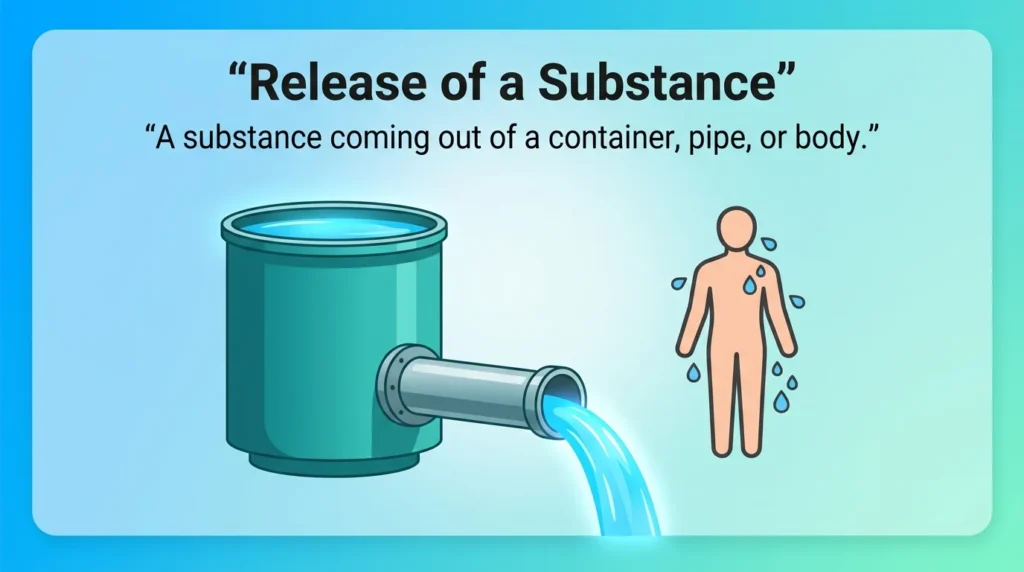
Discharge (Noun) — US: /dɪsˈtʃɑːrdʒ/ | UK: /dɪsˈtʃɑːdʒ/
- Meaning: The release of a substance from a container, pipe, or body.
- Tone/Register: Scientific / Standard
- Example 1: The wastewater discharge met all local environmental standards.
- Example 2: Electrical discharge caused a brief spark across the terminal.
Spout (Noun) — US: /spaʊt/ | UK: /spaʊt/
- Meaning: A tube or lip through which liquid is poured or discharged.
- Tone/Register: Everyday / Descriptive
- Example 1: Water poured steadily from the rusty iron roof spout.
- Example 2: She adjusted the kettle spout to fill her mug neatly.
Nozzle (Noun) — US: /ˈnɑː.zəl/ | UK: /ˈnɒz.əl/
- Meaning: A cylindrical or round spout attached to the end of a pipe.
- Tone/Register: Technical / Practical
- Example 1: He twisted the hose nozzle to create a fine spray.
- Example 2: Mechanics cleaned the fuel nozzle with precision tools.
Faucet (Noun) — US: /ˈfɑː.sət/ | UK: /ˈfɔː.sɪt/
- Meaning: A device that controls the flow of liquid from a pipe.
- Tone/Register: Everyday / Domestic
- Example 1: She turned on the kitchen faucet to wash the dishes.
- Example 2: A dripping bathroom faucet kept them awake at night.
Tap (Noun) — US: /tæp/ | UK: /tæp/
- Meaning: A valve controlling the release of a liquid or gas from a pipe.
- Tone/Register: British / Standard
- Example 1: Fresh water flowed instantly when he opened the garden tap.
- Example 2: They preferred drinking cold water straight from the kitchen tap.
Sluice (Noun) — US: /sluːs/ | UK: /sluːs/
- Meaning: A sliding gate or channel for controlling a flow of water.
- Tone/Register: Engineering / Historical
- Example 1: Workers opened the timber sluice to drain the mill pond.
- Example 2: The irrigation system relied on a network of stone sluices.
Drainage (Noun) — US: /ˈdreɪ.nɪdʒ/ | UK: /ˈdreɪ.nɪdʒ/
- Meaning: The action or process of draining off liquid from an area.
- Tone/Register: Practical / Architectural
- Example 1: Heavy rain tested the city’s underground drainage network.
- Example 2: Good field drainage kept the soccer pitch dry during storms.
Conduit (Noun) — US: /ˈkɑːn.du.ɪt/ | UK: /ˈkɒn.dʒu.ɪt/
- Meaning: A channel for conveying water or other fluid, or a transmitting agency.
- Tone/Register: Formal / Technical
- Example 1: Metal conduits protected the electrical wires inside the wall.
- Example 2: Diplomacy served as a vital conduit for peace talks.
Pipeline (Noun) — US: /ˈpaɪp.laɪn/ | UK: /ˈpaɪp.laɪn/
- Meaning: A long pipe, typically underground, for transporting oil, gas, or water.
- Tone/Register: Industrial / Business
- Example 1: Engineers inspected the transcontinental oil pipeline for leaks.
- Example 2: The firm had several new software products in the pipeline.
Distributor (Noun) — US: /dɪˈstrɪb.jə.tər/ | UK: /dɪˈstrɪb.jə.tə/
- Meaning: An agent or company that supplies goods to retailers.
- Tone/Register: Commercial / Business
- Example 1: The book distributor shipped thousands of copies nationwide.
- Example 2: Local shops signed contracts with a major beverage distributor.
Wholesaler (Noun) — US: /ˈhoʊlˌśleɪ.lər/ | UK: /ˈhəʊlˌseɪ.lə/
- Meaning: A person or company that sells goods in large quantities at low prices.
- Tone/Register: Commercial / Business
- Example 1: Restaurant owners bought ingredients directly from a food wholesaler.
- Example 2: The industrial wholesaler supplied tools to local contractors.
Purveyor (Noun) — US: /pərˈveɪ.ər/ | UK: /pəˈveɪ.ə/
- Meaning: A person or business that sells or supplies particular goods.
- Tone/Register: Formal / Literary
- Example 1: The bakery was a renowned purveyor of fine pastries.
- Example 2: Royalty relied on the royal warrant purveyor for provisions.
Medium of Expression (Noun) — US: /ˈmiː.di.əm əv ɪkˈsprɛʃ.ən/ | UK: /ˈmiː.di.əm əv ɪkˈsprɛʃ.n/
- Meaning: The artistic substance or method used to convey creative thoughts.
- Tone/Register: Artistic / Academic
- Example 1: Clay sculpture became his preferred medium of expression.
- Example 2: Poetry serves as a timeless medium of expression for human grief.
Safety Valve (Noun) — US: /ˈseɪf.ti vælv/ | UK: /ˈseɪf.ti vælv/
- Meaning: A mechanism for releasing excess pressure or a psychological stress reliever.
- Tone/Register: Figurative / Technical
- Example 1: Running served as his emotional safety valve after long office hours.
- Example 2: The boiler included a mechanical safety valve to prevent explosions.
Escape Hatch (Noun) — US: /ɪˈskeɪp hætʃ/ | UK: /ɪˈskeɪp hætʃ/
- Meaning: A door or opening used for emergency exit or a way out of a tight situation.
- Tone/Register: Idiomatic / Conversational
- Example 1: The contract included an escape hatch for early cancellation.
- Example 2: Astronauts checked the spacecraft escape hatch before launch.

Synonyms by Tone
Choosing the right word depends heavily on the emotional tone you wish to convey.
Positive Tone:
Use gateway, medium, expression, and release to highlight healthy communication and creative freedom.
Neutral Tone:
Use channel, opening, market, and store for clear, objective descriptions of physical spaces or distribution paths.
Negative Tone:
Use vent when describing aggressive outbursts or emotional overreactions.
Playful/Informal Tone:
Use shop or retailer in casual daily chats.
Tone guides reader expectations and sets the emotional mood of your writing.
Mini Comparison: Outlet vs. Vent vs. Channel
- Outlet: Focuses on general release, retail sales, or electrical connection. It is versatile and common.
- Vent: Focuses specifically on air or gas escape, or angry verbal outbursts. It sounds more physical or intense.
- Channel: Focuses on structured pathways, communication frequencies, or guiding streams of progress. It carries a professional tone.
Use outlet for retail or general release, vent for physical air or anger, and channel for structured communication.
Context-Based Usage
In daily conversation, native speakers use words like shop or store naturally. You might say you are running errands at a local store.
When writing blogs or essays, terms like medium, expression, or gateway add elegance. They elevate your prose without sounding overly complex.
In professional or academic writing, terms like channel, agency, or instrument fit technical reports and research papers.
Common Mistakes & Native Usage
Learners often misuse vent when they mean a retail store. Remember that a vent handles airflow, whereas an outlet handles retail sales.
Another common error involves confusing outlet with inlet. An inlet brings things inward, while an outlet lets things out.
Keep your register consistent. Avoid using informal terms like shop in formal legal contracts. (For more vocabulary tips, check out our guide on finding precise synonyms for everyday nouns.)
Real-Life Mini Scenarios
- Workplace: The marketing manager opened a new digital communication channel for remote team updates.
- Social Situations: Playing guitar served as his favorite emotional release after a difficult week.
- Media / Pop Culture: The documentary explored how street art became a cultural expression for youth.
- Writing / Storytelling: She described the old market as a bustling gateway of trade and culture.
Conclusion
Mastering vocabulary transforms how you write, blog, and speak in daily life. Every new word gives you better tools to express complex ideas with total clarity.
Practicing these terms in your emails, essays, and conversations builds natural fluency over time. Small daily habits lead to massive improvements in your communication skills.
Start integrating these varied terms into your writing today to engage your readers effortlessly. Keep exploring language, stay curious, and enjoy your writing journey!
Interactive Practice Quiz
1. Which synonym best describes an opening for air to escape?
- A) Channel
- B) Vent
- C) Store
- D) Bourse
2. Which term fits a professional setting for communication pathways?
- A) Vent
- B) Channel
- C) Emporium
- D) Bazaar
3. What is the best alternative when describing a retail discount store?
- A) Outlet store
- B) Valve
- C) Duct
- D) Medium
4. Which synonym carries a creative or artistic connotation?
- A) Depot
- B) Medium
- C) Stockist
- D) Exits
5. Which word describes a financial exchange market?
- A) Bourse
- B) Valve
- C) Opening
- D) Gateway
6. What term works best for an emotional release of stress?
- A) Retailer
- B) Release
- C) Stockist
- D) Duct
7. Which synonym refers specifically to water or fluid control?
- A) Valve
- B) Channel
- C) Shop
- D) Medium
8. Which word is ideal for describing a wholesale distribution center?
- A) Depot
- B) Gateway
- C) Vent
- D) Expression
9. Which term describes a large retail emporium of varied goods?
- A) Vent
- B) Emporium
- C) Channel
- D) Release
10. Which synonym fits a formal academic or legal context?
- A) Shop
- B) Instrument
- C) Store
- D) Outlet store
Reflection Task: Write one short sentence using the word medium to describe an artistic hobby.
Answer Key: 1. B | 2. B | 3. A | 4. B | 5. A | 6. B | 7. A | 8. A | 9. B | 10. B
Frequently Asked Questions
What is the best synonym for outlet in retail?
- Retailer, store, and outlet store serve as the best alternatives when discussing commercial shopping, merchandise sales, and consumer storefronts in modern business writing.
How do outlet and vent differ in meaning?
- An outlet refers to a general release or retail sales, whereas a vent specifically controls the passage of air, gas, steam, or heated fumes out of an enclosed space.
Can outlet be used for emotional expression?
- Yes, native speakers frequently use outlet to describe healthy activities or creative hobbies that help release pent-up stress, frustration, or strong emotions.
What is the historical origin of outlet?
- The word originates from Middle English components combining out and leten, initially describing water-draining paths before expanding to modern electrical and retail uses.
Which synonym works best in formal writing?
- Terms like medium, channel, instrument, and agency offer professional, formal alternatives depending on whether you’re discussing communication, art, or business services.

Aqsa Rani is the founder and lead writer at VocaNeest.com, a trusted platform dedicated to helping people improve their English vocabulary and communication skills. She creates well-researched, accurate, and easy-to-understand content covering synonyms, antonyms, word meanings, idioms, phrases, and everyday vocabulary. Her goal is to make learning English simple, practical, and accessible for students, writers, professionals, and lifelong learners.
At VocaNeest.com, every article is carefully researched, fact-checked, and written with a strong focus on accuracy, clarity, and real-world usage. Content is regularly reviewed and updated to ensure it remains helpful, relevant, and aligned with modern language standards. Through reliable vocabulary guides and practical examples, Aqsa aims to help readers write with confidence, expand their vocabulary, and communicate more effectively.