

Searching for a synonym for tracker helps you write clear and accurate English sentences. You might be describing a smart fitness watch, a bloodhound, or a digital monitoring script.
For example, imagine you are writing an article about a smart health watch. Repeating the word “tracker” six times makes your paragraph feel robotic and tedious to read.
By discovering a fresh synonym for tracker, you immediately transform dull prose into sharp writing. This single noun carries immense weight across tech, wildlife, and security fields.
Therefore, expanding your vocabulary with a precise synonym for tracker empowers students, bloggers, and professionals. It allows you to express exact nuances with total confidence.
What Does “Tracker” Really Mean?
The word tracker refers to a person, animal, device, or software program that monitors, follows, or records movement, progress, or location. Native English speakers understand it both as a physical agent (like a wilderness guide following footprints) and a modern digital tool (like a web cookie or GPS chip).
In everyday communication, it appears in contexts ranging from athletics and logistics to cybersecurity. The noun carries a mostly neutral tone, though its emotional shade shifts based on context. For example, a fitness tracker feels positive and helpful, whereas a hidden web tracker feels invasive.
Connotative Meaning
(Connotation refers to the emotional association or implied feeling a word carries beyond its literal definition).
- Positive Tone: Associated with health goals, organization, habit building, and safety (e.g., “fitness tracker”, “progress tracker”).
- Negative Tone: Associated with surveillance, loss of privacy, and unwanted monitoring (e.g., “ad tracker”, “spyware tracker”).
- Neutral Tone: Refers strictly to functional measurement or location monitoring without judgment (e.g., “package tracker”, “GPS tracker”).
Etymology & Word Origins
The root verb track comes from the Middle Dutch word trecken (meaning “to pull, draw, or march”) and Old French trace (meaning “a footprint or track”).
- Old English (450–1100): Early Germanic roots used terms related to drawing paths or footprints on physical ground.
- Middle English (1100–1500): The term trake entered English usage, signifying a visible mark left by a passing creature or wheel.
- Modern English (1500–Present): The noun tracker gained widespread use in the 19th century to describe wilderness scouts. In the late 20th and 21st centuries, it evolved to describe digital software and wearable technology.
Pronunciation, Syllables & Structure
- US Pronunciation: /ˈtræk.ɚ/
- UK Pronunciation: /ˈtræk.ər/
- Syllables: track-er (2 syllables)
- Affixation Pattern:
- Root: Track (Verb/Noun)
- Suffix: -er (Noun suffix designating an agent, device, or performer)
Synonyms List
Monitor (Noun) — US: /ˈmɑː.nə.t̬ɚ/ | UK: /ˈmɒn.ɪ.tər/
- Meaning: A device or system that continuously checks, records, or warns about specific conditions.
- Tone/Register: Neutral / Professional
- Example 1: The nurse carefully observed the heart monitor beside the patient.
- Example 2: Additionally, the software engineer installed a network monitor to check traffic spikes.
Follower (Noun) — US: /ˈfɑː.loʊ.ɚ/ | UK: /ˈfɒl.əʊ.ər/
- Meaning: A person or mechanism that travels behind or observes the movement of another.
- Tone/Register: Informal / Descriptive
- Example 1: The seasoned hound proved to be an exceptional follower of fresh animal trails.
- Example 2: Modern satellite systems act as a reliable follower of storm paths.
Tracer (Noun) — US: /ˈtreɪ.sɚ/ | UK: /ˈtreɪ.sər/
- Meaning: An agent, instrument, or substance used to track missing items or chemical paths.
- Tone/Register: Technical / Investigative
- Example 1: Health officials assigned a contact tracer to locate exposed individuals.
- Example 2: The laboratory added a radioactive tracer to study fluid movements.
Scout (Noun) — US: /skaʊt/ | UK: /skaʊt/
- Meaning: A person sent ahead to gather information about physical terrain or targets.
- Tone/Register: Active / Historical
- Example 1: The army scout reported the enemy movements to the commander.
- Example 2: Meanwhile, the talent scout searched local games for promising players.
Path-finder (Noun) — US: /ˈpæθˌfaɪn.dɚ/ | UK: /ˈpɑːθˌfaɪn.dər/
- Meaning: An explorer or device that discovers a path through unknown territory.
- Tone/Register: Expressive / Adventurous
- Example 1: The wilderness path-finder guided the hiking group safely through the blizzard.
- Example 2: Robotic pathfinders navigated the rough surface of Mars efficiently.
Hound (Noun) — US: /haʊnd/ | UK: /haʊnd/
- Meaning: A dog trained for hunting or tracking targets by scent.
- Tone/Register: Casual / Vivid
- Example 1: The search team relied on a trained bloodhound to find the lost child.
- Example 2: As a result, the relentless detective acted like a hound on a trail.
Detector (Noun) — US: /dɪˈtek.tɚ/ | UK: /dɪˈtek.tər/
- Meaning: An electronic or mechanical sensor designed to uncover the presence of something.
- Tone/Register: Technical / Functional
- Example 1: The smoke detector sounded an alarm instantly when fumes filled the kitchen.
- Example 2: Consequently, security officers used a metal detector at the venue entrance.
Sensor (Noun) — US: /ˈsen.sɚ/ | UK: /ˈsen.sər/
- Meaning: A physical device that detects physical inputs and responds by recording data.
- Tone/Register: Technological / Modern
- Example 1: The motion sensor turned on the outdoor lights when the car arrived.
- Example 2: In addition, modern wearable devices feature an optical pulse sensor.
Observer (Noun) — US: /əbˈzɝː.vɚ/ | UK: /əbˈzɜː.vər/
- Meaning: A person or system that watches events attentively without direct intervention.
- Tone/Register: Neutral / Formal
- Example 1: An independent observer witnessed the international election process.
- Example 2: Therefore, the weather observer noted sudden pressure changes.
Pursuer (Noun) — US: /pɚˈsuː.ɚ/ | UK: /pəˈsjuː.ər/
- Meaning: A person or entity that follows someone rapidly in order to catch them.
- Tone/Register: Dramatic / Literary
- Example 1: The runner glanced over her shoulder to spot her closest pursuer.
- Example 2: Thus, the police cars stayed close behind the fleeing pursuer target.
Trapper (Noun) — US: /ˈtræp.ɚ/ | UK: /ˈtræp.ər/
- Meaning: A person who tracks and catches wild animals using specialized gear.
- Tone/Register: Traditional / Historical
- Example 1: The frontier trapper knew how to read subtle animal signs in winter.
- Example 2: Furthermore, historical accounts detail how trappers mapped mountain passes.
Locator (Noun) — US: /ˈloʊ.keɪ.t̬ɚ/ | UK: /ləʊˈkeɪ.tər/
- Meaning: A tool or digital utility used for finding the exact position of an object.
- Tone/Register: Practical / Technical
- Example 1: Use the online store locator to find the branch nearest to your house.
- Example 2: The emergency beacon serves as a visual locator for rescue teams.
Spy (Noun) — US: /spaɪ/ | UK: /spaɪ/
- Meaning: A person or clandestine tool that secretly collects confidential information.
- Tone/Register: Covert / Negative
- Example 1: The intelligence agency uncovered an enemy spy working inside the facility.
- Example 2: Consequently, modern anti-virus software blocks hidden digital spy scripts.
Shadow (Noun) — US: /ˈʃæd.oʊ/ | UK: /ˈʃæd.əʊ/
- Meaning: An investigator who secretly follows a subject everywhere they go.
- Tone/Register: Narrative / Informal
- Example 1: The private investigator acted as a silent shadow behind the suspect.
- Example 2: Therefore, the undercover officer stayed close like a shadow in the crowd.
Sleuth (Noun) — US: /sluːθ/ | UK: /sluːθ/
- Meaning: A skilled detective or researcher who investigates clues to track answers.
- Tone/Register: Literary / Playful
- Example 1: The clever amateur sleuth solved the neighborhood mystery quickly.
- Example 2: In addition, digital sleuths analyzed open-source maps to verify news footage.
Log (Noun) — US: /lɑːɡ/ | UK: /lɒɡ/
- Meaning: A detailed, systematically maintained record of events, operations, or data.
- Tone/Register: Business / Analytical
- Example 1: The captain recorded daily progress in the official ship log.
- Example 2: Hence, the web server generated an access log for every visitor.
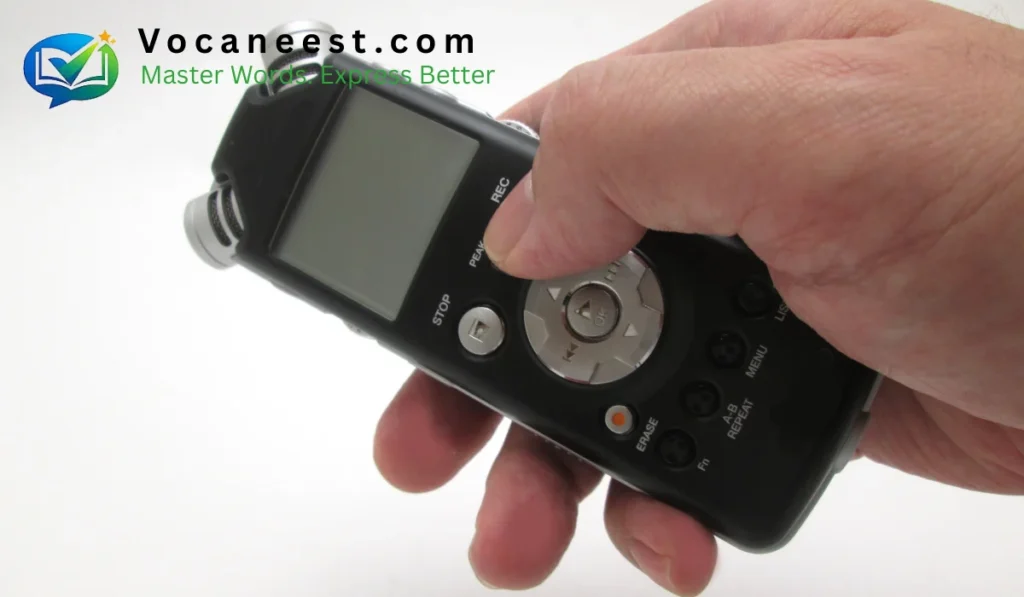
Recorder (Noun) — US: /rɪˈkɔːr.dɚ/ | UK: /rɪˈkɔː.dər/
- Meaning: An apparatus or individual that captures and stores information permanently.
- Tone/Register: Objective / Functional
- Example 1: Flight safety teams analyzed the data from the black box flight recorder.
- Example 2: Moreover, the digital audio recorder captured every word of the interview.
Guide (Noun) — US: /ɡaɪd/ | UK: /ɡaɪd/
- Meaning: A person or directional aid that leads travelers along an established path.
- Tone/Register: Helpful / General
- Example 1: Our mountain guide pointed out faint trail markers along the ridge.
- Example 2: Consequently, the interactive city guide showed tourists where to walk.
Logger (Noun) — US: /ˈlɑː.ɡɚ/ | UK: /ˈlɒɡ.ər/
- Meaning: A digital system or mechanical device that automatically registers operational data.
- Tone/Register: Technical / Computing
- Example 1: The keystroke logger secretly captured unauthorized system entries.
- Example 2: As a result, the solar inverter includes a built-in energy logger.
Investigator (Noun) — US: /ɪnˈves.tə.ɡeɪ.t̬ɚ/ | UK: /ɪnˈves.tɪ.ɡeɪ.tər/
- Meaning: A formal agent who examines facts to uncover hidden truths or tracks paths.
- Tone/Register: Formal / Professional
- Example 1: The lead investigator gathered physical evidence from the crime scene.
- Example 2: Furthermore, financial investigators traced illicit money transfers across borders.
Cookie (Noun) — US: /ˈkʊk.i/ | UK: /ˈkʊk.i/
- Meaning: A small data file stored on a browser that tracks user activity across websites.
- Tone/Register: Technical / Digital
- Example 1: The website asked visitors to accept tracking cookies before browsing.
- Example 2: Therefore, clearing your browser cookie files helps protect digital privacy.
Tag (Noun) — US: /tæɡ/ | UK: /tæɡ/
- Meaning: An electronic chip or physical marker attached to an object for tracking location.
- Tone/Register: Everyday / Logistics
- Example 1: She attached a smart location tag to her luggage before flying.
- Example 2: Consequently, wildlife researchers fitted the sea turtle with a GPS tag.
Tail (Noun) — US: /teɪl/ | UK: /teɪl/
- Meaning: A person, often a police officer or investigator, assigned to secretly follow and observe someone.
- Tone/Register: Informal / Criminal Investigation
- Example 1: The suspect was completely unaware that he had a tail following his car.
- Example 2: Moreover, the detective acted as a silent tail throughout the crowded market.
Scoutmaster (Noun) — US: /ˈskaʊt.mæs.tɚ/ | UK: /ˈskaʊt.mɑː.stər/
- Meaning: An experienced leader or guide who navigates and tracks routes through the outdoors or wilderness.
- Tone/Register: Traditional / Organizational
- Example 1: The scoutmaster mapped out the safest path up the mountain peak.
- Example 2: In addition, the experienced scoutmaster spotted faint animal tracks near the campsite.
Navigation System (Noun Phrase) — US: /ˌnæv.əˈɡeɪ.ʃən ˈsɪs.təm/ | UK: /ˌnæv.ɪˈɡeɪ.ʃən ˈsɪs.təm/
- Meaning: An electronic device or software that continuously tracks position and guides movement.
- Tone/Register: Technical / Everyday Tech
- Example 1: The car’s navigation system re-routed us around the heavy traffic delay.
- Example 2: Consequently, modern aircraft rely on a satellite navigation system for precise tracking.
Transponder (Noun) — US: /trænˈspɑːn.dɚ/ | UK: /trænˈspɒn.dər/
- Meaning: A wireless tracking device that receives and automatically transmits location identification signals.
- Tone/Register: Aviation / Marine / Technical
- Example 1: The toll booth registered the vehicle using an electronic dashboard transponder.
- Example 2: Therefore, air traffic control tracked the plane via its radio transponder.
Scent Hound (Noun) — US: /sent haʊnd/ | UK: /sent haʊnd/
- Meaning: A dog specifically bred and trained to track human or animal quarry by following scent trails.
- Tone/Register: Specialized / Outdoors
- Example 1: The search-and-rescue team deployed a trained scent hound in the forest.
- Example 2: As a result, the scent hound picked up the trail near the riverbank.
Telemetric Device (Noun Phrase) — US: /ˌtel.əˈme.trɪk dɪˈvaɪs/ | UK: /ˌtel.ɪˈme.trɪk dɪˈvaɪs/
- Meaning: An automated instrument that records remote data and transmits it to a central receiving system.
- Tone/Register: Scientific / Industrial
- Example 1: Wildlife biologists attached a telemetric device to the migratory bird.
- Example 2: Furthermore, the fleet manager used a telemetric device to track truck fuel usage.
Trailblazer (Noun) — US: /ˈtreɪlˌbleɪ.zɚ/ | UK: /ˈtreɪlˌbleɪ.zər/
- Meaning: A pioneer or guide who marks a new path through unknown terrain for others to follow.
- Tone/Register: Expressive / Inspirational
- Example 1: The wilderness trailblazer cut physical markers into tree bark along the ridge.
- Example 2: Thus, the polar exploration team relied on an expert trailblazer.
Web Analytics Script (Noun Phrase) — US: /web ˌæn.əˈlɪt̬.ɪks skrɪpt/ | UK: /web ˌæn.əˈlɪt.ɪks skrɪpt/
- Meaning: A snippet of computer code designed to record and track user engagement on websites.
- Tone/Register: Digital Marketing / Technical
- Example 1: The e-commerce team added an analytics script to measure conversion rates.
- Example 2: Consequently, privacy-focused browsers routinely block background analytics scripts.
Spotter (Noun) — US: /ˈspɑː.t̬ɚ/ | UK: /ˈspɒt.ər/
- Meaning: An observer stationed to watch, locate, and report on specific targets or movements.
- Tone/Register: Military / Aviation / Sports
- Example 1: The storm spotter alerted local authorities as the tornado formed.
- Example 2: In addition, the race car driver depended on his spotter to navigate crowded turns.
Pedometer (Noun) — US: /pəˈdɑː.mə.t̬ɚ/ | UK: /pəˈdɒm.ɪ.tər/
- Meaning: An instrument or wearable sensor designed specifically to track and count steps taken on foot.
- Tone/Register: Health / Medical
- Example 1: Her physician recommended using a daily pedometer to maintain an active lifestyle.
- Example 2: Therefore, the digital pedometer logged over ten thousand steps during her walk.
Spyware (Noun) — US: /ˈspaɪ.wer/ | UK: /ˈspaɪ.weər/
- Meaning: Software installed surreptitiously to monitor, record, and transmit user data without consent.
- Tone/Register: Cybersecurity / Negative
- Example 1: Security software detected malicious spyware tracking keystrokes on the laptop.
- Example 2: As a result, the IT department wiped the infected system to eliminate hidden spyware.
Sentinel (Noun) — US: /ˈsen.t̬ə.nəl/ | UK: /ˈsen.tɪ.nəl/
- Meaning: A guard or monitoring system posted to stand watch and track potential threats.
- Tone/Register: Formal / Literary
- Example 1: Automated security cameras served as a digital sentinel around the perimeter.
- Example 2: Furthermore, the night sentinel watched the horizon for suspicious movement.
Microchip (Noun) — US: /ˈmaɪ.kroʊ.tʃɪp/ | UK: /ˈmaɪ.krəʊ.tʃɪp/
- Meaning: A tiny electronic integrated circuit implanted in animals or items to store tracking data.
- Tone/Register: Veterinary / Everyday Tech
- Example 1: The shelter identified the lost cat instantly by scanning her internal microchip.
- Example 2: Consequently, livestock managers use an RFID microchip to track herd movement.
Look-out (Noun) — US: /ˈlʊk.aʊt/ | UK: /ˈlʊk.aʊt/
- Meaning: A person stationed to keep watch for approaching danger, targets, or changes.
- Tone/Register: Action / Informal
- Example 1: The ship’s look-out spotted land through the morning fog.
- Example 2: Meanwhile, security posted a look-out near the building entry point.
Counter-tracker (Noun) — US: /ˈkaʊn.t̬ɚˌtræk.ɚ/ | UK: /ˈkaʊn.təˌtræk.ər/
- Meaning: A specialist or tool designed to detect, track, and disrupt adversary tracking attempts.
- Tone/Register: Tactical / Military
- Example 1: The intelligence team assigned a counter-tracker to detect hidden surveillance.
- Example 2: Thus, specialized counter-tracker software identifies unauthorized network probes.
Heart Rate Monitor (Noun Phrase) — US: /hɑːrt reɪt ˈmɑː.nə.t̬ɚ/ | UK: /hɑːt reɪt ˈmɒn.ɪ.tər/
- Meaning: A personal device or chest strap that tracks pulse rate and cardiovascular exertion.
- Tone/Register: Fitness / Medical
- Example 1: The marathon runner checked her chest-strap heart rate monitor during the uphill incline.
- Example 2: In addition, smartwatches include an optical heart rate monitor on the wristband.
Watchman (Noun) — US: /ˈwɑːtʃ.mən/ | UK: /ˈwɒtʃ.mən/
- Meaning: A guard tasked with monitoring and keeping watch over premises during set hours.
- Tone/Register: Traditional / Professional
- Example 1: The building watchman checked door locks every hour on his night shift.
- Example 2: Therefore, the company hired an extra watchman to patrol the storage yard.
Path-tracer (Noun) — US: /pæθ ˈtreɪ.sɚ/ | UK: /pɑːθ ˈtreɪ.sər/
- Meaning: An algorithm or agent that traces paths through digital networks or graphic rays.
- Tone/Register: Computer Science / Graphics
- Example 1: The 3D software utilizes a path-tracer to simulate realistic light rays in rendering.
- Example 2: As a result, network diagnostics run a path-tracer tool to locate packet loss.
Bloodhound (Noun) — US: /ˈblʌd.haʊnd/ | UK: /ˈblʌd.haʊnd/
- Meaning: A large hound breed famous for its keen sense of smell, frequently used figuratively for a relentless tracker.
- Tone/Register: Descriptive / Figurative
- Example 1: The forensic team brought in a bloodhound to assist in the missing person search.
- Example 2: Moreover, the investigative journalist worked like a bloodhound following public records.
Web Beacon (Noun Phrase) — US: /web ˈbiː.kən/ | UK: /web ˈbiː.kən/
- Meaning: A tiny, transparent graphic image used on websites or emails to track user views and behavior.
- Tone/Register: Tech / Marketing
- Example 1: The email marketing campaign embedded a web beacon to record email open rates.
- Example 2: Consequently, modern email clients block automatic image loading to stop web beacons.
Vanguard (Noun) — US: /ˈvæn.ɡɑːrd/ | UK: /ˈvæn.ɡɑːd/
- Meaning: The leading group or scout unit advancing of a main force to locate paths or dangers.
- Tone/Register: Formal / Historical
- Example 1: The military vanguard scouted terrain miles ahead of the main division.
- Example 2: Furthermore, technological vanguards continuously track emerging market trends.
Activity Log (Noun Phrase) — US: /ækˈtɪv.ə.t̬i lɑːɡ/ | UK: /ækˈtɪv.ə.ti lɒɡ/
- Meaning: A systematic record generated by software or users to track events and interactions over time.
- Tone/Register: Business / Computing
- Example 1: System administrators reviewed the user activity log to identify security breaches.
- Example 2: Therefore, your online portal maintains a complete activity log of past transactions.
Tracker Dog (Noun Phrase) — US: /ˈtræk.ɚ dɑːɡ/ | UK: /ˈtræk.ər dɒɡ/
- Meaning: A dog specially trained to pursue trails by scent for law enforcement or rescue teams.
- Tone/Register: Everyday / Utility
- Example 1: Rescue crews deployed a tracker dog to locate hikers stranded in the snowstorm.
- Example 2: Consequently, the police tracker dog quickly pinpointed the suspect’s hiding spot.
Location Beacon (Noun Phrase) — US: /loʊˈkeɪ.ʃən ˈbiː.kən/ | UK: /ləʊˈkeɪ.ʃən ˈbiː.kən/
- Meaning: A signal transmitter that regularly broadcasts location coordinates to tracking receivers.
- Tone/Register: Maritime / Emergency Services
- Example 1: The sailboat was equipped with a satellite location beacon for open sea voyages.
- Example 2: In addition, mountain climbers carried a portable location beacon for emergency signal tracking.
Surveillance System (Noun Phrase) — US: /sɚˈveɪ.ləns ˈsɪs.təm/ | UK: /səˈveɪ.ləns ˈsɪs.təm/
- Meaning: An interconnected group of cameras, software, or monitors designed to track activities in a setting.
- Tone/Register: Formal / Security
- Example 1: The bank installed an AI-powered surveillance system to monitor vault entries.
- Example 2: As a result, city planners deployed a traffic surveillance system across busy intersections.

Synonyms for “Tracker” by Tone
Choosing a synonym for tracker requires matching the emotional tone of your writing:
- Positive / Constructive Tone: Pathfinder, Guide, Ranger, Watchdog, Fitness Band. These words suggest helpful guidance, protection, physical wellness, or ethical oversight.
- Neutral / Technical Tone: Monitor, GPS Receiver, Telemetric Sensor, Locator, Navigation Unit, Logbook. These terms describe functional tools, administrative records, or machinery without emotional bias.
- Negative / Suspicious Tone: Spy, Shadow, Bug, Spyware, Pursuer. These options convey covert surveillance, unwanted intrusion, or predatory pursuit.
- Informal / Conversational Tone: Tail, Sleuth, Spotter, Look-out. Perfect for casual dialogue, crime fiction, or narrative prose.
Matching tone prevents confusing readers. For example, calling a child’s health monitor a “bug” creates accidental concern!
Mini Comparison: “Tracker” vs. Close Alternatives
| Feature | Tracker | Pathfinder | Monitor |
| Core Focus | Following trails or recording incoming data points over time. | Discovering new routes and navigating unknown wilderness regions. | Observing parameters and alerting users to state changes. |
| Primary Context | Technology, physical trails, health metrics, and logistics. | Outdoor survival, early exploration, and visionary leadership. | Medical environments, IT networks, and administrative oversight. |
| Tone | Neutral and versatile across industries. | Inspiring, adventurous, and historical. | Technical, precise, and formal. |
When to Use Which:
- Use Tracker when referencing continuous logging, software, or following established paths.
- Choose Pathfinder when emphasizing innovation, pioneering journeys, or marking new trails.
- Select Monitor when describing stationary observation, data collection screens, or warning systems.
Context-Based Usage
Daily Conversation
In everyday speech, people prefer familiar terms. For example, you might say: “My fitness band shows I walked five miles today.”
Writing and Blogging
Content creators benefit from varied terms to avoid repetitive phrasing. Instead of overusing the base noun, bloggers can alternate between navigation system, analytics tool, or digital recorder.
Professional and Academic Contexts
Formal papers require technical precision. Authors replace general terms with specialized vocabulary like telemetric sensor, data logging software, or environmental monitor.
Creative Writing and Storytelling
Narratives thrive on atmospheric vocabulary. Writers use evocative terms like relentless pursuer, forest ranger, or covert shadow to heighten suspense.
Common Mistakes & Native Usage
Mistake 1: Misusing Technical Terms
Calling a simple paper journal a “telemetric device” sounds unnatural. Match high-tech vocabulary strictly to digital or automated systems.
Mistake 2: Ignoring Privacy Connotations
Describing an employee wellness app as a “surveillance bug” implies illegal monitoring rather than voluntary health tracking.
Mistake 3: Overusing the Base Noun
Repeating “tracker” five times in one paragraph creates boring prose. Vary your choices based on whether you mean a person, a digital app, or a physical trail guide.
Real-Life Mini Scenarios
- Workplace: The logistics manager checked the package locator to verify delivery times.
- Social Situation: During our weekend hike, Sarah acted as our guide, finding safe paths along the creek.
- Media & Tech: A popular news site revealed how background web cookies record browsing habits.
- Storytelling: The detective followed the suspect through downtown streets like an invisible shadow.
Conclusion
Expanding your vocabulary with a fresh synonym for tracker makes your writing more engaging, precise, and expressive. Whether you write technical documentation, creative fiction, or daily emails, using varied terminology keeps your audience interested.
Furthermore, selecting terms like “pathfinder,” “telemetric sensor,” or “watchdog” allows you to communicate exact meanings effortlessly. Learning these nuances helps you sound like a fluent native speaker across every environment.
Try using two new synonyms from this guide in your next essay, blog post, or business email today! Practice makes varied vocabulary feel natural and effortless over time.
Interactive Practice Quiz
Test your understanding of these terms in context! Select the best word for each sentence.
1. The hospital nurse checked the patient’s vital signs on the cardiac ________.
- A) trapper
- B) monitor
- C) bug
2. Our wilderness ________ led the hiking group safely through uncharted mountain trails.
- A) pathfinder
- B) web cookie
- C) logbook
3. The undercover detective acted as a discreet ________ behind the suspect.
- A) fitness band
- B) tail
- C) navigation unit
4. Environmental scientists mounted a remote ________ to collect temperature data from the glacier.
- A) sleuth
- B) telemetric sensor
- C) pursuer
5. The corporate ________ released a report on ethical supply chain practices.
- A) watchdog
- B) trapper
- C) bug
6. She checked her wearable ________ after completing her evening run.
- A) ranger
- B) fitness band
- C) spy
7. Logistics teams placed a digital ________ inside the cargo container to follow its journey across the ocean.
- A) tracer
- B) huntsman
- C) look-out
8. The forest ________ inspected the national park trail for fallen trees after the storm.
- A) ranger
- B) web beacon
- C) shadow
9. Developers added a security ________ to alert admins about unauthorized access attempts.
- A) pathfinder
- B) network monitor
- C) trapper
10. The crime novel featured a brilliant amateur ________ who solved cold cases.
- A) sleuth
- B) logbook
- C) transponder
Reflection Task
Write two original sentences describing a digital device and a wilderness guide, using a different synonym for tracker in each!
Answer Key:
1-B | 2-A | 3-B | 4-B | 5-A | 6-B | 7-A | 8-A | 9-B | 10-A
FAQs
What is the most common synonym for tracker in technology?
In digital technology, monitor, locator, and analytics script are the most widely used alternatives. “Monitor” describes hardware display tools and system status checks. Meanwhile, “locator” refers to GPS tracking hardware, and “analytics script” describes web software that logs online user metrics.
Is “sleuth” a good replacement for a physical tracker?
“Sleuth” works well when referring to a human investigator or detective following clues. However, it is not suitable for digital software, medical devices, or wild animals. Use “sleuth” specifically in investigative or literary contexts where human problem-solving is involved.
How does “pathfinder” differ from a standard guide?
A pathfinder specifically discovers or creates new routes through unknown territories. In contrast, a guide usually leads people along established, pre-existing paths. Therefore, “pathfinder” carries a stronger connotation of innovation, discovery, and pioneering leadership than a general guide.
Which synonym for tracker works best for fitness devices?
The most accurate terms for personal fitness devices are fitness band, activity logger, or wearable monitor. Using these specific phrases sounds much more natural to native speakers than calling a smartwatch a “pedometer” or general “locator.”
What is the negative term for an online tracker?
In cybersecurity, negative alternatives include spyware, tracking bug, or surveillance script. These terms emphasize hidden, unauthorized, or intrusive data collection practices that compromise user privacy on digital networks.

Aqsa Rani is the founder and lead writer at VocaNeest.com, a trusted platform dedicated to helping people improve their English vocabulary and communication skills. She creates well-researched, accurate, and easy-to-understand content covering synonyms, antonyms, word meanings, idioms, phrases, and everyday vocabulary. Her goal is to make learning English simple, practical, and accessible for students, writers, professionals, and lifelong learners.
At VocaNeest.com, every article is carefully researched, fact-checked, and written with a strong focus on accuracy, clarity, and real-world usage. Content is regularly reviewed and updated to ensure it remains helpful, relevant, and aligned with modern language standards. Through reliable vocabulary guides and practical examples, Aqsa aims to help readers write with confidence, expand their vocabulary, and communicate more effectively.