
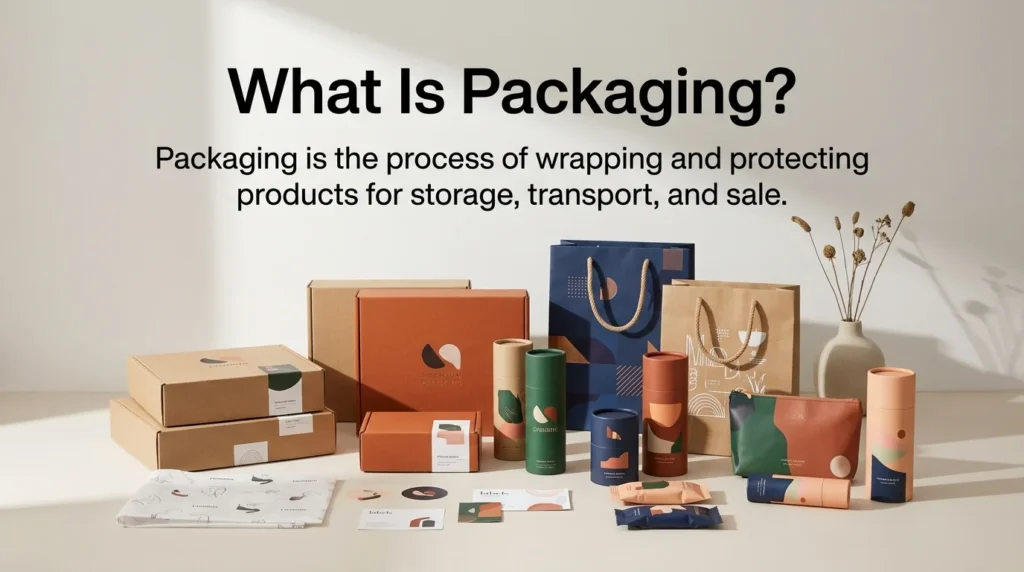
A synonym for packaging depends on the context in which you use the word. Common alternatives include wrapping, packing, casing, boxing, container, enclosure, and presentation. In business, packaging often refers to materials that protect products, while wrapping and presentation emphasize covering or appearance.
Imagine ordering a gift online. It arrives in a cardboard box, protected by paper and bubble wrap, with a neat ribbon on top. You could describe this as packaging, wrapping, or presentation, depending on which part you want to emphasize.
The word packaging appears in shopping, manufacturing, shipping, marketing, and everyday conversations. Learning its alternatives helps you describe product protection, storage, and appearance more accurately.
If you are a student, blogger, content writer, or everyday English user, knowing a suitable synonym for packaging can make your writing clearer and less repetitive.
Whether you are writing a product description, explaining a delivery process, or discussing a gift, the right word helps readers understand exactly what you mean.
What Does “Packaging” Really Mean?
Packaging refers to the materials, containers, and methods used to enclose, protect, store, transport, or present a product. It can also describe the way information, ideas, or services are presented to an audience.
The word is commonly used as a noun. It can refer to a physical package, such as a cardboard box, or the overall process of preparing products for sale and delivery.
For example, a company may improve its packaging to protect fragile items during shipping. A food manufacturer may use sealed packaging to keep products fresh.
In marketing, packaging can also refer to a product’s visual appearance, including its colors, labels, shape, and design. In a figurative sense, an idea may be presented in appealing packaging to attract attention.
Connotative Meaning of Packaging
(Connotation is the feeling, association, or attitude a word communicates beyond its basic definition.)
- Positive tone: Packaging can suggest creativity, attractive presentation, convenience, and professional quality.
- Negative tone: It may suggest unnecessary waste, excessive wrapping, or misleading presentation.
- Neutral tone: In shipping and manufacturing, it often refers simply to the materials and process used to protect goods.
The word itself is generally neutral. Its emotional meaning depends on the situation.
Etymology of Packaging
The word packaging comes from the verb pack, which is associated with placing items together, arranging them, or preparing them for storage and transport. The word pack has roots in earlier Germanic languages, although its precise historical development is complex.
Old English (450–1100)
The modern word packaging was not used in Old English. People nevertheless used words and methods for gathering, binding, carrying, and storing goods.
Middle English (1100–1500)
Forms of pack became established in English through contact with other European languages. The idea of arranging goods together for movement or storage became increasingly familiar.
Modern English (1500–Present)
The word packaging developed from pack with the suffix -age. As manufacturing, retail, and distribution expanded, packaging became a distinct term for preparing products for protection, storage, transport, and sale.
Pronunciation of Packaging (US & UK – IPA)
- US: /ˈpæk.ɪ.dʒɪŋ/
- UK: /ˈpæk.ɪ.dʒɪŋ/
Syllables: pack-ag-ing
Affixation pattern of Packaging
- Root: Pack
- Prefix: None
- Suffix: -age, followed by -ing in the word packaging
The suffix -age helps form a noun associated with a process, result, or collection. The ending -ing creates the form packaging, which can describe an ongoing process or the materials used.
Synonyms List
The most suitable synonym depends on whether you mean the physical materials, the act of preparing a product, its outer covering, or its visual presentation.
Wrapping (Noun) — US / UK: /ˈræp.ɪŋ/ / /ˈræp.ɪŋ/
Meaning: Material used to cover or protect an item, often for storage, shipping, or gifting.
Tone/Register: Neutral, everyday.
Example:
The gift wrapping made the present look beautiful.
Please remove the wrapping before using the item.

Packing (Noun) — US / UK: /ˈpæk.ɪŋ/ / /ˈpæk.ɪŋ/
Meaning: The process or materials involved in placing items securely into containers for storage or transport.
Tone/Register: Neutral, practical, professional.
Example:
The packing team prepared the orders before noon.
Careful packing helped prevent the glassware from breaking.
Boxing (Noun) — US / UK: /ˈbɑːk.sɪŋ/ / /ˈbɒk.sɪŋ/
Meaning: The process of putting an item into a box for storage, sale, or delivery.
Tone/Register: Neutral, operational.
Example:
The boxing stage begins after quality inspection.
Proper boxing protects the product during delivery.
Wrapping Material (Noun Phrase) — US / UK: /ˈræp.ɪŋ məˈtɪr.i.əl/ / /ˈræp.ɪŋ məˈtɪə.ri.əl/
Meaning: Material used to cover an object and help protect it from damage, dust, or exposure.
Tone/Register: Neutral, descriptive.
Example:
The shop uses recycled wrapping material for gifts.
Choose suitable wrapping material for delicate objects.
Container (Noun) — US / UK: /kənˈteɪ.nɚ/ / /kənˈteɪ.nə/
Meaning: An object designed to hold, store, or transport something.
Tone/Register: Neutral, general-purpose.
Example:
The sauce comes in a sealed container.
Place the remaining ingredients in an airtight container.
Enclosure (Noun) — US / UK: /ɪnˈkloʊ.ʒɚ/ / /ɪnˈkləʊ.ʒə/
Meaning: Something that surrounds or contains an object, offering protection or separation.
Tone/Register: Formal, technical.
Example:
The electronic component sits inside a protective enclosure.
The enclosure keeps dust away from sensitive equipment.
Casing (Noun) — US / UK: /ˈkeɪ.sɪŋ/ / /ˈkeɪ.sɪŋ/
Meaning: An outer covering that protects or surrounds an object.
Tone/Register: Neutral, technical.
Example:
The device has a durable plastic casing.
A damaged casing can expose internal components.
Carton (Noun) — US / UK: /ˈkɑːr.tən/ / /ˈkɑː.tən/
Meaning: A container, usually made of cardboard or coated paperboard, used to hold products.
Tone/Register: Neutral, commercial.
Example:
The milk carton is easy to recycle in our area.
Each carton contains six smaller boxes of juice.
Box (Noun) — US / UK: /bɑːks/ / /bɒks/
Meaning: A container with flat sides, commonly used to store, protect, or transport goods.
Tone/Register: Neutral, everyday.
Example:
The headphones arrived in a sturdy box.
Put the spare parts back in their original box.
Outer Covering (Noun Phrase) — US / UK: /ˈaʊ.t̬ɚ ˈkʌv.ɚ.ɪŋ/ / /ˈaʊ.tə ˈkʌv.ər.ɪŋ/
Meaning: The external layer that surrounds and protects an item.
Tone/Register: Neutral, descriptive.
Example:
The outer covering prevents scratches during transport.
Remove the outer covering before assembling the furniture.
Protective Covering (Noun Phrase) — US / UK: /prəˈtek.tɪv ˈkʌv.ɚ.ɪŋ/ / /prəˈtek.tɪv ˈkʌv.ər.ɪŋ/
Meaning: A layer or material designed to shield an object from damage or contamination.
Tone/Register: Technical, practical.
Example:
The protective covering keeps the equipment clean.
Use a protective covering when storing the machine outdoors.
Wrapping Paper (Noun Phrase) — US / UK: /ˈræp.ɪŋ ˌpeɪ.pɚ/ / /ˈræp.ɪŋ ˌpeɪ.pə/
Meaning: Decorative or functional paper used to cover gifts and other items.
Tone/Register: Neutral, everyday.
Example:
She chose blue wrapping paper for the birthday gift.
The store offers paper made from recycled materials.
Pouch (Noun) — US / UK: /paʊtʃ/ / /paʊtʃ/
Meaning: A small flexible bag or container used to hold or protect an item.
Tone/Register: Neutral, commercial.
Example:
The coffee comes in a resealable pouch.
Keep the small accessories in a separate pouch.
Sleeve (Noun) — US / UK: /sliːv/ / /sliːv/
Meaning: A protective or enclosing cover that fits around an object.
Tone/Register: Neutral, technical or everyday.
Example:
The document arrived in a cardboard sleeve.
A paper sleeve keeps the cup comfortable to hold.
Bagging (Noun) — US / UK: /ˈbæɡ.ɪŋ/ / /ˈbæɡ.ɪŋ/
Meaning: The process of placing items into bags for storage, sale, or transport.
Tone/Register: Neutral, operational.
Example:
Bagging begins once the vegetables have been sorted.
The factory automated the bagging process to improve consistency.
Sealing (Noun) — US / UK: /ˈsiː.lɪŋ/ / /ˈsiː.lɪŋ/
Meaning: The act of closing a package securely to protect its contents.
Tone/Register: Technical, practical.
Example:
Proper sealing helps keep the food fresh.
The final sealing stage prevents liquid from leaking.
Labeling (Noun) — US / UK: /ˈleɪ.bəl.ɪŋ/ / /ˈleɪ.bəl.ɪŋ/
Meaning: The process of attaching labels that identify a product or communicate important information.
Tone/Register: Neutral, business, technical.
Example:
Accurate labeling helps customers identify the ingredients.
The labeling process includes the product name and expiry date.
Crating (Noun) — US / UK: /ˈkreɪ.tɪŋ/ / /ˈkreɪ.tɪŋ/
Meaning: The process of placing goods inside a rigid crate for protection and transport.
Tone/Register: Industrial, logistical.
Example:
Crating protects heavy machinery during overseas shipping.
The fragile sculpture required a custom wooden crate.
Palletizing (Noun) — US / UK: /ˈpæl.ə.taɪ.zɪŋ/ / /ˈpæl.ə.taɪ.zɪŋ/
Meaning: The process of arranging and securing goods on a pallet for efficient handling and transportation.
Tone/Register: Industrial, logistical.
Example:
Palletizing makes large shipments easier to move.
The warehouse checks every pallet before dispatch.
Cushioning (Noun) — US / UK: /ˈkʊʃ.ən.ɪŋ/ / /ˈkʊʃ.ən.ɪŋ/
Meaning: Soft or shock-absorbing material used to reduce damage during handling and transport.
Tone/Register: Technical, practical.
Example:
The cushioning protected the glass vase inside the box.
Add enough cushioning to keep the item from moving.
Padding (Noun) — US / UK: /ˈpæd.ɪŋ/ / /ˈpæd.ɪŋ/
Meaning: Soft material placed around an item to absorb impact or prevent scratches.
Tone/Register: Neutral, practical.
Example:
Extra padding kept the camera safe during shipping.
The package needs more padding around its corners.
Insulation (Noun) — US / UK: /ˌɪn.səˈleɪ.ʃən/ / /ˌɪn.sjəˈleɪ.ʃən/
Meaning: Material that reduces the transfer of heat or protects temperature-sensitive contents.
Tone/Register: Technical, scientific.
Example:
The packaging includes insulation to keep the medicine cool.
Thermal insulation helps frozen products stay cold during transport.
Wrapping System (Noun Phrase) — US / UK: /ˈræp.ɪŋ ˌsɪs.təm/ / /ˈræp.ɪŋ ˌsɪs.təm/
Meaning: A method or arrangement of materials and equipment used to wrap products consistently.
Tone/Register: Technical, industrial.
Example:
The factory introduced a new wrapping system for its bottles.
An effective wrapping system reduces handling errors.
Product Presentation (Noun Phrase) — US / UK: /ˈprɑː.dʌkt ˌprez.ənˈteɪ.ʃən/ / /ˈprɒd.ʌkt ˌprez.ənˈteɪ.ʃən/
Meaning: The way a product is visually arranged or displayed to appeal to customers.
Tone/Register: Marketing, professional.
Example:
Thoughtful product presentation can improve the shopping experience.
The brand uses simple colors for a clean product presentation.

Presentation (Noun) — US / UK: /ˌprez.ənˈteɪ.ʃən/ / /ˌprez.ənˈteɪ.ʃən/
Meaning: The way something is displayed, arranged, or introduced to an audience.
Tone/Register: Neutral, professional.
Example:
The gift’s presentation made it feel personal.
Clear presentation helps customers understand the product’s benefits.
Product Design (Noun Phrase) — US / UK: /ˈprɑː.dʌkt dɪˌzaɪn/ / /ˈprɒd.ʌkt dɪˌzaɪn/
Meaning: The planning of a product’s appearance, structure, and functionality, which may include its packaging.
Tone/Register: Professional, creative.
Example:
The team improved the product design to make it easier to open.
Good product design considers both appearance and usability.
Branding (Noun) — US / UK: /ˈbræn.dɪŋ/ / /ˈbræn.dɪŋ/
Meaning: The process of creating a recognizable identity for a company or product through its name, visuals, and messaging.
Tone/Register: Business, marketing.
Example:
Consistent branding makes the product easy to recognize.
The packaging reflects the company’s natural and simple branding.
Wrapping Design (Noun Phrase) — US / UK: /ˈræp.ɪŋ dɪˌzaɪn/ / /ˈræp.ɪŋ dɪˌzaɪn/
Meaning: The visual arrangement of colors, patterns, and graphics on material used to cover a product.
Tone/Register: Creative, descriptive.
Example:
The wrapping design uses soft colors and simple patterns.
A seasonal wrapping design can make a gift feel special.
Pack Format (Noun Phrase) — US / UK: /ˈpæk ˌfɔːr.mæt/ / /ˈpæk ˌfɔː.mæt/
Meaning: The particular form or arrangement in which a product is packaged, such as a bottle, pouch, carton, or multipack.
Tone/Register: Business, technical.
Example:
The company introduced a smaller pack format for travel.
The pack format must suit the product and its intended use.
Product Enclosure (Noun Phrase) — US / UK: /ˈprɑː.dʌkt ɪnˌkloʊ.ʒɚ/ / /ˈprɒd.ʌkt ɪnˌkləʊ.ʒə/
Meaning: The structure that surrounds a product and separates it from the outside environment.
Tone/Register: Technical, industrial.
Example:
The product enclosure protects the internal parts from dust.
A secure enclosure is essential for sensitive electronic equipment.
Wrapper (Noun) — US / UK: /ˈræp.ɚ/ / /ˈræp.ə/
Meaning: A material or covering placed around an object to protect it or keep it enclosed.
Tone/Register: Neutral, everyday.
Example:
The chocolate wrapper keeps the bar clean until it is opened.
The manufacturer designed a simple wrapper for the small product.
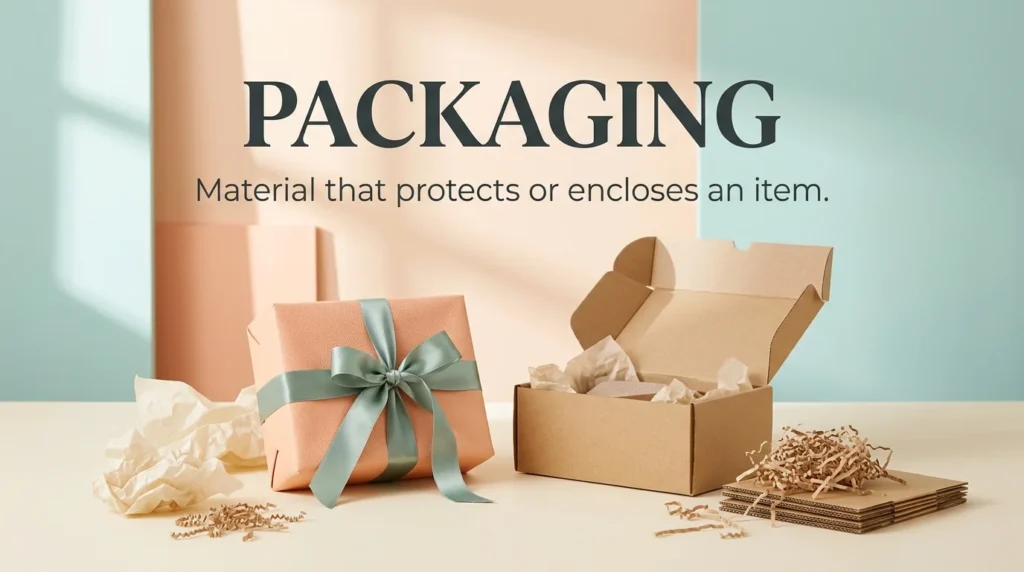
Wrapping Film (Noun Phrase) — US / UK: /ˈræp.ɪŋ fɪlm/ / /ˈræp.ɪŋ fɪlm/
Meaning: A thin, flexible film used to cover products and protect them from dust, moisture, or exposure.
Tone/Register: Technical, commercial.
Example:
The bakery uses wrapping film to cover its fresh sandwiches.
The wrapping film keeps the contents protected during storage.
Shrink Wrap (Noun) — US / UK: /ˈʃrɪŋk ræp/ / /ˈʃrɪŋk ræp/
Meaning: Plastic film that tightens around an item when heat is applied.
Tone/Register: Technical, industrial.
Example:
The manufacturer uses shrink wrap to secure several bottles together.
Shrink wrap helps protect the product from dust during storage.
Blister Pack (Noun) — US / UK: /ˈblɪs.tɚ pæk/ / /ˈblɪs.tə pæk/
Meaning: A package made with molded cavities that hold individual products, often with a backing layer.
Tone/Register: Technical, commercial.
Example:
The batteries came in a sealed blister pack.
Each tablet sits in a separate cavity inside the blister pack.
Clamshell (Noun) — US / UK: /ˈklæm.ʃel/ / /ˈklæm.ʃel/
Meaning: A hinged container that opens and closes like a shell to hold or protect an item.
Tone/Register: Technical, commercial.
Example:
The headphones were displayed in a clear plastic clamshell.
The bakery uses a hinged clamshell for its pastries.
Sachet (Noun) — US / UK: /sæˈʃeɪ/ / /ˈsæʃ.eɪ/
Meaning: A small sealed packet used to hold a single serving or a small quantity of a product.
Tone/Register: Commercial, everyday.
Example:
The hotel provides a sachet of shampoo in each room.
The seasoning comes in a small sachet for convenient use.
Wrapper Sheet (Noun Phrase) — US / UK: /ˈræp.ɚ ʃiːt/ / /ˈræp.ə ʃiːt/
Meaning: A flat sheet of material used to cover or protect an item.
Tone/Register: Neutral, practical.
Example:
Place a wrapper sheet between the delicate items.
The bakery uses a clean wrapper sheet for each pastry.
Corrugated Board (Noun Phrase) — US / UK: /ˈkɔːr.ə.ɡeɪ.tɪd bɔːrd/ / /ˈkɒr.ə.ɡeɪ.tɪd bɔːd/
Meaning: A layered paperboard material with a fluted middle layer, commonly used to make shipping boxes.
Tone/Register: Technical, industrial.
Example:
The shipping box is made from strong corrugated board.
Corrugated board helps protect products from impacts during delivery.
Paperboard (Noun) — US / UK: /ˈpeɪ.pɚ.bɔːrd/ / /ˈpeɪ.pə.bɔːd/
Meaning: Thick paper-based material used to manufacture cartons, sleeves, and other product containers.
Tone/Register: Technical, commercial.
Example:
The company chose paperboard for its lightweight product cartons.
Paperboard can be printed with product details and branding.
Casing Material (Noun Phrase) — US / UK: /ˈkeɪ.sɪŋ məˈtɪr.i.əl/ / /ˈkeɪ.sɪŋ məˈtɪə.ri.əl/
Meaning: Material used to form the outer shell or casing of a product.
Tone/Register: Technical, manufacturing.
Example:
The engineer selected a durable casing material for the device.
The casing material must withstand regular handling.
Packing Material (Noun Phrase) — US / UK: /ˈpæk.ɪŋ məˈtɪr.i.əl/ / /ˈpæk.ɪŋ məˈtɪə.ri.əl/
Meaning: Material placed around or among goods to protect them during storage or transportation.
Tone/Register: Neutral, logistical.
Example:
We reused packing material from an earlier delivery.
The fragile ornament needs suitable packing material.
Void Fill (Noun) — US / UK: /ˈvɔɪd fɪl/ / /ˈvɔɪd fɪl/
Meaning: Material used to fill empty spaces inside a package and prevent its contents from moving.
Tone/Register: Technical, shipping.
Example:
The warehouse added paper void fill around the ceramic mug.
Good void fill keeps the product steady inside the box.
Dunnage (Noun) — US / UK: /ˈdʌn.ɪdʒ/ / /ˈdʌn.ɪdʒ/
Meaning: Material used to support, cushion, or secure goods during transport.
Tone/Register: Technical, logistics.
Example:
The shipping team used wooden dunnage to stabilize the heavy cargo.
Proper dunnage reduces movement during transportation.
Separator (Noun) — US / UK: /ˈsep.ə.reɪ.t̬ɚ/ / /ˈsep.ə.reɪ.tə/
Meaning: A piece of material placed between products to keep them apart and prevent contact or damage.
Tone/Register: Neutral, technical.
Example:
A cardboard separator keeps the glass bottles apart.
Each layer has a separator to prevent surface scratches.
Divider (Noun) — US / UK: /dɪˈvaɪ.dɚ/ / /dɪˈvaɪ.də/
Meaning: A partition inside a container that creates separate spaces for different items.
Tone/Register: Neutral, practical.
Example:
The box includes a divider for each glass.
The internal divider prevents the products from colliding.
Tamper-Evident Seal (Noun Phrase) — US / UK: /ˈtæm.pɚ ˌev.ɪ.dənt siːl/ / /ˈtæm.pə ˌev.ɪ.dənt siːl/
Meaning: A seal designed to show visible signs if a package has been opened or interfered with.
Tone/Register: Technical, security-focused.
Example:
The bottle has a tamper-evident seal beneath its cap.
Customers can check the seal before using the product.
Vacuum Packaging (Noun Phrase) — US / UK: /ˈvæk.juːm ˈpæk.ɪ.dʒɪŋ/ / /ˈvæk.juːm ˈpæk.ɪ.dʒɪŋ/
Meaning: A packaging method that removes air from a package before sealing it.
Tone/Register: Technical, food-related.
Example:
The manufacturer uses vacuum packaging to preserve the coffee.
Vacuum packaging reduces the amount of air around the food.
Aseptic Packaging (Noun Phrase) — US / UK: /eɪˈsep.tɪk ˈpæk.ɪ.dʒɪŋ/ / /eɪˈsep.tɪk ˈpæk.ɪ.dʒɪŋ/
Meaning: A method of filling sterile products into sterile containers under controlled conditions.
Tone/Register: Scientific, technical.
Example:
Aseptic packaging helps keep certain beverages safe for storage.
The factory follows strict hygiene standards during aseptic packaging.
Flexible Packaging (Noun Phrase) — US / UK: /ˈflek.sə.bəl ˈpæk.ɪ.dʒɪŋ/ / /ˈflek.sə.bəl ˈpæk.ɪ.dʒɪŋ/
Meaning: Packaging made from materials that can bend or change shape, such as flexible films, pouches, and bags.
Tone/Register: Technical, commercial.
Example:
Flexible packaging allows the snack bags to fit easily on shelves.
The company is exploring lighter flexible packaging for its products.
Rigid Packaging (Noun Phrase) — US / UK: /ˈrɪdʒ.ɪd ˈpæk.ɪ.dʒɪŋ/ / /ˈrɪdʒ.ɪd ˈpæk.ɪ.dʒɪŋ/
Meaning: Packaging made from firm materials that maintain their shape, such as glass bottles, metal cans, and rigid plastic containers.
Tone/Register: Technical, manufacturing.
Example:
Rigid packaging protects the glass product from being crushed.
The company uses rigid packaging for its premium gift sets.
Synonyms for Packaging by Tone
Different alternatives suit different situations. Some describe physical protection, while others emphasize appearance, logistics, or marketing.
Positive
- Product presentation: Emphasizes appearance and customer appeal.
- Wrapping design: Highlights creativity and visual style.
- Branding: Focuses on recognition and identity.
- Protective covering: Highlights safety and care.
These words work well when describing thoughtful design, attractive gifts, or packaging that improves the customer experience.
Neutral
- Packing: Suitable for preparing goods for transport.
- Container: Refers to an object that holds something.
- Box: A simple, everyday term for a rigid container.
- Carton: Common for food, beverages, and retail products.
- Sleeve: Describes a fitted protective cover.
- Labeling: Refers to product identification and information.
These alternatives are useful for instructions, everyday conversation, and factual descriptions.
Negative
- Excessive wrapping: Suggests more material than necessary.
- Overpackaging: Describes packaging that uses unnecessary materials or space.
- Wasteful packaging: Emphasizes avoidable environmental or material waste.
For example, a customer might complain about excessive wrapping when a small product arrives in a very large box filled with unnecessary materials.
Playful or Informal
- Gift wrap: A familiar term for decorative coverings.
- Boxing up: An informal expression for placing items in boxes.
- Wrapping: A simple term used in daily conversations.
Tone matters because the word you choose influences how readers interpret the product or process. A technical report may require protective enclosure, while a casual conversation may use box or wrapping.
Packaging vs. Close Alternatives
The following terms are related, but they are not interchangeable in every sentence.
| Word | Main meaning | Best context |
|---|---|---|
| Packaging | Materials and methods used to enclose, protect, or present products | Manufacturing, retail, shipping |
| Wrapping | Material or action used to cover an item | Gifts, covering, protection |
| Packing | Preparing items for storage or transport | Moving, shipping, warehouses |
| Container | An object that holds something | Storage, food, liquids |
| Presentation | How something looks when displayed | Gifts, retail, marketing |
Packaging vs. wrapping: Packaging can include a box, label, seal, and protective materials. Wrapping usually means the material or action used to cover an item.
Packaging vs. packing: Packaging often refers to the materials and design surrounding a product. Packing focuses more on preparing items for storage or shipment.
Packaging vs. presentation: Packaging may protect the contents and communicate product information. Presentation focuses on how something looks to the viewer or customer.
How Packaging Changes by Context
Daily Conversation
In everyday English, people usually choose simple terms such as box, bag, wrapping, or container.
For example, someone might ask, “Can you keep the original box?” rather than asking about the original packaging.
Writing and Blogging
Bloggers can use wrapping, protective covering, product presentation, or pack format to avoid repetition. The best choice depends on whether the article discusses appearance, materials, or delivery.
For example, a sustainability article might use recyclable packaging and excessive wrapping to explain waste reduction.
Professional and Academic Writing
Technical and business documents often use terms such as protective enclosure, palletizing, sealing, and insulation.
These words communicate specific processes. For example, a research report about food preservation may discuss sealing and insulation rather than using the general word packaging repeatedly.
Creative and Informal Writing
Creative writing often focuses on the appearance and emotional effect of a package. Words such as gift wrap, presentation, and wrapping design help describe the experience of receiving a gift.
For instance, “The simple wrapping made the handmade gift feel special” sounds more personal than a technical description of its packaging.
Common Mistakes Learners Make
Using “Wrapping” for Every Type of Packaging
Wrapping usually refers to covering something. It does not always include the full packaging system, such as labels, seals, boxes, and inserts.
Better: Use packaging when discussing the complete arrangement of materials and processes.
Treating “Packing” and “Packaging” as Identical
The words overlap, but they often have different emphases. Packing commonly describes preparing goods for transport, while packaging can include the design and materials surrounding a product.
Better: Use packing for the action of preparing items and packaging for the wider product enclosure or system.
Using “Presentation” to Mean Physical Protection
Presentation describes how something looks or is displayed. It does not necessarily mean that the item is protected.
Better: Use protective covering or container when discussing safety.
Choosing Technical Words in Casual Conversations
Words such as palletizing and product enclosure can sound unnecessarily technical when a simple word would work.
Better: Match your vocabulary to the reader and situation.
Repeating “Packaging” Too Often
Repeating the same word can make an article feel monotonous. However, replacing every occurrence with a synonym can also reduce clarity.
Better: Use the original word when it is the most accurate option, and introduce alternatives only when they fit the meaning.
For more vocabulary practice, you can connect this topic with an article about synonyms for presentation or container on your vocabulary website.
Real-Life Mini Scenarios Using Packaging Synonyms
Workplace: A warehouse employee checks the packing before dispatch and confirms that the sealing is secure.
Social situations: A friend chooses colorful wrapping paper and adds a ribbon to improve the gift’s presentation.
Media and retail: A product review discusses the carton, the labeling, and the product design before explaining whether the item is easy to store.
Writing and storytelling: A writer describes a handmade gift with simple wrapping to show that the thought behind the present matters more than its appearance.
Interactive Practice Quiz
Choose the most suitable answer for each situation.
Questions
1. You cover a birthday gift with decorative paper. What is this material called?
- A. Palletizing
- B. Wrapping paper
- C. Insulation
2. A warehouse prepares items for safe transport. Which word best describes the process?
- A. Packing
- B. Presentation
- C. Branding
3. A bottle needs a structure that holds the liquid. Which word fits best?
- A. Container
- B. Labeling
- C. Cushioning
4. A company wants to make its product more visually attractive to customers. Which term is most suitable?
- A. Crating
- B. Product presentation
- C. Sealing
5. A fragile vase needs soft material to absorb shocks. Which word describes that material?
- A. Cushioning
- B. Branding
- C. Boxing
6. A factory closes a food package to prevent leaks. Which process is involved?
- A. Wrapping design
- B. Sealing
- C. Product presentation
7. A business arranges boxes on pallets for transportation. What is this process called?
- A. Palletizing
- B. Labeling
- C. Bagging
8. An electronic device needs an outer structure to protect its internal parts. Which term is appropriate?
- A. Gift wrap
- B. Product enclosure
- C. Presentation
9. A company adds product names and expiry dates to its packages. What is this process?
- A. Labeling
- B. Cushioning
- C. Crating
10. A small item arrives inside a fitted protective cover. Which word could describe that cover?
- A. Sleeve
- B. Branding
- C. Palletizing
Answer key: 1-B, 2-A, 3-A, 4-B, 5-A, 6-B, 7-A, 8-B, 9-A, 10-A,
Conclusion
Learning a synonym for packaging helps you describe products, containers, and protective materials more clearly. The right word makes everyday conversations and written explanations easier to understand.
Students can use these terms in assignments, while bloggers and content writers can make articles more precise. Vocabulary variety also helps avoid unnecessary repetition without changing the intended meaning.
Practice these words in product descriptions, emails, essays, and daily conversations. Start with simple alternatives such as wrapping, packing, and container, then explore more specific terms.
Keep learning by choosing one new synonym each day and writing your own sentence with it. Regular practice will help you build confidence and communicate more naturally in English.
Frequently Asked Questions
1. What is the best synonym for packaging in product descriptions?
Product presentation is a useful alternative when you are discussing how an item looks to customers. If you mean the materials that surround and protect the item, container, wrapping, or protective covering may be more accurate. Choose the term that matches the feature you want to describe.
2. What is another word for packaging in shipping and logistics?
In shipping and logistics, packing is a common alternative when referring to preparing goods for transport. More specific terms include boxing, crating, palletizing, and cushioning. Each describes a particular activity, so the best choice depends on whether goods are being placed in boxes, secured on pallets, or protected against impact.
3. What is a formal synonym for packaging?
There is no single formal synonym that fits every context. Protective enclosure works for certain technical products, while pack format is useful when discussing the arrangement of a product for sale. In business documents, packaging materials is often clearer than a substitute that changes the original meaning.
4. What is the difference between packaging and wrapping?
Packaging is a broad term for materials and processes used to contain, protect, store, transport, or present products. Wrapping specifically involves covering an item with paper, plastic film, fabric, or another material. Wrapping can be part of packaging, but packaging may also include containers, labels, seals, and protective inserts.
5. What is a synonym for eco-friendly packaging?
Depending on the materials and design, you could use sustainable packaging, recyclable packaging, reusable packaging, or compostable packaging. These expressions have different meanings. Recyclable packaging can be processed for recycling, while reusable packaging is designed for repeated use. Avoid treating these terms as interchangeable unless the product meets the relevant description.
6. What word describes attractive packaging?
Product presentation, wrapping design, and visual design can describe the attractive appearance of a product’s packaging. Branding is also relevant when colors, logos, and other visual elements communicate a company’s identity. Use presentation when emphasizing how the product looks to a customer rather than how it is physically protected.
7. What is the opposite of excessive packaging?
The best expression depends on the context. Minimal packaging describes using fewer packaging materials, while right-sized packaging emphasizes choosing a package that fits the product appropriately. Reduced packaging describes a decrease compared with an earlier design. These terms can communicate efficiency without implying that essential product protection should be removed.

Aqsa Rani is the founder and lead writer at VocaNeest.com, a trusted platform dedicated to helping people improve their English vocabulary and communication skills. She creates well-researched, accurate, and easy-to-understand content covering synonyms, antonyms, word meanings, idioms, phrases, and everyday vocabulary. Her goal is to make learning English simple, practical, and accessible for students, writers, professionals, and lifelong learners.
At VocaNeest.com, every article is carefully researched, fact-checked, and written with a strong focus on accuracy, clarity, and real-world usage. Content is regularly reviewed and updated to ensure it remains helpful, relevant, and aligned with modern language standards. Through reliable vocabulary guides and practical examples, Aqsa aims to help readers write with confidence, expand their vocabulary, and communicate more effectively.


Pingback: 🏛️Synonym for Museum: 50 Best Words for Culture in (2026)