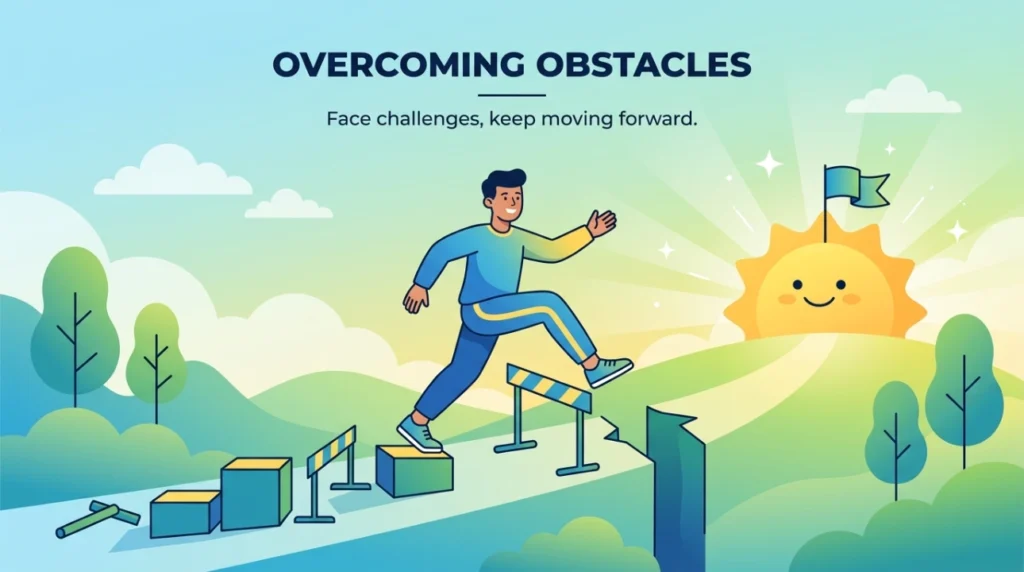
A synonym for overcoming obstacles is a word or phrase that describes successfully dealing with barriers, difficulties, challenges, or problems that stand in the way of a goal. Useful alternatives include surmounting challenges, conquering difficulties, tackling barriers, overcoming adversity, and navigating challenges.
Synonym for overcoming obstacles is useful when you want to describe progress despite difficulties. Imagine a student struggling with a difficult subject but continuing to study until the topic becomes clear.
In everyday English, overcoming obstacles commonly describes persistence, problem-solving, and success. It can apply to school, work, relationships, sports, personal growth, and many other situations.
Learning a synonym for overcoming obstacles gives you more ways to express determination. Instead of repeating “overcoming obstacles,” you can choose a phrase that better matches your exact meaning and tone.
Students can use these expressions in essays and assignments. Bloggers and content writers can use them to make descriptions more varied and engaging.
Daily English users also benefit from these alternatives. Knowing several ways to express the same idea makes conversations and writing sound more natural.
What Does “Overcoming Obstacles” Really Mean?
Overcoming obstacles means successfully dealing with or getting past things that make a goal, task, or form of progress more difficult.
The phrase contains two important ideas. Overcoming means defeating, controlling, or successfully dealing with something difficult, while an obstacle is something that blocks or makes progress harder.
Native speakers usually understand the phrase as positive or determined. It often suggests that a person faced a barrier and found a way forward.
The phrase appears in many contexts, including education, careers, sports, personal development, storytelling, and academic writing.
Part of Speech
Overcoming obstacles is a verb phrase.
- Overcoming: present participle of the verb overcome
- Obstacles: plural noun
- Simple definition: successfully dealing with barriers or difficulties
Cambridge defines overcome as defeating or successfully controlling or dealing with something.
Connotative Meaning
Connotation (the emotional or implied feeling associated with a word or phrase) can change how an expression feels.
Positive tone: It can suggest courage, resilience, determination, achievement, and growth.
Negative tone: The phrase itself is not normally negative, but the obstacles may involve stressful, painful, or difficult circumstances.
Neutral tone: In factual writing, it can simply describe successfully dealing with a barrier or problem.
Etymology of “Overcoming Obstacles”
The phrase is built from two older English words: overcome and obstacle.
Overcome
Overcome is an old Germanic English formation. It combines over-, meaning across, beyond, or above, with come. Its modern sense developed around the idea of prevailing over something difficult.
In Old English (450–1100), forms related to overcome expressed the idea of prevailing or coming over something.
During Middle English (1100–1500), related forms continued developing as English vocabulary and spelling changed.
In Modern English (1500–Present), overcome became a common verb meaning to defeat, control, or successfully deal with a difficulty. Modern dictionaries still use this core sense.
Obstacle
Obstacle entered English through Old French, ultimately from Latin obstaculum, connected with the idea of something that stands in the way.
Today, an obstacle is something that blocks movement, action, or progress.
Pronunciation
For overcome:
- US: /ˌoʊ.vɚˈkʌm/
- UK: /ˌəʊ.vəˈkʌm/
For obstacle:
- US: /ˈɑːb.stə.kəl/
- UK: /ˈɒb.stə.kəl/
Syllables
overcoming: o-ver-com-ing
obstacles: ob-sta-cles
Affixation Pattern
Overcoming
- Root/base: come
- Prefix: over-
- Suffix: -ing
Obstacles
- Root/base: obstacle
- Plural suffix: -s
Synonyms List
Surmounting Challenges (Verb Phrase)
US: /sɚˈmaʊntɪŋ ˈtʃælɪndʒɪz/
UK: /səˈmaʊntɪŋ ˈtʃælɪndʒɪz/
Meaning: Successfully getting past something difficult.
Tone/Register: Formal, academic.
Example:
The team succeeded by surmounting several technical challenges.
Her progress shows how patience can help in surmounting challenges.
Conquering Difficulties (Verb Phrase)
US: /ˈkɑːŋkərɪŋ ˈdɪfəkəltiz/
UK: /ˈkɒŋkərɪŋ ˈdɪfɪkəltiz/
Meaning: Successfully defeating or mastering difficult situations.
Tone/Register: Strong, motivational.
Example:
She gained confidence by conquering difficult tasks.
The athlete spoke about conquering difficulties through practice.
Tackling Challenges (Verb Phrase)
US: /ˈtækəlɪŋ ˈtʃælɪndʒɪz/
UK: /ˈtækəlɪŋ ˈtʃælɪndʒɪz/
Meaning: Actively trying to deal with difficult situations.
Tone/Register: Neutral, professional.
Example:
The students worked together on tackling the new assignment.
Good planning helps when tackling challenges at work.
Dealing With Difficulties (Verb Phrase)
US: /ˈdiːlɪŋ wɪð ˈdɪfəkəltiz/
UK: /ˈdiːlɪŋ wɪð ˈdɪfɪkəltiz/
Meaning: Managing or handling problems successfully.
Tone/Register: Neutral, everyday.
Example:
She learned useful ways of dealing with difficulties.
Experience can make dealing with setbacks easier.
Overcoming Challenges (Verb Phrase)
US: /ˌoʊvɚˈkʌmɪŋ ˈtʃælɪndʒɪz/
UK: /ˌəʊvəˈkʌmɪŋ ˈtʃælɪndʒɪz/
Meaning: Successfully handling challenging situations.
Tone/Register: Neutral, common.
Example:
He wrote about overcoming challenges during university.
Small victories helped her continue overcoming challenges.
Conquering Obstacles (Verb Phrase)
US: /ˈkɑːŋkərɪŋ ˈɑːbstəkəlz/
UK: /ˈkɒŋkərɪŋ ˈɒbstəkəlz/
Meaning: Defeating barriers that prevent progress.
Tone/Register: Strong, motivational.
Example:
The project succeeded after conquering several obstacles.
Determination played a major role in conquering obstacles.
Surmounting Difficulties (Verb Phrase)
US: /sɚˈmaʊntɪŋ ˈdɪfəkəltiz/
UK: /səˈmaʊntɪŋ ˈdɪfɪkəltiz/
Meaning: Rising above difficult conditions or problems.
Tone/Register: Formal, academic.
Example:
The researcher succeeded in surmounting several difficulties.
Careful preparation helped them in surmounting difficulties.
Navigating Challenges (Verb Phrase)
US: /ˈnævəɡeɪtɪŋ ˈtʃælɪndʒɪz/
UK: /ˈnævɪɡeɪtɪŋ ˈtʃælɪndʒɪz/
Meaning: Finding a practical way through complicated difficulties.
Tone/Register: Professional, modern.
Example:
The manager is skilled at navigating challenges.
Students often need support when navigating academic challenges.
Overcoming Adversity (Verb Phrase)
US: /ˌoʊvɚˈkʌmɪŋ ədˈvɝːsəti/
UK: /ˌəʊvəˈkʌmɪŋ ədˈvɜːsəti/
Meaning: Successfully dealing with serious hardship.
Tone/Register: Formal, inspirational.
Example:
Her story is an example of overcoming adversity.
He showed remarkable determination while overcoming adversity.
Defeating Barriers (Verb Phrase)
US: /dɪˈfiːtɪŋ ˈbæriɚz/
UK: /dɪˈfiːtɪŋ ˈbæriəz/
Meaning: Removing or getting past things that prevent progress.
Tone/Register: Neutral, motivational.
Example:
Education can help people defeat barriers to opportunity.
The group focused on defeating barriers to participation.
Breaking Through Barriers (Verb Phrase)
US: /ˈbreɪkɪŋ θruː ˈbæriɚz/
UK: /ˈbreɪkɪŋ θruː ˈbæriəz/
Meaning: Successfully pushing past a major limitation.
Tone/Register: Motivational, conversational.
Example:
The young player kept breaking through barriers.
Her research is breaking through barriers in the field.
Rising Above Challenges (Verb Phrase)
US: /ˈraɪzɪŋ əˈbʌv ˈtʃælɪndʒɪz/
UK: /ˈraɪzɪŋ əˈbʌv ˈtʃælɪndʒɪz/
Meaning: Remaining strong and moving forward despite difficulties.
Tone/Register: Inspirational.
Example:
He kept rising above challenges at every stage.
Her story encourages others to rise above challenges.
Getting Past Obstacles (Verb Phrase)
US: /ˈɡetɪŋ pæst ˈɑːbstəkəlz/
UK: /ˈɡetɪŋ pɑːst ˈɒbstəkəlz/
Meaning: Successfully moving beyond barriers.
Tone/Register: Informal, conversational.
Example:
We need a new plan for getting past these obstacles.
She found a simple way of getting past the problem.
Managing Setbacks (Verb Phrase)
US: /ˈmænɪdʒɪŋ ˈsetbæks/
UK: /ˈmænɪdʒɪŋ ˈsetbæks/
Meaning: Handling temporary failures without giving up.
Tone/Register: Neutral, professional.
Example:
Learning to manage setbacks is part of professional growth.
The team improved after managing several setbacks.
Handling Difficulties (Verb Phrase)
US: /ˈhændəlɪŋ ˈdɪfəkəltiz/
UK: /ˈhændəlɪŋ ˈdɪfɪkəltiz/
Meaning: Dealing effectively with difficult circumstances.
Tone/Register: Neutral, everyday.
Example:
She is good at handling difficulties calmly.
The training prepared workers for handling difficulties.
Resolving Problems (Verb Phrase)
US: /rɪˈzɑːlvɪŋ ˈprɑːbləmz/
UK: /rɪˈzɒlvɪŋ ˈprɒbləmz/
Meaning: Finding solutions that remove or reduce problems.
Tone/Register: Professional, academic.
Example:
The team met to discuss resolving problems quickly.
Clear communication is important for resolving problems.
Addressing Barriers (Verb Phrase)
US: /əˈdresɪŋ ˈbæriɚz/
UK: /əˈdresɪŋ ˈbæriəz/
Meaning: Taking action to deal with factors that prevent progress.
Tone/Register: Formal, academic.
Example:
The report focuses on addressing barriers to education.
New policies may help with addressing barriers for students.
Battling Difficulties (Verb Phrase)
US: /ˈbætəlɪŋ ˈdɪfəkəltiz/
UK: /ˈbætəlɪŋ ˈdɪfɪkəltiz/
Meaning: Struggling actively against difficult conditions.
Tone/Register: Strong, emotional.
Example:
The novel follows a family battling difficulties together.
She remained hopeful while battling difficulties at school.
Persisting Through Challenges (Verb Phrase)
US: /pɚˈsɪstɪŋ θruː ˈtʃælɪndʒɪz/
UK: /pəˈsɪstɪŋ θruː ˈtʃælɪndʒɪz/
Meaning: Continuing despite problems or delays.
Tone/Register: Positive, motivational.
Example:
He succeeded by persisting through challenges.
Persisting through challenges helped her build confidence.
Pushing Past Barriers (Verb Phrase)
US: /ˈpʊʃɪŋ pæst ˈbæriɚz/
UK: /ˈpʊʃɪŋ pɑːst ˈbæriəz/
Meaning: Making continued progress despite limitations.
Tone/Register: Informal, motivational.
Example:
The runner kept pushing past barriers during training.
She is proud of pushing past barriers in her studies.
Triumphing Over Adversity (Verb Phrase)
US: /ˈtraɪəmfɪŋ ˈoʊvɚ ədˈvɝːsəti/
UK: /ˈtraɪəmfɪŋ ˈəʊvə ədˈvɜːsəti/
Meaning: Achieving success despite serious hardship.
Tone/Register: Formal, literary.
Example:
The biography tells a story of triumphing over adversity.
His achievement became a symbol of triumphing over adversity.
Beating the Odds (Idiom)
US: /ˈbiːtɪŋ ði ɑːdz/
UK: /ˈbiːtɪŋ ði ɒdz/
Meaning: Succeeding even when success seemed unlikely.
Tone/Register: Informal, conversational.
Example:
The small team beat the odds and reached the final.
She beat the odds by finishing the difficult project.
Moving Past Difficulties (Verb Phrase)
US: /ˈmuːvɪŋ pæst ˈdɪfəkəltiz/
UK: /ˈmuːvɪŋ pɑːst ˈdɪfɪkəltiz/
Meaning: Leaving difficult experiences behind and continuing forward.
Tone/Register: Neutral, reflective.
Example:
He is slowly moving past his academic difficulties.
The team is moving past its early problems.
Getting Through Hardships (Verb Phrase)
US: /ˈɡetɪŋ θruː ˈhɑːrdʃɪps/
UK: /ˈɡetɪŋ θruː ˈhɑːdʃɪps/
Meaning: Successfully enduring difficult circumstances.
Tone/Register: Neutral, emotional.
Example:
Family support helped them get through hardships.
She learned valuable lessons from getting through hardships.
Overcoming Hurdles (Verb Phrase)
US: /ˌoʊvɚˈkʌmɪŋ ˈhɝːdəlz/
UK: /ˌəʊvəˈkʌmɪŋ ˈhɜːdəlz/
Meaning: Successfully dealing with individual barriers that slow progress.
Tone/Register: Neutral, common.
Example:
The project moved forward after overcoming several hurdles.
Every successful application involved overcoming small hurdles.
Surmounting Challenges (Verb Phrase)
US: /sɚˈmaʊntɪŋ ˈtʃælɪndʒɪz/
UK: /səˈmaʊntɪŋ ˈtʃælɪndʒɪz/
Meaning: Successfully overcoming difficult situations or problems.
Tone/Register: Formal, positive.
Example 1: She succeeded by surmounting several challenges along the way.
Example 2: Surmounting challenges requires patience and determination.
Tackling Difficulties (Verb Phrase)
US: /ˈtækəlɪŋ ˈdɪfəkəltiz/
UK: /ˈtækəlɪŋ ˈdɪfɪkəltiz/
Meaning: Taking active steps to deal with difficult situations.
Tone/Register: Neutral, common.
Example 1: The team worked together when tackling difficulties.
Example 2: Tackling difficulties early can prevent bigger problems.
Navigating Challenges (Verb Phrase)
US: /ˈnævəˌɡeɪtɪŋ ˈtʃælɪndʒɪz/
UK: /ˈnævɪɡeɪtɪŋ ˈtʃælɪndʒɪz/
Meaning: Successfully managing a difficult or complicated situation.
Tone/Register: Neutral, professional.
Example 1: She learned how to navigate challenges at work.
Example 2: Navigating challenges becomes easier with experience.
Resolving Difficulties (Verb Phrase)
US: /rɪˈzɑlvɪŋ ˈdɪfəkəltiz/
UK: /rɪˈzɒlvɪŋ ˈdɪfɪkəltiz/
Meaning: Finding effective solutions to problems or difficult situations.
Tone/Register: Formal, professional.
Example 1: The manager focused on resolving difficulties quickly.
Example 2: Resolving difficulties helped the team complete the project.
Addressing Challenges (Verb Phrase)
US: /əˈdrɛsɪŋ ˈtʃælɪndʒɪz/
UK: /əˈdresɪŋ ˈtʃælɪndʒɪz/
Meaning: Taking action to deal with challenging circumstances.
Tone/Register: Neutral, professional.
Example 1: The organization is addressing challenges in the education system.
Example 2: Addressing challenges directly can lead to better results.
Handling Adversity (Verb Phrase)
US: /ˈhændəlɪŋ ədˈvɝːsəti/
UK: /ˈhændəlɪŋ ədˈvɜːsəti/
Meaning: Managing difficult circumstances with strength and patience.
Tone/Register: Neutral, slightly formal.
Example 1: She showed great maturity when handling adversity.
Example 2: Handling adversity can build confidence and resilience.
Coping with Difficulties (Verb Phrase)
US: /ˈkoʊpɪŋ wɪð ˈdɪfəkəltiz/
UK: /ˈkəʊpɪŋ wɪð ˈdɪfɪkəltiz/
Meaning: Managing problems or stressful situations successfully.
Tone/Register: Neutral, common.
Example 1: He developed healthy ways of coping with difficulties.
Example 2: Coping with difficulties becomes easier with proper support.
Managing Obstacles (Verb Phrase)
US: /ˈmænɪdʒɪŋ ˈɑbstəkəlz/
UK: /ˈmænɪdʒɪŋ ˈɒbstəkəlz/
Meaning: Dealing effectively with barriers that interfere with progress.
Tone/Register: Neutral, professional.
Example 1: Good planning helps in managing obstacles effectively.
Example 2: She remained calm while managing unexpected obstacles.
Overcoming Adversity (Verb Phrase)
US: /ˌoʊvɚˈkʌmɪŋ ədˈvɝːsəti/
UK: /ˌəʊvəˈkʌmɪŋ ədˈvɜːsəti/
Meaning: Successfully dealing with serious difficulties or hardship.
Tone/Register: Formal, inspirational.
Example 1: His story shows the power of overcoming adversity.
Example 2: Overcoming adversity can make people more resilient.
Conquering Challenges (Verb Phrase)
US: /ˈkɑŋkərɪŋ ˈtʃælɪndʒɪz/
UK: /ˈkɒŋkərɪŋ ˈtʃælɪndʒɪz/
Meaning: Successfully defeating or mastering difficult situations.
Tone/Register: Strong, motivational.
Example 1: She remained determined while conquering new challenges.
Example 2: Conquering challenges gave the team greater confidence.
Mastering Difficulties (Verb Phrase)
US: /ˈmæstərɪŋ ˈdɪfəkəltiz/
UK: /ˈmɑːstərɪŋ ˈdɪfɪkəltiz/
Meaning: Learning to manage and overcome difficult situations effectively.
Tone/Register: Positive, slightly formal.
Example 1: Mastering difficulties takes time and consistent effort.
Example 2: She became more confident after mastering difficult tasks.
Overcoming Trials (Verb Phrase)
US: /ˌoʊvɚˈkʌmɪŋ traɪəlz/
UK: /ˌəʊvəˈkʌmɪŋ traɪəlz/
Meaning: Successfully getting through difficult experiences or tests.
Tone/Register: Formal, literary.
Example 1: The novel tells the story of overcoming trials.
Example 2: Overcoming trials can reveal a person’s inner strength.
Overcoming Struggles (Verb Phrase)
US: /ˌoʊvɚˈkʌmɪŋ ˈstrʌɡəlz/
UK: /ˌəʊvəˈkʌmɪŋ ˈstrʌɡəlz/
Meaning: Successfully dealing with ongoing personal or practical difficulties.
Tone/Register: Neutral, empathetic.
Example 1: She inspired others by overcoming struggles in her career.
Example 2: Overcoming struggles often requires patience and support.
Defeating Barriers (Verb Phrase)
US: /dɪˈfiːtɪŋ ˈbæriɚz/
UK: /dɪˈfiːtɪŋ ˈbæriəz/
Meaning: Successfully removing or getting past things that prevent progress.
Tone/Register: Strong, motivational.
Example 1: Education can help people defeat barriers to success.
Example 2: The team succeeded by defeating several major barriers.
Overcoming Impediments (Verb Phrase)
US: /ˌoʊvɚˈkʌmɪŋ ɪmˈpɛdəmənts/
UK: /ˌəʊvəˈkʌmɪŋ ɪmˈpedɪmənts/
Meaning: Successfully dealing with factors that prevent or delay progress.
Tone/Register: Formal, academic.
Example 1: The researchers found ways of overcoming technical impediments.
Example 2: Overcoming impediments allowed the project to continue.
Breaking Through Barriers (Verb Phrase)
US: /ˈbreɪkɪŋ θruː ˈbæriɚz/
UK: /ˈbreɪkɪŋ θruː ˈbæriəz/
Meaning: Successfully getting past something that has prevented progress.
Tone/Register: Neutral, motivational.
Example 1: The scientist succeeded in breaking through barriers in the field.
Example 2: Breaking through barriers requires creativity and persistence.
Getting Past Difficulties (Verb Phrase)
US: /ˈɡɛtɪŋ pæst ˈdɪfəkəltiz/
UK: /ˈɡetɪŋ pɑːst ˈdɪfɪkəltiz/
Meaning: Successfully moving beyond problems or difficult situations.
Tone/Register: Informal, conversational.
Example 1: The team eventually succeeded in getting past difficulties.
Example 2: Getting past difficulties can teach valuable lessons.
Working Around Obstacles (Verb Phrase)
US: /ˈwɝːkɪŋ əˈraʊnd ˈɑbstəkəlz/
UK: /ˈwɜːkɪŋ əˈraʊnd ˈɒbstəkəlz/
Meaning: Finding alternative ways to continue despite barriers.
Tone/Register: Neutral, practical.
Example 1: The engineers found a way of working around obstacles.
Example 2: Working around obstacles kept the project on schedule.
Overcoming Roadblocks (Verb Phrase)
US: /ˌoʊvɚˈkʌmɪŋ ˈroʊdˌblɑks/
UK: /ˌəʊvəˈkʌmɪŋ ˈrəʊdˌblɒks/
Meaning: Successfully dealing with problems that stop or delay progress.
Tone/Register: Neutral, common.
Example 1: The developers kept working on overcoming roadblocks.
Example 2: Overcoming roadblocks helped the company reach its goal.
Overcoming Difficulties (Verb Phrase)
US: /ˌoʊvɚˈkʌmɪŋ ˈdɪfəkəltiz/
UK: /ˌəʊvəˈkʌmɪŋ ˈdɪfɪkəltiz/
Meaning: Successfully dealing with problems or challenging circumstances.
Tone/Register: Neutral, common.
Example 1: Overcoming difficulties made the experience more meaningful.
Example 2: She remained hopeful while overcoming difficulties.
Defeating Challenges (Verb Phrase)
US: /dɪˈfiːtɪŋ ˈtʃælɪndʒɪz/
UK: /dɪˈfiːtɪŋ ˈtʃælɪndʒɪz/
Meaning: Successfully dealing with challenges that stand in the way of a goal.
Tone/Register: Strong, motivational.
Example 1: The athlete kept training despite defeating challenges along the way.
Example 2: Defeating challenges gave her the confidence to aim higher.
Surviving Hard Times (Verb Phrase)
US: /sɚˈvaɪvɪŋ hɑːrd taɪmz/
UK: /səˈvaɪvɪŋ hɑːd taɪmz/
Meaning: Continuing successfully through periods of serious difficulty.
Tone/Register: Neutral, emotional.
Example 1: The community showed strength while surviving hard times.
Example 2: Surviving hard times can teach important life lessons.
Overcoming Constraints (Verb Phrase)
US: /ˌoʊvɚˈkʌmɪŋ kənˈstreɪnts/
UK: /ˌəʊvəˈkʌmɪŋ kənˈstreɪnts/
Meaning: Successfully dealing with restrictions that limit choices or progress.
Tone/Register: Formal, professional.
Example 1: The team found creative ways of overcoming constraints.
Example 2: Overcoming constraints allowed the researchers to complete the study.
Dealing with Setbacks (Verb Phrase)
US: /ˈdiːlɪŋ wɪð ˈsɛtˌbæks/
UK: /ˈdiːlɪŋ wɪð ˈsetˌbæks/
Meaning: Managing problems or disappointments that temporarily interrupt progress.
Tone/Register: Neutral, common.
Example 1: Successful people learn how to deal with setbacks.
Example 2: Dealing with setbacks helped her become more patient.
Battling Difficulties (Verb Phrase)
US: /ˈbætəlɪŋ ˈdɪfəkəltiz/
UK: /ˈbætlɪŋ ˈdɪfɪkəltiz/
Meaning: Making a determined effort to overcome difficult circumstances.
Tone/Register: Strong, emotional.
Example 1: He kept moving forward while battling difficulties.
Example 2: Battling difficulties can require courage and determination.
Synonyms by Tone
Positive
For an encouraging or motivational tone, use:
- overcoming challenges
- rising above challenges
- overcoming adversity
- triumphing over adversity
- conquering obstacles
- persisting through challenges
- beating the odds
These choices emphasize strength, resilience, and achievement.
Neutral
For everyday or factual writing, use:
- dealing with difficulties
- handling difficulties
- tackling challenges
- navigating challenges
- resolving problems
- moving past difficulties
- overcoming hurdles
These expressions sound natural without adding dramatic emotion.
Negative or Struggle-Focused
Some expressions emphasize the difficulty rather than the success:
- battling difficulties
- getting through hardships
- managing setbacks
- pushing past barriers
They can be useful when the situation involves significant struggle.
Playful or Informal
For casual speech, consider:
- getting past obstacles
- beating the odds
- pushing past barriers
These sound more conversational than formal academic expressions.
“Overcoming Obstacles” vs. Close Alternatives
Overcoming Obstacles vs. Surmounting Challenges
Facing difficulties is common and natural in everyday English. Surmounting challenges sounds more formal and polished.
Use overcoming obstacles when describing how someone deals with problems. Use surmounting challenges when you want a more academic or sophisticated style.
Overcoming Obstacles vs. Tackling Challenges
The difference is important.
Tackling challenges focuses on actively dealing with a difficult situation. It does not necessarily mean the problem has already been solved.
Overcoming obstacles usually suggests that the barrier has been successfully defeated or passed.
Overcoming Obstacles vs. Navigating Challenges
Navigating challenges suggests carefully finding your way through complexity.
Overcoming obstacles puts more emphasis on successfully getting beyond the barrier.
How “Overcoming Obstacles” Changes by Context
Daily Conversation
In everyday speech, simple expressions sound best.
You might say, “She overcame a lot of difficulties,” or “He managed to get past several problems.”
These forms are natural and easy to understand.
Writing or Blogging
Bloggers can use alternatives such as rising above challenges, navigating difficulties, and breaking through barriers to avoid repetitive wording.
The best choice depends on whether the article emphasizes progress, persistence, or final success.
Professional or Academic Tone
Formal writing often benefits from phrases such as addressing barriers, resolving problems, surmounting difficulties, and navigating challenges.
These expressions can sound more precise than repeating overcoming obstacles throughout a report.
Creative or Informal Use
Creative writing can use stronger expressions such as beating the odds, battling difficulties, or rising above adversity.
These phrases can create a stronger emotional image.
Related Words and Expressions for Overcoming Obstacles
When describing personal growth, problem-solving, and progress, several related words can help express your ideas more precisely. Understanding these terms makes it easier to choose the right expression for essays, professional writing, and everyday conversations.
Focus Synonyms
Focus means giving attention to a particular person, task, or subject. Useful synonyms include concentration, attention, emphasis, priority, and concentrate on. For example, “Her main focus was overcoming academic difficulties” can be rewritten as “Her main priority was overcoming academic difficulties.”
Letting Go Synonyms
Letting go means releasing an attachment, accepting a situation, or moving forward from something that causes emotional difficulty. Alternatives include moving on, releasing, relinquishing, giving up, and leaving behind. For example, letting go of past failures can help someone focus on future goals.
Nurture Synonyms
Nurture means helping someone or something grow and develop through care and support. Synonyms include foster, encourage, cultivate, support, and develop. For example, teachers nurture resilience by encouraging students to learn from mistakes and continue working toward their goals.
Motive Synonyms
A motive is a reason or purpose behind an action. Related words include reason, intention, purpose, incentive, and motivation. For example, her main motivation for overcoming obstacles was the desire to achieve her educational goals.
Negative Impact Synonyms
Negative impact describes an unwanted or harmful effect. Alternatives include adverse effect, harmful influence, detrimental effect, damaging consequence, and unfavorable outcome. For example, financial difficulties can have an adverse effect on a student’s education.
Occupation Synonyms
Occupation commonly means a person’s job or profession. Depending on the context, alternatives include profession, career, employment, trade, and vocation. For example, overcoming professional challenges can help someone progress in their chosen career.
Harnessing Synonyms
Harnessing means using something effectively to achieve a particular result. Synonyms include utilizing, employing, leveraging, applying, and making use of. For example, harnessing personal strengths can help individuals find creative solutions to difficult problems.
Underpinned Synonyms
Underpinned means supported, strengthened, or provided with a foundation by something. Alternatives include supported, reinforced, backed, grounded, and strengthened. For example, her success was underpinned by persistence, careful planning, and consistent effort.
Try Out Synonyms
Try out means testing or experimenting with something to discover whether it works or suits your needs. Alternatives include test, experiment with, attempt, explore, and give something a try. For example, students can try out different study techniques to overcome learning difficulties.
High-Stakes Synonyms
High-stakes describes a situation in which the consequences of success or failure are significant. Similar expressions include critical, consequential, high-risk, crucial, and make-or-break. For example, overcoming obstacles during a high-stakes examination may require careful preparation and effective time management.
Obtained Synonyms
Obtained means acquired, received, or gained through an action or process. Synonyms include acquired, gained, secured, received, and attained. For example, she obtained valuable experience by working through challenging assignments.
Length Synonyms
Length refers to the measurement of something from one end to another or the duration of an event. Depending on the context, alternatives include duration, extent, distance, span, and measurement. For example, the length of a difficult project may depend on the number of obstacles the team encounters.
Magnify Synonyms
Magnify means to make something appear larger or to increase its importance or effect. Synonyms include enlarge, amplify, intensify, expand, and exaggerate. For example, poor communication can magnify the difficulties a team faces while completing a project.
Lifeless Synonyms
Lifeless describes something lacking life, energy, movement, or enthusiasm. Alternatives include inanimate, motionless, dull, inactive, and spiritless. For example, a lifeless presentation may fail to engage an audience, even when its message is important.
Lenient Synonyms
Lenient means being tolerant, not overly strict, or willing to allow some flexibility. Synonyms include tolerant, forgiving, permissive, indulgent, and easygoing. For example, a lenient teacher may give students another opportunity to improve after making mistakes.
Ideology Synonyms
Ideology refers to a system of ideas, beliefs, or principles that influences how people understand society and the world. Related terms include belief system, doctrine, philosophy, principles, and worldview. For example, a person’s ideology may influence how they respond to social challenges.
Outlines Synonyms
Outlines can refer to the main points of a subject or the act of describing something briefly. Depending on the context, alternatives include summarizes, describes, sketches, presents, and frameworks. For example, a project plan outlines the steps required to overcome potential obstacles.
Hone Synonyms
Hone means to improve or refine a skill through practice and effort. Synonyms include refine, sharpen, improve, perfect, and develop. For example, students can hone their problem-solving skills by working through increasingly difficult tasks.
Towards Synonyms
Towards indicates movement or direction to a place, goal, or result. Depending on the sentence, alternatives include in the direction of, toward, approaching, and in pursuit of. For example, every completed assignment was a step towards achieving her academic goals.
Lifeblood Synonyms
Lifeblood refers to something essential for the survival, success, or continued operation of a person, organization, or activity. Alternatives include backbone, foundation, driving force, vital support, and essential element. For example, teamwork is the lifeblood of a group working to overcome shared obstacles.
Treachery Synonyms
Treachery means betrayal or deliberate disloyalty, particularly when someone breaks trust. Synonyms include betrayal, deceit, disloyalty, duplicity, and treason. For example, treachery within a team can create additional obstacles and undermine cooperation.
Loan Synonyms
A loan is money or another item borrowed with an agreement that it will be returned. Depending on the context, related terms include advance, credit, borrowing, financing, and lending. For example, a student may use an educational loan to manage financial obstacles while pursuing a degree.
Lunge Synonyms
Lunge means to make a sudden forward movement, often with the body or a part of it. Synonyms include thrust, dart, spring, plunge, and leap. For example, the athlete made a quick lunge to reach the ball during the competition.
Laced Synonyms
Laced can mean tied with laces, mixed with another substance, or filled with a particular quality. Context-dependent alternatives include tied, threaded, interwoven, infused, and mixed. For example, her speech was laced with optimism despite the obstacles she had faced.
Lately Synonyms
Lately means recently or during the period close to the present. Synonyms include recently, of late, in recent times, and in the past few days. For example, she has lately become more confident in handling difficult situations.
Trickster Synonyms
A trickster is someone who deceives others or uses clever tricks, often for personal gain or amusement. Alternatives include deceiver, prankster, schemer, swindler, and con artist. For example, the story’s trickster character created obstacles by misleading the other characters.
Logging Synonyms
Logging can refer to recording information or cutting down trees for timber. For recording information, alternatives include documenting, recording, registering, and entering data. In forestry, related expressions include timber harvesting and tree felling. For example, accurate logging of research results helps researchers identify problems and track progress.
Limbo Synonyms
Limbo describes an uncertain situation in which someone or something is waiting without a clear resolution. Alternatives include uncertainty, suspension, an unresolved state, and a state of waiting. For example, the application remained in limbo while the committee considered the final decision.
Negated Synonyms
Negated means denied, canceled, or made ineffective. Synonyms include denied, nullified, invalidated, contradicted, and canceled. For example, the new evidence negated the assumption that the project could not succeed.
Lightness Synonyms
Lightness can refer to low weight, brightness, a pale color, or a cheerful quality. Depending on the meaning, alternatives include brightness, paleness, airiness, buoyancy, and cheerfulness. For example, the lightness of the backpack made the long journey easier.
Lips Synonyms
Lips are the two soft, movable parts that form the outer edges of the mouth. Related expressions include lip edges, mouth, and labial structures in appropriate anatomical contexts. In ordinary English, mouth may sometimes replace lips, but the terms are not exact synonyms because the mouth includes more than the lips.
Naked Synonyms
Naked commonly means not wearing clothes, but it can also describe something uncovered or lacking its usual protection. Depending on the context, synonyms include bare, unclothed, exposed, uncovered, and unprotected. For example, the bare facts helped the team understand the problem clearly.
Logged Synonyms
Logged means recorded or entered into a formal record. Alternatives include recorded, documented, registered, entered, and noted. For example, the researcher logged every difficulty encountered during the experiment.
Laceration Synonyms
A laceration is a cut or tear in the skin or other body tissue. Related terms include cut, tear, wound, and skin injury, although their medical meanings can differ. For example, the athlete received treatment for a minor laceration after the match.
Lined Up Synonyms
Lined up can mean arranged in a row, organized in sequence, or prepared for a particular purpose. Alternatives include arranged, aligned, organized, queued, and scheduled, depending on the context. For example, the team lined up the tasks in order of priority to overcome obstacles efficiently.
Set of Rules Synonyms
A set of rules is a collection of instructions or principles that guide behavior or determine how something should be done. Synonyms include regulations, guidelines, code of conduct, protocol, and ruleset. For example, a clear set of rules helps teams resolve disagreements and overcome organizational obstacles.
Unaccepted Synonyms
Unaccepted describes something that has not been approved, recognized, or welcomed. Alternatives include rejected, declined, disapproved, refused, and not approved. For example, an unaccepted proposal may require revision before it can help solve an existing problem.
Another Word for Librarian
A librarian is a professional who organizes, manages, and helps people access information and library resources. Depending on the role, related terms include library professional, information specialist, library manager, and library science professional. These expressions may describe different responsibilities, so they are not always interchangeable.
Confusing or Unusual Words: Loopy, Quirky, and Luddite
Loopy can mean silly, eccentric, confused, or behaving unusually. Related words include zany, wacky, eccentric, and scatterbrained, depending on the intended meaning.
Quirky describes someone or something unusual in an interesting or distinctive way. Synonyms include eccentric, unconventional, distinctive, and offbeat.
Luddite refers to a person who opposes or is reluctant to adopt new technology. Related descriptions include technology skeptic and technophobe, although their meanings are not identical.
Other Useful Vocabulary Alternatives
Laboratory synonyms: lab, research facility, testing facility, science laboratory, and research center.
Lighthouse synonyms: beacon, guiding light, navigational light, and light tower. These terms may describe different types of navigation aids.
Multiple times synonyms: repeatedly, several times, on numerous occasions, and over and over.
In progress synonyms: underway, ongoing, continuing, in development, and in progress.
Incapability synonyms: inability, lack of ability, incompetence, and incapacity. The most appropriate term depends on whether the context concerns skills, physical capacity, or authority.
Naughtiness synonyms: mischief, disobedience, cheekiness, and playful misconduct.
Needless synonyms: unnecessary, avoidable, unwarranted, superfluous, and gratuitous.
Nonsense synonyms: absurdity, foolishness, gibberish, absurd talk, and rubbish.
Normalize synonyms: standardize, regularize, make normal, adapt, and bring into line with a standard.
Nutritious synonyms: nourishing, wholesome, healthful, nutrient-rich, and beneficial for health.
Obligated synonyms: required, compelled, duty-bound, responsible, and bound by an obligation.
Museum synonyms: gallery, exhibition center, cultural institution, and collection center. These are related terms rather than exact replacements in every context.
Narrowing synonyms: reducing, restricting, limiting, tightening, and becoming more specific.
Infinite synonyms: endless, limitless, boundless, immeasurable, and unending.
Ingenuity synonyms: creativity, inventiveness, resourcefulness, originality, and cleverness.
Very little synonyms: hardly any, a tiny amount, minimal, scarcely any, and a small quantity.
Packaging synonyms: wrapping, packing materials, containers, casing, and presentation. The correct alternative depends on whether packaging refers to materials or the process of preparing goods.
Paint synonyms: color, coating, pigment, finish, and paintwork. These words have different meanings depending on whether paint is a substance, a layer, or an artistic medium.
Choosing the Right Synonym
Related words can make writing more expressive, but the best synonym always depends on the sentence and intended meaning. For the main topic of this article, expressions such as surmounting challenges, navigating difficulties, addressing barriers, and persisting through challenges are the most relevant choices. Other vocabulary words are useful for building general English knowledge, but they may be better suited to their own dedicated articles.
Common Mistakes Learners Make
One common mistake is treating every synonym as completely interchangeable.
For example, tackling a challenge can describe the beginning of an effort, while overcoming a challenge normally highlights successful progress.
Another mistake is using overly dramatic expressions in ordinary situations. Triumphing over adversity sounds powerful, but it may feel excessive for a small everyday problem.
Learners should also remember that obstacle, challenge, difficulty, problem, and setback are related but not identical.
An obstacle blocks progress. A challenge requires effort. A difficulty makes something harder. A setback usually interrupts or delays progress.
Register Notes
Formal: surmounting difficulties, addressing barriers, resolving problems
Neutral: overcoming challenges, handling difficulties, navigating challenges
Informal: getting past obstacles, beating the odds, pushing past barriers
For more vocabulary practice, connect this topic with other synonym-based vocabulary lessons on your site.
Real-Life Mini Scenarios
Workplace
A project manager discovers that a deadline has become difficult to meet. The team changes its schedule and solves the main problems. Here, navigating challenges or resolving problems works well.
Social Situation
A student feels nervous about speaking in front of classmates but gradually becomes more confident.
You could describe this as overcoming a challenge or rising above a difficulty.
Media and Storytelling
A documentary may describe an athlete who faced repeated failures before achieving a major goal.
Expressions such as beating the odds and triumphing over adversity create a stronger emotional effect.
Writing and Storytelling
A character may face a difficult journey and continue despite repeated barriers.
Here, battling difficulties, pushing past barriers, or overcoming hurdles can add variety to the narrative.
Interactive Practice Quiz
Choose the best expression for each situation.
1. A student finally succeeds after struggling with a difficult subject for months.
A) navigating challenges
B) overcoming challenges
C) creating obstacles
D) avoiding difficulties
2. A formal research paper discusses policies designed to remove educational barriers.
A) beating the odds
B) addressing barriers
C) getting through hardships
D) battling difficulties
3. A manager is actively working on a difficult workplace issue. The problem is not solved yet.
A) tackling the challenge
B) triumphing over adversity
C) overcoming the obstacle
D) beating the odds
4. A person succeeds even though everyone expected failure.
A) handling difficulties
B) beating the odds
C) addressing barriers
D) managing setbacks
5. Which phrase sounds most academic?
A) getting past problems
B) beating the odds
C) surmounting difficulties
D) pushing past barriers
6. Someone continues working despite repeated problems.
A) persisting through challenges
B) avoiding difficulties
C) creating setbacks
D) ignoring barriers
7. Which phrase focuses on finding a way through a complicated situation?
A) navigating challenges
B) conquering obstacles
C) beating the odds
D) defeating barriers
8. A motivational speech describes success after serious hardship.
A) handling difficulties
B) triumphing over adversity
C) addressing problems
D) managing setbacks
Answer Key: 1-B | 2-B | 3-A | 4-B | 5-C | 6-A | 7-A | 8-B
Frequently Asked Questions
1. What is another way to say overcoming obstacles in an essay?
In an essay, strong alternatives include surmounting challenges, overcoming difficulties, addressing barriers, navigating challenges, and resolving problems. The best choice depends on your sentence. For formal academic writing, surmounting challenges or addressing barriers can sound more polished. For general essays, overcoming difficulties is clear and natural.
2. What is a professional synonym for overcoming obstacles?
Professional alternatives include navigating challenges, addressing barriers, resolving problems, managing setbacks, and surmounting difficulties. These expressions work well in reports, workplace communication, presentations, and professional profiles. Navigating challenges is especially useful when the situation requires careful decision-making rather than simply defeating a problem.
3. What is a powerful word for overcoming obstacles?
There is no single best word for every context, but surmount is a strong formal verb meaning to successfully overcome a difficulty or barrier. In motivational writing, phrases such as conquering obstacles, rising above challenges, and triumphing over adversity can create a stronger sense of determination and achievement.
4. What is a synonym for overcoming obstacles in personal growth?
For personal growth, useful expressions include overcoming adversity, rising above challenges, moving past difficulties, persisting through challenges, and breaking through barriers. These phrases highlight development, resilience, and continued progress. The best choice depends on whether you want to emphasize the difficulty, the process, or the final achievement.
5. What is the difference between overcoming a challenge and tackling a challenge?
Tackling a challenge usually means actively beginning to deal with it, while overcoming a challenge suggests successfully getting past it. For example, a student can be tackling a difficult course throughout the semester and later say they overcame the academic challenges involved.
6. Can “beating the odds” replace “overcoming obstacles”?
Sometimes, but not always. Beating the odds specifically suggests succeeding despite low expectations or an unlikely chance of success. Overcoming obstacles is broader and can describe successfully dealing with almost any barrier. Therefore, beating the odds is best when the unusual difficulty or unlikely success is important to the context.
7. Which synonym for overcoming obstacles is best for academic writing?
For academic writing, consider surmounting difficulties, addressing barriers, navigating challenges, overcoming limitations, or resolving problems. The most precise choice depends on the subject. Addressing barriers is useful when discussing causes or solutions, while surmounting difficulties focuses more directly on successful progress.
External Reference
For a reliable dictionary reference on overcome, including pronunciation, meanings, grammar, and authentic examples, see Cambridge Dictionary: overcome. Cambridge confirms that overcome can mean successfully defeating, controlling, or dealing with something difficult.
Conclusion
A good synonym for overcoming obstacles helps you express persistence without repeating the same phrase. Options such as navigating challenges and surmounting difficulties add precision.
Vocabulary becomes stronger when you understand small differences between related expressions. The right synonym can make an essay clearer, a blog smoother, or a conversation more natural.
Learning these alternatives also improves communication because you can match your words to the situation. Formal writing may need precision, while daily speech often needs simplicity.
Keep practicing these expressions in emails, essays, stories, and daily conversations. Choose one new synonym today and create your own sentence with it.

Aqsa Rani is the founder and lead writer at VocaNeest.com, a trusted platform dedicated to helping people improve their English vocabulary and communication skills. She creates well-researched, accurate, and easy-to-understand content covering synonyms, antonyms, word meanings, idioms, phrases, and everyday vocabulary. Her goal is to make learning English simple, practical, and accessible for students, writers, professionals, and lifelong learners.
At VocaNeest.com, every article is carefully researched, fact-checked, and written with a strong focus on accuracy, clarity, and real-world usage. Content is regularly reviewed and updated to ensure it remains helpful, relevant, and aligned with modern language standards. Through reliable vocabulary guides and practical examples, Aqsa aims to help readers write with confidence, expand their vocabulary, and communicate more effectively.